

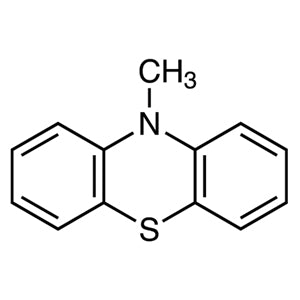
10-Methylphenothiazine is a chemical compound widely used in laboratory settings for its versatility in chemical experiments and scientific research. As a heterocyclic building block, it plays a crucial role in the synthesis of various compounds, including pharmaceuticals, industrial chemicals, and materials for advanced research. Its complex structure allows it to interact with multiple functional groups, making it a valuable resource for chemists and researchers seeking to develop new substances. This compound is commonly found in organic chemistry and pharmacological studies, where it serves as a foundation for creating compounds with specific biological or chemical properties.
The compound's chemical properties make it a preferred choice in laboratory environments. It exhibits stability under controlled conditions, yet it remains reactive enough to participate in a variety of chemical reactions. Its heterocyclic nature enables it to form stable bonds with other molecules, which is essential for the synthesis of more complex structures. These characteristics make it an ideal building block for researchers aiming to design and test new compounds with tailored functions. The compound's adaptability and chemical reactivity contribute to its widespread use in both academic and industrial research settings.
In Indonesian laboratories, 10-Methylphenothiazine is frequently utilized in organic chemistry and pharmacology research. It is a key component in studies aimed at developing new drugs and materials. Its presence supports ongoing scientific initiatives in higher education institutions and local research centers, contributing to the advancement of chemical and pharmaceutical sciences in the region.
- Organic synthesis experiments benefit from 10-Methylphenothiazine due to its ability to form complex molecular structures through functional group interactions.
- Pharmaceutical research utilizes this compound as a building block for the development of new drug molecules with targeted biological activities.
- Material science applications leverage its heterocyclic structure for the creation of advanced chemical compounds used in industrial and technological processes.
- Educational institutions incorporate it into their curriculum to teach students about heterocyclic chemistry and synthetic methodologies.
- Pharmacological studies use it to investigate its potential therapeutic effects and interactions with biological systems.
| Brand | TCI |
|---|---|
| CAS number | 1207-72-3 |
| Molecular formula | — |
| Purity | — |
| Category | Chemistry > Building Blocks > Heterocyclic Building Blocks |
| Pack sizes | Available in standard laboratory quantities |
| Physical form | Solid |
| Storage | Store in a cool, dry place away from light and moisture |
10-Methylphenothiazine should be stored in a cool, dry environment, away from direct light and moisture. It is recommended to use airtight containers to prevent exposure to air and humidity. Due to its chemical reactivity, it should be handled with appropriate personal protective equipment, such as gloves and safety goggles. Proper ventilation is essential when working with this compound to minimize inhalation risks. It is important to keep it away from incompatible substances to avoid potential chemical reactions. Maintaining proper storage conditions ensures the compound's stability and effectiveness in laboratory applications.
—
Produk Terkait
-
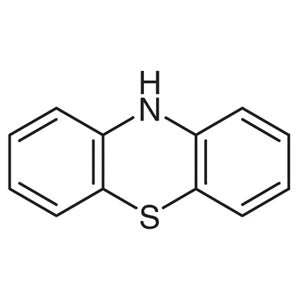
Phenothiazine TCI P0106
Regular price From Rp 477.750,00Regular price -
10-(4-Methoxyphenyl)-10H-phenothiazine TCI M3639
Regular price From Rp 2.625.000,00Regular price -
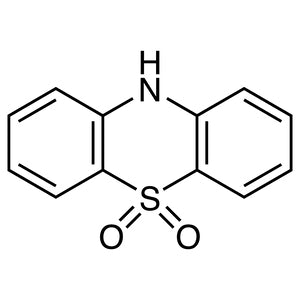
10H-Phenothiazine5,5-Dioxide TCI D6164
Regular price From Rp 3.232.950,00Regular price -
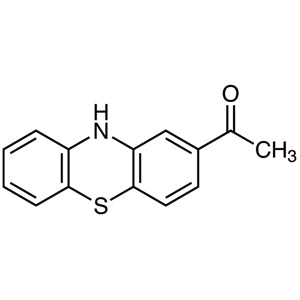
2-Acetylphenothiazine TCI A2815
Regular price From Rp 4.452.000,00Regular price -
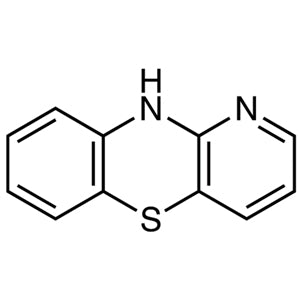
1-Azaphenothiazine TCI A2862
Regular price From Rp 505.050,00Regular price -
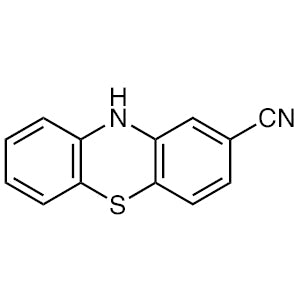
10H-Phenothiazine-2-carbonitrile TCI P2308
Regular price From Rp 848.400,00Regular price -
10-[2-(2-Methoxyethoxy)ethyl]-10H-phenothiazine TCI M3068
Regular price Rp 3.312.750,00Regular price -
2-Methylthiophenothiazine TCI M1387
Regular price Rp 4.161.150,00Regular price

![2098786-35-5 10-[2-(2-Methoxyethoxy)ethyl]-10H-phenothiazine - AMI Scientific](http://amiscientific.com/cdn/shop/files/TCI2510M3068.jpg?v=1767127707&width=533)
