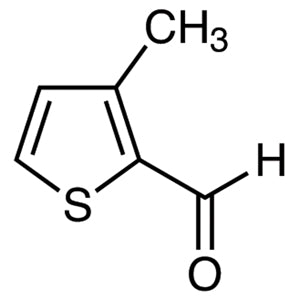
3-Methylthiophene-2-carboxaldehyde is a chemical compound widely used as a building block in the synthesis of heterocyclic compounds. Its unique molecular structure, featuring sulfur and carbon atoms, makes it a valuable tool in organic chemistry. In laboratory settings, this compound plays a crucial role in the development of complex molecules, particularly in pharmaceutical and materials research. It is often employed in the creation of bioactive compounds, contributing to advancements in drug discovery and chemical innovation.
This compound is preferred for its chemical stability under controlled conditions, which allows for consistent results in synthetic processes. However, it is sensitive to oxidation and UV light, necessitating careful handling and storage. These properties make it ideal for reactions requiring precise control and selectivity. Its reactivity and structural versatility also enable it to be a key component in the synthesis of compounds with specific functional groups and molecular architectures.
In Indonesian laboratories, 3-Methylthiophene-2-carboxaldehyde is commonly used in chemical, pharmaceutical, and biochemical research. It is a fundamental reagent for institutions and universities conducting experiments that require heterocyclic building blocks. Its availability in the local market ensures that researchers have access to this essential compound for their studies and innovations.
TCI brochures (PDF)
- Thiophenes 2026-06-29 · p. 3
Related TCI products
- TCI M0911 13679-70-4 5-Methylthiophene-2-carboxaldehyde
- TCI T1327 1795-05-7 2,3,5-Trimethylthiophene
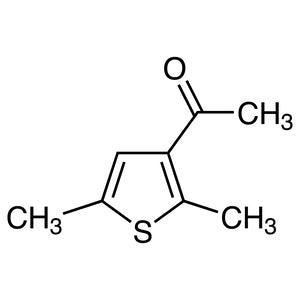
- TCI A3587 2530-10-1 1-(2,5-Dimethylthiophen-3-yl)ethan-1-one
- TCI A1181 13679-74-8 2-Acetyl-5-methylthiophene
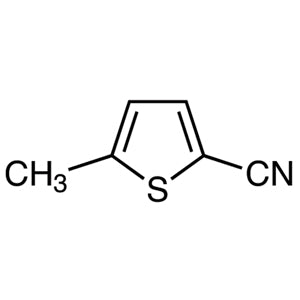
- TCI M2959 72835-25-7 5-Methylthiophene-2-carbonitrile
- TCI M2662 81452-54-2 Methyl 3-Methylthiophene-2-carboxylate
- Pharmaceutical research utilizes this compound for synthesizing bioactive molecules due to its heterocyclic structure and reactivity.
- Organic chemistry experiments benefit from its role as a versatile building block in the creation of complex molecular frameworks.
- Materials science applications leverage its chemical properties for the development of advanced functional materials.
- Biochemical studies employ it in the synthesis of compounds with specific biological activities and molecular targets.
- Academic research institutions use it as a standard reagent for teaching and experimental purposes in heterocyclic chemistry.
| Brand | TCI |
|---|---|
| CAS number | 5834-16-2 |
| Molecular formula | — |
| Purity | — |
| Category | Chemistry > Building Blocks > Heterocyclic Building Blocks |
| Pack sizes | Available in various quantities as per standard laboratory supply formats |
| Physical form | Solid or liquid, depending on the specific formulation |
| Storage | Requires protection from light and oxidation, stored in a cool, dry place |
This compound should be stored in a cool, dry environment away from direct sunlight and sources of heat. It is recommended to use amber-colored glass containers to minimize exposure to UV light, which can cause degradation. Due to its sensitivity to oxidation, it should be kept in an airtight container to prevent contact with air. Laboratory personnel should wear appropriate personal protective equipment, such as gloves and safety goggles, when handling this material. Proper ventilation is essential to ensure safe working conditions. The compound should not be stored near incompatible substances, such as strong oxidizing agents, to avoid potential chemical reactions. Regular monitoring of storage conditions is advised to maintain its chemical integrity and ensure safe usage in laboratory settings.
—
Produk Terkait
-
5-Methylthiophene-2-carboxaldehyde TCI M0911
Regular price From Rp 928.200,00Regular price -
2,3,5-Trimethylthiophene TCI T1327
Regular price From Rp 3.551.100,00Regular price -
1-(2,5-Dimethylthiophen-3-yl)ethan-1-one TCI A3587
Regular price From Rp 2.359.350,00Regular price -
2-Acetyl-5-methylthiophene TCI A1181
Regular price Rp 1.644.300,00Regular price -
5-Methylthiophene-2-carbonitrile TCI M2959
Regular price Rp 1.749.300,00Regular price -
Methyl3-Methylthiophene-2-carboxylate TCI M2662
Regular price From Rp 717.150,00Regular price -
Methyl3-Amino-4-methylthiophene-2-carboxylate TCI M1772
Regular price From Rp 452.550,00Regular price -
2-Methylthiophenothiazine TCI M1387
Regular price Rp 4.161.150,00Regular price