TCI D6508 tert-Butyl 3,3-Bis(bromomethyl)azetidine-1-carboxylate is a heterocyclic building block that carries two bromomethyl groups on the third carbon of an azetidine ring, with the ring nitrogen protected as a Boc carbamate. In the organic synthesis laboratory, this compound functions as a bis-electrophile, that is, a reagent capable of performing two sequential alkylations on a bifunctional nucleophile. Its role is highly distinctive: it builds spirocyclic ring systems in a single synthetic operation, so that complex three-dimensional frameworks can be assembled without the long sequence of steps that would normally be required.
The property that makes this reagent a preferred choice is the placement of its two leaving groups, which are symmetric and spaced exactly right for ring closure. When reacted with primary amines, malonates, sulfonamides, or other bidentate nucleophiles, the two bromides are substituted one after the other and generate a new ring connected in spiro fashion to the azetidine. The bromine atoms are good leaving groups in nucleophilic substitution reactions, while the Boc group keeps the azetidine nitrogen unreactive so that destructive internal alkylation does not occur.
In Indonesian laboratories, this building block is typically used in university and institutional research groups working on medicinal chemistry and methodology development, where saturated spirocyclic scaffolds are of interest. It is handled on small synthetic scales in fume-hooded organic synthesis benches, usually as part of multi-step route development. It should be noted that the same strong electrophilic character that makes the reagent useful also demands careful handling by trained personnel.
Related TCI products
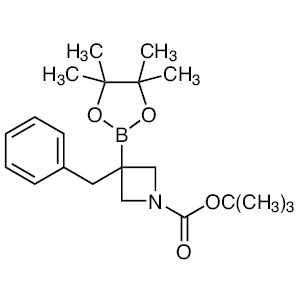
- TCI P2872 2296775-60-3 tert-Butyl 3-Benzyl-3-(4,4,5,5-tetramethyl-1,3,2-dioxaborolan-2-yl)azetidine-1-carboxylate
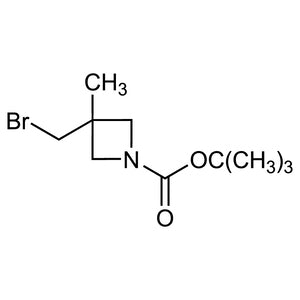
- TCI D6391 1408075-52-4 tert-Butyl 3-(Bromomethyl)-3-methylazetidine-1-carboxylate
- TCI C3721 2507954-86-9 tert-Butyl 3-(4-Chlorobenzyl)-3-(4,4,5,5-tetramethyl-1,3,2-dioxaborolan-2-yl)azetidine-1-carboxylate
- TCI B6429 253176-93-1 tert-Butyl 3-(Bromomethyl)azetidine-1-carboxylate
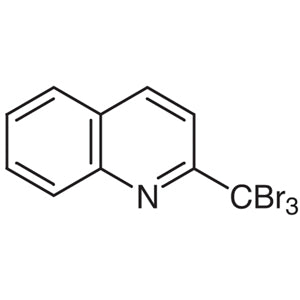
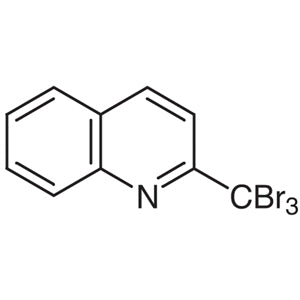
- TCI T1453 613-53-6 2-Tribromomethylquinoline
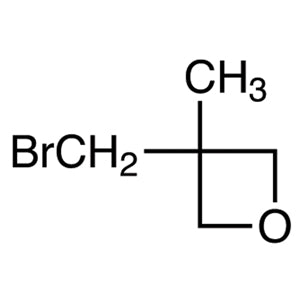
- TCI B5424 78385-26-9 3-(Bromomethyl)-3-methyloxetane
- Spirocyclic scaffold construction: the two symmetric bromomethyl arms close a new ring onto the azetidine in one operation, giving three-dimensional frameworks without long step sequences.
- Double alkylation of primary amines: the amine nitrogen attacks both bromides in turn, producing a spiro-fused azetidine–azacycle system directly from a simple bifunctional nucleophile.
- Malonate-based ring annulation: stabilized malonate carbanions displace each bromide sequentially, delivering a carbocyclic spiro ring joined at the third carbon of the azetidine core.
- Sulfonamide cyclization chemistry: deprotonated sulfonamides serve as bidentate nucleophiles, undergoing two consecutive substitutions to build nitrogen-containing spiro rings on the protected azetidine.
- Protected-intermediate route development: the Boc carbamate holds the ring nitrogen unreactive during alkylation, allowing chemists to plan multi-step sequences that unmask the amine at a later stage.
| Brand | TCI |
|---|---|
| CAS number | 2098131-64-5 |
| Molecular formula | — |
| Purity | — |
| Category | Chemistry > Building Blocks > Heterocyclic Building Blocks |
| Pack sizes | available in standard TCI research-scale packaging; please confirm the size required when ordering |
| Physical form | supplied as a Boc-protected azetidine derivative; consult the manufacturer's data sheet for the form of the lot supplied |
| Storage | keep in the closed original container under the conditions stated on the manufacturer's label |
Store the material in its original tightly closed container, kept in a cool, dry, well-ventilated chemical store away from direct sunlight, heat, and moisture, and observe the storage conditions printed on the manufacturer's label. Keep it separated from strong bases, strong oxidizing agents, and nucleophilic reagents, since the compound is a reactive bis-electrophile. All weighing and transfer operations should be carried out in a functioning fume hood by trained personnel wearing safety glasses, a laboratory coat, and chemically resistant gloves. Alkylating agents of this type should be treated as potentially harmful on skin contact, inhalation, or eye contact. Use clean, dry glassware or compatible plastic containers for handling, close the container promptly after use to limit moisture uptake, and collect residues and contaminated consumables as halogenated organic chemical waste for disposal according to institutional procedures. Consult the manufacturer's safety data sheet before first use.
—
Produk Terkait
-
tert-Butyl3-Benzyl-3-(4,4,5,5-tetramethyl-1,3,2-dioxaborolan-2-yl)azetidine-1-carboxylate TCI P2872
Regular price Rp 1.618.050,00Regular priceRp 1.146.600,00Sale price Rp 1.618.050,00 -
tert-Butyl3-(Bromomethyl)-3-methylazetidine-1-carboxylate TCI D6391
Regular price Rp 4.001.550,00Regular priceRp 2.814.000,00Sale price Rp 4.001.550,00 -
tert-Butyl3-(4-Chlorobenzyl)-3-(4,4,5,5-tetramethyl-1,3,2-dioxaborolan-2-yl)azetidine-1-carboxylate TCI C3721
Regular price Rp 4.054.050,00Regular priceRp 2.850.750,00Sale price Rp 4.054.050,00 -
tert-Butyl3-(Bromomethyl)azetidine-1-carboxylate TCI B6429
Regular price Rp 3.365.250,00Regular priceRp 2.368.800,00Sale price Rp 3.365.250,00 -
2-Tribromomethylquinoline TCI T1453
Regular price Rp 1.087.800,00Regular priceRp 775.950,00Sale price Rp 1.087.800,00 -
3-(Bromomethyl)-3-methyloxetane TCI B5424
Regular price Rp 2.464.350,00Regular priceRp 1.738.800,00Sale price Rp 2.464.350,00 -
3-(Bromomethyl)-5-chlorobenzo[b]thiophene TCI B3147
Regular price Rp 822.150,00Regular priceRp 590.100,00Sale price Rp 822.150,00 -
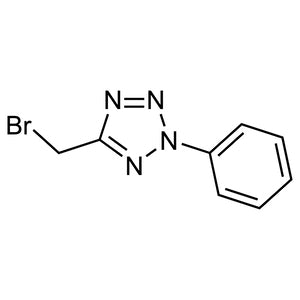
5-(Bromomethyl)-2-phenyl-2H-tetrazole TCI B6880
Regular price Rp 3.870.300,00Regular priceRp 2.721.600,00Sale price Rp 3.870.300,00


![1198-51-2 3-(Bromomethyl)-5-chlorobenzo[b]thiophene - AMI Scientific](http://amiscientific.com/cdn/shop/files/TCI2510B3147_60d2db55-0a47-4814-a979-2d13689150ba.jpg?v=1767431521&width=533)