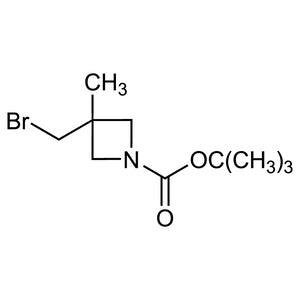
TCI D6391 is tert-Butyl 3-(Bromomethyl)-3-methylazetidine-1-carboxylate, a heterocyclic synthesis building block consisting of a Boc-protected azetidine derivative that carries a bromomethyl group on a quaternary carbon. In the organic chemistry laboratory, this compound serves as a ready-to-use alkylating reagent: its bromine atom is a good leaving group and is therefore readily displaced by a wide range of nucleophiles. In a single reaction step, researchers can attach the entire methylated azetidine framework to a target molecule, then remove the Boc protecting group whenever a free amine is required at a later stage.
The characteristics that make this reagent a preferred choice lie in the four-membered azetidine ring, which is both rigid and compact, together with the quaternary carbon bearing a methyl group. A framework of this kind contributes high sp3 character to drug candidate molecules, helping to improve solubility and reduce structural flatness without adding excessive molecular weight. The methyl group on the same carbon also blocks certain metabolic pathways and locks the conformation of the bromomethyl group. Boc protection on the nitrogen keeps the cyclic amine unreactive while the substitution reaction proceeds, so that reaction selectivity is maintained.
In Indonesian laboratories, this building block is typically used in medicinal chemistry and organic synthesis research groups at universities, national research institutes, and pharmaceutical development units. It is normally handled at small scale on the bench during analogue preparation and structure-activity relationship studies, where a single well-defined fragment must be introduced reproducibly. Users generally combine it with standard base and polar aprotic solvent systems already available in a routine synthesis laboratory.
Related TCI products
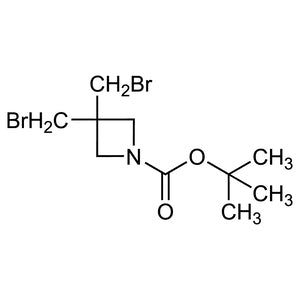
- TCI D6508 2098131-64-5 tert-Butyl 3,3-Bis(bromomethyl)azetidine-1-carboxylate
- TCI B6429 253176-93-1 tert-Butyl 3-(Bromomethyl)azetidine-1-carboxylate
- TCI B3147 1198-51-2 3-(Bromomethyl)-5-chlorobenzo[b]thiophene
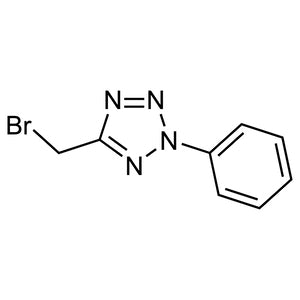
- TCI B6880 1202942-54-8 5-(Bromomethyl)-2-phenyl-2H-tetrazole
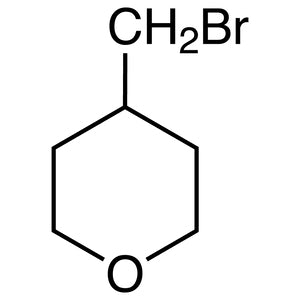
- TCI B6596 125552-89-8 4-(Bromomethyl)tetrahydro-2H-pyran
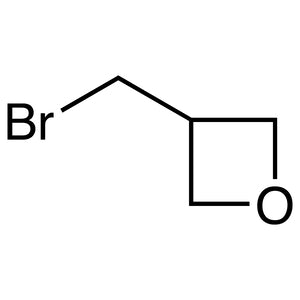
- TCI B6549 1374014-30-8 3-(Bromomethyl)oxetane
- Nucleophilic substitution chemistry: the bromomethyl group is displaced cleanly by amines, alcohols, thiols, and stabilised carbanions, installing the azetidine fragment in one step.
- Medicinal chemistry fragment installation: the compact azetidine ring raises sp3 content in candidate molecules, improving solubility and reducing structural flatness without a large molecular weight penalty.
- Protecting group strategies: the Boc group on the ring nitrogen keeps the cyclic amine masked during coupling, then is removed to reveal the free secondary amine.
- Analogue and structure-activity relationship studies: the quaternary carbon with its methyl substituent blocks certain metabolic pathways, making it useful for systematic metabolic stability comparisons.
- Conformationally constrained scaffold synthesis: the rigid four-membered ring and locked bromomethyl orientation give predictable three-dimensional presentation of substituents in designed target molecules.
| Brand | TCI |
|---|---|
| CAS number | 1408075-52-4 |
| Molecular formula | — |
| Purity | — |
| Category | Chemistry > Building Blocks > Heterocyclic Building Blocks |
| Pack sizes | available in standard TCI research-scale packaging; please confirm the currently offered size when ordering |
| Physical form | — |
| Storage | keep in the original tightly closed container, protected from light and moisture |
- Chemical name: tert-Butyl 3-(Bromomethyl)-3-methylazetidine-1-carboxylate
Store the container tightly closed in a cool, dry, well-ventilated area, protected from light and away from moisture, since the bromomethyl group is sensitive to hydrolysis and nucleophilic contaminants. Retain the material in its original supplier container or transfer it to a clean, dry amber glass vessel with a chemically resistant closure. Handle the compound in a fume hood using safety glasses, gloves, and a laboratory coat, and avoid contact with skin, eyes, and inhalation of dust or vapour. As an alkylating agent, it should be kept separate from strong bases, strong oxidising agents, and incompatible nucleophiles. Allow sealed containers to reach room temperature before opening to prevent moisture condensation, and dispose of residues and contaminated consumables through the laboratory's chemical waste procedures. Always consult the manufacturer's safety data sheet before use.
—
Produk Terkait
-
tert-Butyl3,3-Bis(bromomethyl)azetidine-1-carboxylate TCI D6508
Regular price Rp 6.281.100,00Regular price -
tert-Butyl3-(Bromomethyl)azetidine-1-carboxylate TCI B6429
Regular price Rp 3.312.750,00Regular price -
3-(Bromomethyl)-5-chlorobenzo[b]thiophene TCI B3147
Regular price From Rp 769.650,00Regular price -
5-(Bromomethyl)-2-phenyl-2H-tetrazole TCI B6880
Regular price Rp 3.817.800,00Regular price -
4-(Bromomethyl)tetrahydro-2H-pyran TCI B6596
Regular price From Rp 3.021.900,00Regular price -
3-(Bromomethyl)oxetane TCI B6549
Regular price Rp 4.797.450,00Regular price -
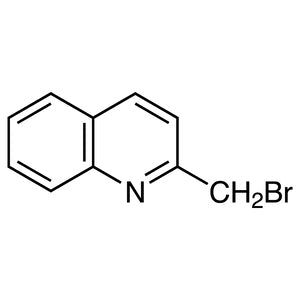
2-(Bromomethyl)quinoline TCI B6387
Regular price Rp 2.969.400,00Regular price -
2-(Bromomethyl)-1,3-benzothiazole TCI B6226
Regular price From Rp 3.419.850,00Regular price

![1198-51-2 3-(Bromomethyl)-5-chlorobenzo[b]thiophene - AMI Scientific](http://amiscientific.com/cdn/shop/files/TCI2510B3147_60d2db55-0a47-4814-a979-2d13689150ba.jpg?v=1767431521&width=533)