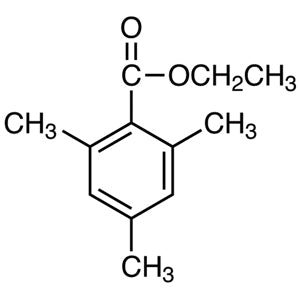
TCI E0736 Ethyl 2,4,6-Trimethylbenzoate (CAS 1754-55-8), also known as ethyl mesitoate, is an aromatic ester bearing three methyl groups on the benzene ring, two of which occupy the ortho positions relative to the ester group. Tokyo Chemical Industry supplies it as a non-heterocyclic building block for organic synthesis laboratories. In research settings this compound is frequently used not only as a synthetic intermediate but also as a classic model system in the teaching and study of ester reaction mechanisms, particularly for demonstrating how steric hindrance can dramatically alter the rate and pathway of hydrolysis.
The property that makes this material stand out is the extraordinary steric hindrance surrounding the carbonyl group. The two methyl groups at the ortho positions force the ester group out of the plane of the aromatic ring and block the approach of nucleophiles, so that this ester is remarkably resistant to both basic and acidic hydrolysis under ordinary conditions. Precisely because of this behaviour, the compound serves as a standard example of hydrolysis proceeding through an acylium ion pathway in strong acid. For synthetic chemists, that hydrolytic robustness is valuable whenever an ester group must survive several successive reaction steps.
In Indonesian laboratories, this building block is typically handled in organic synthesis and mechanistic chemistry groups within universities and research institutes, as well as by industrial R&D units developing fine chemicals. It is generally ordered in small research quantities for multistep synthesis work, method development, or as a demonstration substrate in advanced physical organic chemistry teaching, where the contrast between hindered and unhindered esters can be shown clearly under controlled laboratory conditions.
Related TCI products
- Multistep organic synthesis — the hindered ester group survives conditions that would cleave ordinary esters, allowing it to be carried unchanged through several successive transformation steps.
- Mechanistic studies of ester hydrolysis — serves as a standard substrate for demonstrating the acylium ion pathway that operates in strong acid rather than conventional nucleophilic attack at the carbonyl.
- Physical organic chemistry teaching — provides a clear classroom and practical-class illustration of how ortho substitution and steric hindrance can change reaction rates and pathways dramatically.
- Non-heterocyclic building block chemistry — supplies a trisubstituted aromatic core with defined methyl substitution for constructing more elaborate target molecules in research programmes.
- Steric effect and structure–reactivity research — allows investigators to compare hindered and unhindered aromatic esters when studying how molecular geometry governs nucleophilic accessibility to the carbonyl carbon.
| Brand | TCI (Tokyo Chemical Industry) |
|---|---|
| CAS number | 1754-55-8 |
| Molecular formula | — |
| Purity | — |
| Category | Chemistry > Building Blocks > Non-Heterocyclic Building Blocks |
| Pack sizes | available in standard research pack sizes as supplied by the manufacturer |
| Physical form | — |
| Storage | store in a cool, dry place in a tightly closed container, following the manufacturer's product documentation |
- Product code: E0736
- Chemical class: aromatic ester (non-heterocyclic building block), also known as ethyl mesitoate
Store the container tightly closed in a cool, dry, well-ventilated area, away from direct sunlight, heat sources, ignition sources, and strong oxidising agents. Keep the material in its original manufacturer packaging or in a chemically compatible glass container with a well-sealed cap, clearly labelled with the compound name and CAS number. Handle in a fume hood using safety goggles, nitrile gloves, and a laboratory coat, and avoid inhalation of vapours or direct contact with skin and eyes. Reseal containers promptly after use, keep them upright to prevent leakage, and always consult the manufacturer's Safety Data Sheet before use and prior to any disposal of residues.
—
Produk Terkait
-
tert-Butyl4-Formylbenzoate TCI B5414
Regular price From Rp 4.797.450,00Regular price -
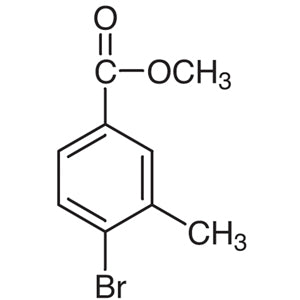
Methyl4-Bromo-3-methylbenzoate TCI B2256
Regular price From Rp 903.000,00Regular price -
Methyl2-Benzoylbenzoate TCI B1231
Regular price From Rp 903.000,00Regular price -
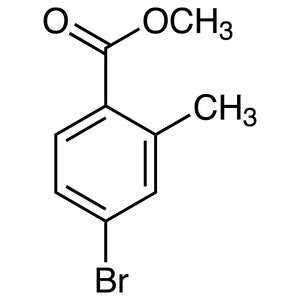
Methyl4-Bromo-2-methylbenzoate TCI M3630
Regular price From Rp 1.936.200,00Regular price -
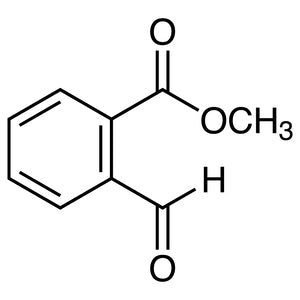
Methyl2-Formylbenzoate TCI M3552
Regular price From Rp 3.392.550,00Regular price -
Methyl3-Formylbenzoate TCI M3500
Regular price From Rp 1.829.100,00Regular price -
Methyl4-Isopropylbenzoate TCI M3307
Regular price From Rp 1.803.900,00Regular price -
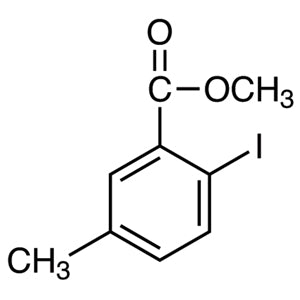
Methyl2-Iodo-5-methylbenzoate TCI M3019
Regular price From Rp 1.510.950,00Regular price