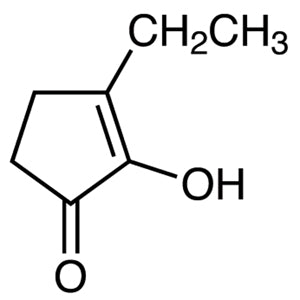
TCI E0792 3-Ethyl-2-hydroxy-2-cyclopenten-1-one, CAS 21835-01-8, is a hydroxylated cyclopentenone compound better known among flavour researchers as the ethyl-substituted cyclotene derivative. The enol group sitting adjacent to the ketone function on the five-membered ring gives this molecule its distinctive chemical character together with a sweet aroma reminiscent of caramel and burnt sugar. In the laboratory the compound serves both as a building block for organic synthesis and as a reference material in research on aroma compounds generated by the Maillard reaction in heated foodstuffs.
What makes this material special is its enol-diketone motif, which renders the hydroxyl group far more acidic than that of an ordinary alcohol. As a consequence the compound readily forms salts, chelates easily with metal ions, and is prepared to undergo selective etherification or acetylation at the enol position. The conjugated carbonyl system within the ring also opens routes to addition reactions, condensations, and the formation of further cyclic derivatives. This dual nature — at once an aroma compound and a reactive intermediate — is precisely what makes it interesting to two research fields at the same time.
In Indonesia this material is widely used by laboratories working at the intersection of food chemistry and synthetic organic chemistry. Groups studying thermally generated flavour compounds employ it as a reference substance, while synthesis laboratories draw on its reactive enol and conjugated carbonyl positions when assembling non-heterocyclic building blocks. It is supplied as part of the TCI building blocks range, in the pack formats offered by the manufacturer.
Related TCI products
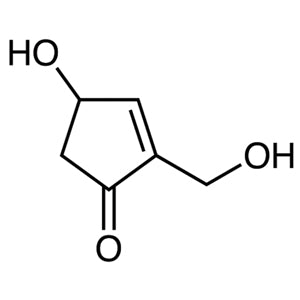
- TCI H1723 76374-26-0 4-Hydroxy-2-(hydroxymethyl)-2-cyclopenten-1-one
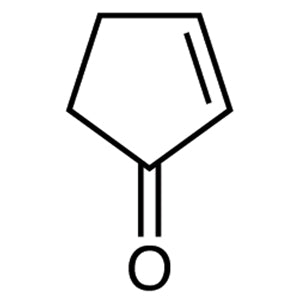
- TCI C0794 930-30-3 2-Cyclopenten-1-one
- TCI M0956 2758-18-1 3-Methyl-2-cyclopentenone
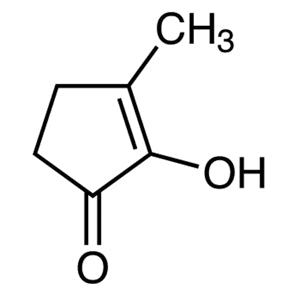
- TCI H0469 80-71-7 2-Hydroxy-3-methyl-2-cyclopentenone
- TCI E0831 21622-01-5 Ethyl 3-Cyclopentene-1-carboxylate
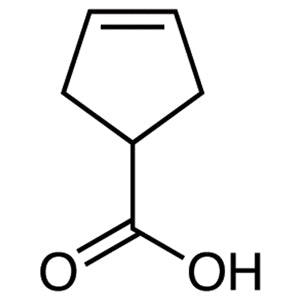
- TCI C1914 7686-77-3 3-Cyclopentene-1-carboxylic Acid
- Maillard reaction aroma studies — serves as a reference compound for identifying and quantifying caramel-type aroma constituents formed when foodstuffs are heated.
- Organic synthesis building block — the reactive enol and conjugated carbonyl positions make it a convenient starting point for constructing more elaborate non-heterocyclic frameworks.
- Selective derivatisation chemistry — its unusually acidic hydroxyl group allows controlled etherification and acetylation at the enol position without disturbing the ring ketone.
- Metal chelation investigations — the enol-diketone motif binds metal ions readily, making the compound suitable for coordination and complexation studies in solution.
- Conjugate addition and condensation work — the conjugated carbonyl system in the five-membered ring supports addition, condensation, and cyclic derivative formation routes.
| Brand | TCI (Tokyo Chemical Industry) |
|---|---|
| CAS number | 21835-01-8 |
| Molecular formula | — |
| Purity | — |
| Category | Chemistry > Building Blocks > Non-Heterocyclic Building Blocks |
| Pack sizes | available in the pack formats listed by the manufacturer for this catalogue item |
| Physical form | — |
| Storage | keep in the closed original container under the conditions stated on the manufacturer label |
- Catalogue number: E0792
Store the container tightly closed in a cool, dry, well-ventilated area away from heat sources, direct sunlight, and incompatible materials, following the conditions printed on the manufacturer label. Keep the material in its original container, or in a chemically compatible sealed glass vessel, and label any transferred portion clearly. Handle in a fume hood using safety glasses, gloves, and a laboratory coat, and avoid inhaling vapours or generating aerosols. Because the compound carries a strong caramel-like odour, minimise open handling on the bench. Consult the manufacturer safety data sheet before use and dispose of residues through your institution's chemical waste route.
—
Produk Terkait
-
4-Hydroxy-2-(hydroxymethyl)-2-cyclopenten-1-one TCI H1723
Regular price Rp 1.936.200,00Regular price -
2-Cyclopenten-1-one TCI C0794
Regular price From Rp 1.565.550,00Regular price -
3-Methyl-2-cyclopentenone TCI M0956
Regular price From Rp 3.419.850,00Regular price -
2-Hydroxy-3-methyl-2-cyclopentenone TCI H0469
Regular price Rp 1.538.250,00Regular price -
Ethyl3-Cyclopentene-1-carboxylate TCI E0831
Regular price From Rp 3.525.900,00Regular price -
3-Cyclopentene-1-carboxylicAcid TCI C1914
Regular price From Rp 875.700,00Regular price -
1-CyclopentenecarboxylicAcid TCI C1702
Regular price From Rp 2.174.550,00Regular price -
(S)-4-Hydroxy-2-(hydroxymethyl)-2-cyclopenten-1-one TCI H1722
Regular price Rp 3.658.200,00Regular price