TCI M0956 3-Methyl-2-cyclopentenone is a five-membered unsaturated cyclic ketone that carries a conjugated double bond adjacent to its carbonyl group, together with a single methyl substituent at the beta position. This cyclic enone framework ranks among the most productive building blocks in organic synthesis because it presents two distinct reactive centres at once: a carbonyl carbon open to direct nucleophilic attack, and a beta carbon that accepts conjugate addition. In the laboratory the compound serves as a starting point for constructing substituted cyclopentane skeletons, a motif encountered widely in natural products and active pharmaceutical substances.
The property that makes this material so highly valued is its reliability as a Michael acceptor. The conjugated enone system allows organometallic reagents, enolates, and soft nucleophiles to add at the beta position with good selectivity, giving substituted cyclopentanone products that can be elaborated further in subsequent steps. The methyl group at position three contributes both steric hindrance and an electronic influence that helps direct the course of the reaction, giving chemists a useful handle on regiochemical outcomes. The compound exists as a liquid, so it is straightforward to measure out and transfer during routine bench work.
In Indonesian laboratories this reagent is typically found in synthetic organic chemistry groups at universities and research institutes, as well as in industrial R&D settings where cyclopentanoid intermediates are prepared. Because it behaves as a reactive enone, it should be protected from conditions that promote decomposition and handled with the same care given to other conjugated carbonyl reagents. Its liquid form suits both small exploratory reactions and larger preparative runs.
Related TCI products
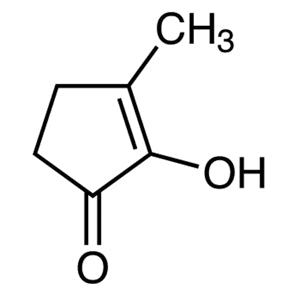
- TCI H0469 80-71-7 2-Hydroxy-3-methyl-2-cyclopentenone
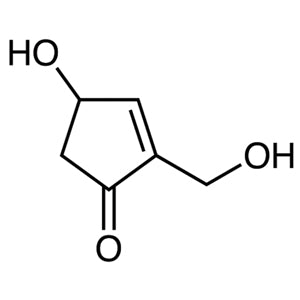
- TCI H1723 76374-26-0 4-Hydroxy-2-(hydroxymethyl)-2-cyclopenten-1-one
- TCI E0792 21835-01-8 3-Ethyl-2-hydroxy-2-cyclopenten-1-one
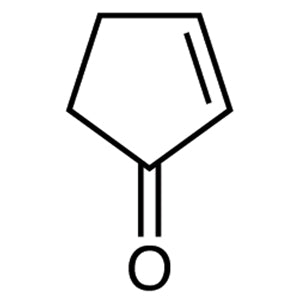
- TCI C0794 930-30-3 2-Cyclopenten-1-one
- TCI E0831 21622-01-5 Ethyl 3-Cyclopentene-1-carboxylate
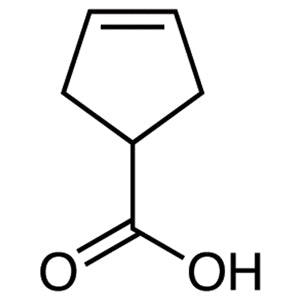
- TCI C1914 7686-77-3 3-Cyclopentene-1-carboxylic Acid
- Conjugate (Michael) addition chemistry — the conjugated enone system accepts organometallic reagents, enolates, and soft nucleophiles at the beta carbon with good selectivity, giving substituted cyclopentanone products.
- Construction of substituted cyclopentane skeletons — provides a direct entry to the cyclopentane motif that appears widely in natural product frameworks and in active pharmaceutical substances.
- Multi-step synthetic sequences — the resulting substituted cyclopentanone products can be elaborated further, making this enone a practical starting point for longer synthetic routes.
- Direct carbonyl functionalisation — the carbonyl carbon remains open to direct nucleophilic attack, so the same molecule supports two distinct modes of reaction depending on the reagent chosen.
- Regiochemical control studies — the methyl group at position three supplies both steric hindrance and an electronic influence that helps direct reactions toward the desired reactive centre.
| Brand | TCI |
|---|---|
| CAS number | 2758-18-1 |
| Molecular formula | — |
| Purity | — |
| Category | Chemistry > Building Blocks > Non-Heterocyclic Building Blocks |
| Pack sizes | available in standard TCI catalogue packaging; please refer to the product listing for currently offered sizes |
| Physical form | liquid, convenient to measure and transfer |
| Storage | keep protected from conditions that promote decomposition, as is standard for reactive enones |
Store this reagent in a cool, well-ventilated chemical store, keeping the container tightly closed in its original packaging or in a compatible, clearly labelled glass bottle fitted with a chemically resistant closure. As a reactive conjugated enone, the material should be kept away from heat sources, ignition sources, and incompatible reagents, and containers should be reclosed promptly after each use. Handle and dispense inside a fume hood while wearing safety glasses, nitrile gloves, and a laboratory coat. Because the compound is a liquid, transfer it with a clean syringe or pipette rather than by pouring, and avoid contamination of the bulk stock. Consult the manufacturer's safety data sheet before first use.
—
Produk Terkait
-
2-Hydroxy-3-methyl-2-cyclopentenone TCI H0469
Regular price Rp 1.538.250,00Regular price -
4-Hydroxy-2-(hydroxymethyl)-2-cyclopenten-1-one TCI H1723
Regular price Rp 1.936.200,00Regular price -
3-Ethyl-2-hydroxy-2-cyclopenten-1-one TCI E0792
Regular price Rp 743.400,00Regular price -
2-Cyclopenten-1-one TCI C0794
Regular price From Rp 1.565.550,00Regular price -
Ethyl3-Cyclopentene-1-carboxylate TCI E0831
Regular price From Rp 3.525.900,00Regular price -
3-Cyclopentene-1-carboxylicAcid TCI C1914
Regular price From Rp 875.700,00Regular price -
1-CyclopentenecarboxylicAcid TCI C1702
Regular price From Rp 2.174.550,00Regular price -
(S)-4-Hydroxy-2-(hydroxymethyl)-2-cyclopenten-1-one TCI H1722
Regular price Rp 3.658.200,00Regular price