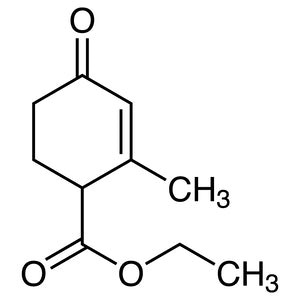
Ethyl 2-Methyl-4-oxocyclohex-2-ene-1-carboxylate is a non-heterocyclic building block built on a cyclohexenone skeleton, carrying a methyl group at position 2 and an ethyl ester group at position 1, supplied by TCI under catalogue code E1485. The compound serves as a ready-made carbocyclic framework for constructing more complex alicyclic molecules, particularly in synthetic routes toward terpenoid- and steroid-type natural products. By providing a six-membered ring that is already functionalised, this reagent removes several synthetic steps that would otherwise be long and laborious to perform from simpler precursors.
The main attraction of this material lies in the conjugated enone system embedded within the ring. The unsaturated carbonyl group makes the molecule a good Michael acceptor, so that both carbon and heteroatom nucleophiles can be added conjugately at the beta position with reliable selectivity. At the same time, the ester group positioned alpha to the ring confers sufficient proton acidity for enolate formation, opening the way to alkylation, Robinson annulation, and intramolecular condensation. The methyl group at position 2 further directs the regiochemistry of these reactions and provides a methyl-bearing centre that can be elaborated into a quaternary carbon.
In Indonesian laboratories, this building block is typically used in university and institutional research groups working on organic synthesis, medicinal chemistry, and natural product chemistry, as well as in process development laboratories exploring new synthetic routes. It is normally handled on a bench scale within a fume hood as part of multi-step sequences, where a functionalised cyclohexenone core shortens the route to a target scaffold. The TCI catalogue code E1485 makes reordering and documentation straightforward for laboratories that need consistent batch-to-batch traceability.
Related TCI products
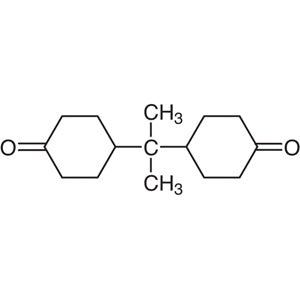
- TCI B1672 7418-16-8 2,2-Bis(4-oxocyclohexyl)propane
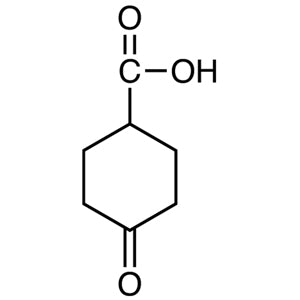
- TCI O0474 874-61-3 4-Oxocyclohexanecarboxylic Acid
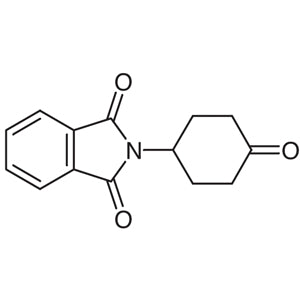
- TCI O0365 104618-32-8 N-(4-Oxocyclohexyl)phthalimide
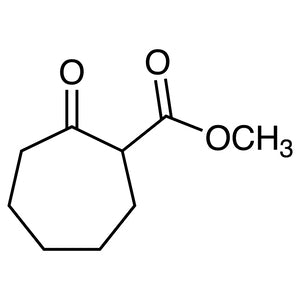
- TCI M3625 52784-32-4 Methyl 2-Oxocycloheptane-1-carboxylate
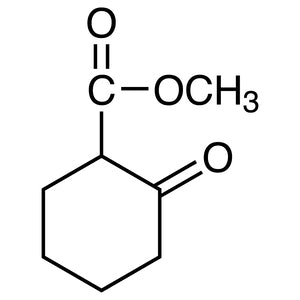
- TCI M2316 41302-34-5 Methyl 2-Oxocyclohexanecarboxylate
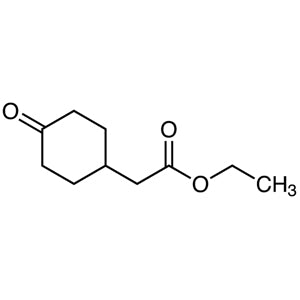
- TCI E1375 58012-34-3 Ethyl 2-(4-Oxocyclohexyl)acetate
- Michael addition chemistry: the conjugated enone acts as an electron-poor acceptor, allowing carbon and heteroatom nucleophiles to be introduced at the beta position with dependable selectivity.
- Robinson annulation sequences: the combination of an enone acceptor and an acidic ester-bearing position lets chemists build fused bicyclic systems in a single, well-established operation.
- Terpenoid synthesis routes: the pre-functionalised six-membered carbocycle supplies the ring framework common to many terpenoid targets, shortening otherwise lengthy synthetic sequences considerably.
- Steroid skeleton construction: the methyl-substituted cyclohexenone unit maps directly onto rings found in steroid frameworks, providing a rational starting point for annulation strategies.
- Enolate alkylation studies: the ester group alpha to the ring provides proton acidity adequate for enolate generation, enabling alkylation and intramolecular condensation toward quaternary carbon centres.
| Brand | TCI (Tokyo Chemical Industry), catalogue code E1485 |
|---|---|
| CAS number | 487-51-4 |
| Molecular formula | — |
| Purity | — |
| Category | Chemistry > Building Blocks > Non-Heterocyclic Building Blocks |
| Pack sizes | please refer to the pack options listed on this product page |
| Physical form | — |
| Storage | store in a cool, dark place in a tightly closed container; refer to the supplier's Safety Data Sheet and label for the definitive storage condition |
- Chemical class: non-heterocyclic building block based on a cyclohexenone skeleton, with a methyl group at position 2 and an ethyl ester at position 1
Store the container tightly closed in a cool, dark, and well-ventilated place, away from heat sources, open flames, and direct sunlight. Keep the material in its original supplier container wherever possible, or transfer it to a chemically compatible, tightly sealed glass container that is clearly labelled with the compound name, CAS number, and date of receipt. As a reactive enone and ester, this compound should be kept away from strong bases, strong oxidising agents, and strong nucleophiles. Handle all weighing and transfer operations inside a functioning fume hood, and wear a laboratory coat, chemical-resistant gloves, and safety goggles throughout. Avoid inhalation of vapour and contact with skin and eyes, and consult the supplier's Safety Data Sheet before first use and before disposal.
—
Produk Terkait
-
2,2-Bis(4-oxocyclohexyl)propane TCI B1672
Regular price From Rp 4.691.400,00Regular price -
4-OxocyclohexanecarboxylicAcid TCI O0474
Regular price Rp 3.763.200,00Regular price -
N-(4-Oxocyclohexyl)phthalimide TCI O0365
Regular price From Rp 1.670.550,00Regular price -
Methyl2-Oxocycloheptane-1-carboxylate TCI M3625
Regular price Rp 2.359.350,00Regular price -
Methyl2-Oxocyclohexanecarboxylate TCI M2316
Regular price Rp 2.359.350,00Regular price -
Ethyl2-(4-Oxocyclohexyl)acetate TCI E1375
Regular price From Rp 1.273.650,00Regular price -
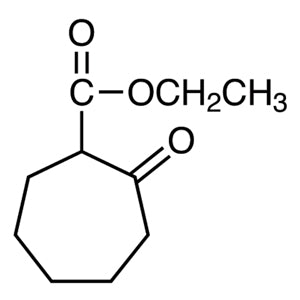
Ethyl2-Oxocycloheptanecarboxylate TCI E1056
Regular price From Rp 2.094.750,00Regular price -
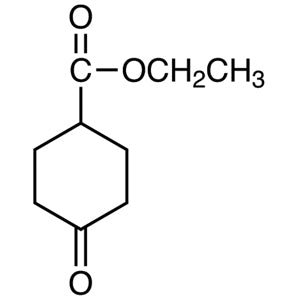
Ethyl4-Oxocyclohexanecarboxylate TCI C1530
Regular price From Rp 928.200,00Regular price