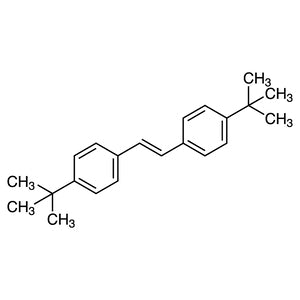
(E)-1,2-Bis(4-tert-butylphenyl)ethene is a symmetrical stilbene derivative in which both aromatic rings carry a tert-butyl group at the para position. The compound belongs to the family of non-heterocyclic building blocks, that is, starting materials built on a purely carbon-based framework and used to assemble larger molecules. In the laboratory it serves as a core scaffold for organic materials research, light-emitting materials, and photochemical studies, because its central double bond links the two aromatic systems into a single, intact conjugated unit that is straightforward to study.
The E configuration makes the molecule relatively planar and fully conjugated, so it displays absorption and emission characteristics that are attractive for optical investigations. The presence of two tert-butyl groups introduces a steric shielding effect while also improving solubility in non-polar organic solvents, a practical advantage when the compound must be processed into coating solutions or thin films. Those bulky alkyl groups further help suppress the intermolecular stacking that so often quenches emission in the solid state. As a crystalline solid, the material is easy to weigh, recrystallize, and characterize using routine spectroscopic techniques.
In Indonesian laboratories, this building block is typically handled at university research groups, materials chemistry laboratories, and institutional research centers working on organic electronics and photochemistry. It is normally received as a packaged crystalline solid, weighed out in small portions on an analytical balance, and dissolved in an appropriate organic solvent before use. Because it functions as a defined starting framework rather than a finished formulation, it fits well into synthetic and characterization workflows where reproducible, well-defined scaffolds are required.
TCI brochures (PDF)
- Air-Stable Tris(stilbene) Nickel(0) Complex 2025-04-15 · p. 1
Related TCI products
- TCI M1425 2-Methylbenzo[e]indene (mixture of 1H- and 3H-form)
- TCI M1411 121254-39-5 2-Methylcyclopenta[l]phenanthrene
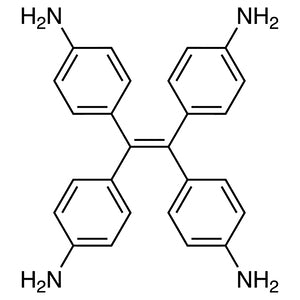
- TCI T4075 78525-34-5 4,4',4'',4'''-(Ethene-1,1,2,2-tetrayl)tetraaniline
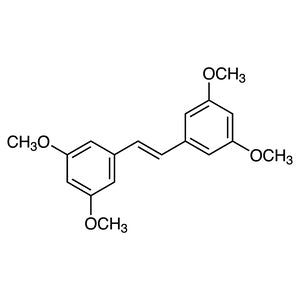
- TCI E1539 125910-07-8 trans-1,2-Bis(3,5-dimethoxyphenyl)ethene
- TCI V0130 2444-68-0 9-Vinylanthracene
- TCI B4307 32857-63-9 4-tert-Butylphenylacetic Acid
- Organic materials research: the rigid, fully conjugated stilbene framework offers a well-defined carbon scaffold on which larger functional molecules and material systems can be systematically constructed.
- Light-emitting material studies: the conjugated double bond bridging two aryl rings gives the emission behaviour that researchers examine when developing and comparing organic luminescent compounds in the laboratory.
- Photochemical investigations: the central carbon-carbon double bond connecting two aromatic systems provides a clear, easily monitored site for studying light-induced behaviour of conjugated molecules.
- Optical characterization work: the planar E configuration and full conjugation give absorption and emission characteristics that make this compound useful as a reference scaffold in spectroscopic study.
- Thin film and coating preparation: the two tert-butyl groups improve solubility in non-polar organic solvents, which simplifies preparing coating solutions and processing the material into films.
| Brand | TCI |
|---|---|
| CAS number | 64392-50-3 |
| Molecular formula | — |
| Purity | — |
| Category | Chemistry > Building Blocks > Non-Heterocyclic Building Blocks |
| Pack sizes | available in standard laboratory research pack sizes; please confirm the required packaging when ordering |
| Physical form | crystalline solid |
| Storage | store in a tightly closed container, protected from light, in a cool and dry place |
- Product code: E1522
Store the container tightly closed in a cool, dry, and well-ventilated place, away from direct sunlight and sources of heat or ignition. Keep the material in its original container or in a chemically compatible, clearly labelled glass or amber container to limit light exposure and moisture uptake. Handle the solid in a fume hood or well-ventilated work area, and wear a laboratory coat, safety goggles, and suitable gloves. Avoid generating dust while weighing, close the container promptly after use, and consult the manufacturer's safety data sheet before handling, use, or disposal.
—
Produk Terkait
-
(mixtureof1H-and3H-form) TCI M1425
Regular price From Rp 3.287.550,00Regular price -
2-Methylcyclopenta[l]phenanthrene TCI M1411
Regular price From Rp 2.279.550,00Regular price -
4,4',4'',4'''-(Ethene-1,1,2,2-tetrayl)tetraaniline TCI T4075
Regular price Rp 3.870.300,00Regular price -
trans-1,2-Bis(3,5-dimethoxyphenyl)ethene TCI E1539
Regular price Rp 2.068.500,00Regular price -
9-Vinylanthracene TCI V0130
Regular price From Rp 2.545.200,00Regular price -
4-tert-ButylphenylaceticAcid TCI B4307
Regular price From Rp 1.908.900,00Regular price -
4-ButylphenylIsocyanate TCI B3205
Regular price From Rp 1.087.800,00Regular price -
4-(4-Butylphenylazo)phenol TCI B2357
Regular price From Rp 2.677.500,00Regular price
![2-Methylbenzo[e]indene (mixture of 1H- and 3H-form) - AMI Scientific](http://amiscientific.com/cdn/shop/files/TCI2510M1425.jpg?v=1767124955&width=533)
![121254-39-5 2-Methylcyclopenta[l]phenanthrene - AMI Scientific](http://amiscientific.com/cdn/shop/files/TCI2510M1411.jpg?v=1767124927&width=533)