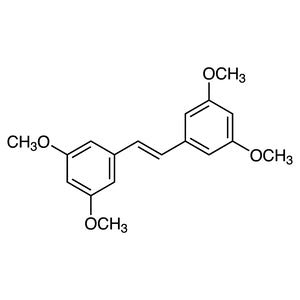
Trans-1,2-Bis(3,5-dimethoxyphenyl)ethene is a chemical compound widely used in laboratory settings for its role in catalytic and organic reactions. This compound is particularly valuable in the study of aromatic reactivity and ligand interactions during catalytic processes. Its molecular structure plays a key role in enabling the activation of double bonds and the formation of metal complexes, making it an essential component in various chemical investigations. It is commonly employed in research involving olefin ligands, where its ability to participate in coordination chemistry is highly beneficial.
The compound is known for its chemical stability under controlled conditions, although it is sensitive to moisture and air exposure. These characteristics make it ideal for use in laboratory environments where precise control over reaction conditions is necessary. Its sensitivity requires careful handling and storage to maintain its integrity and effectiveness. The compound's unique molecular structure also allows for high precision in experimental applications, making it a preferred choice for researchers seeking reliable and reproducible results.
In Indonesian laboratories, this compound is frequently used in organic chemistry and catalysis research. It is a key material for experiments that require specific reactivity and strict control over reaction parameters. Researchers in educational and research institutions rely on this compound for its consistent performance and relevance in advanced chemical studies.
Advantages (TCI brochure)
- Commercialized by the introduction of technology from ENEOS
- Enables stereospecific cross-coupling between tertiary alkyl pivalates and aryl boronic acids in the presence of a nickel catalyst
- Enables the construction of quaternary chiral carbons
- Useful for the synthetic research of pharmaceutical intermediates
TCI brochures (PDF)
- Stilbene Ligand for Stereospecific Cross-Coupling Reactions 2026-09-10 · p. 1
- Ligands 2025-12-01 · p. 18
Related TCI products
- TCI B5377 477789-30-3 trans-1,2-Bis[5-(trimethylstannyl)thiophen-2-yl]ethene
- TCI E1522 64392-50-3 (E)-1,2-Bis(4-tert-butylphenyl)ethene
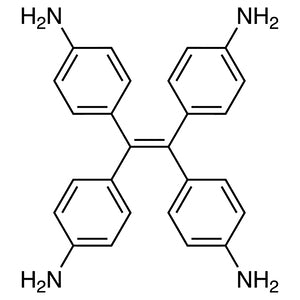
- TCI T4075 78525-34-5 4,4',4'',4'''-(Ethene-1,1,2,2-tetrayl)tetraaniline
- TCI B1536 112440-46-7 cis-1,2-Dicyano-1,2-bis(2,4,5-trimethyl-3-thienyl)ethene
- TCI T1832 74684-34-7 5,10,15,20-Tetrakis(3,5-dimethoxyphenyl)porphyrin
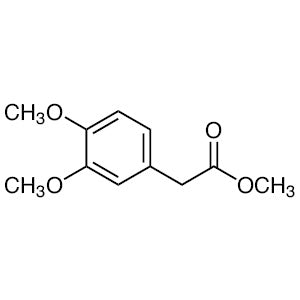
- TCI M3431 15964-79-1 Methyl 2-(3,4-Dimethoxyphenyl)acetate
- Organic synthesis experiments benefit from this compound due to its role in activating double bonds and facilitating complex reaction mechanisms.
- Catalytic studies often use this material as a ligand to enhance metal complex formation and improve reaction efficiency.
- Research on aromatic reactivity relies on its molecular structure to investigate interaction patterns between ligands and substrates.
- Metal complex formation experiments utilize this compound to study coordination chemistry and reaction pathways.
- Controlled reaction environments require this compound for its stability and predictable behavior under specific conditions.
From the TCI brochure
- Stereospecific cross-coupling of tertiary alkyl pivalates with aryl boronic acids (retention of configuration)
| Brand | TCI |
|---|---|
| CAS number | 125910-07-8 |
| Molecular formula | — |
| Purity | — |
| Category | Chemistry > Catalysis and Inorganic Chemistry > Olefin Ligands [Catalysis] |
| Pack sizes | Available in standard laboratory quantities |
| Physical form | Solid (exact form may vary depending on supplier) |
| Storage | Requires storage in a dry, cool, and airtight environment |
This compound should be stored in a dry, cool, and airtight container to prevent moisture and air exposure, which can degrade its properties. It is recommended to use sealed containers made of inert materials such as glass or polyethylene to maintain its stability. Laboratory personnel should wear appropriate personal protective equipment, including gloves and safety goggles, when handling this material. Due to its sensitivity, it is important to avoid prolonged exposure to humidity and to ensure that the storage area is well-ventilated. Proper handling and storage practices are essential to maintain the compound's effectiveness and ensure safe laboratory operations.
References cited in the TCI brochure
- Jianyu Xu. Overcoming the Naphthyl Requirement in Stereospecific Cross-Couplings to Form Quaternary Stereocenters Journal of the American Chemical Society, 2021. doi:10.1021/jacs.1c03898
Product Categories
Produk Terkait
-
trans-1,2-Bis[5-(trimethylstannyl)thiophen-2-yl]ethene TCI B5377
Regular price Rp 7.129.500,00Regular price -
(E)-1,2-Bis(4-tert-butylphenyl)ethene TCI E1522
Regular price From Rp 2.174.550,00Regular price -
4,4',4'',4'''-(Ethene-1,1,2,2-tetrayl)tetraaniline TCI T4075
Regular price Rp 3.870.300,00Regular price -
cis-1,2-Dicyano-1,2-bis(2,4,5-trimethyl-3-thienyl)ethene TCI B1536
Regular price Rp 6.970.950,00Regular price -
5,10,15,20-Tetrakis(3,5-dimethoxyphenyl)porphyrin TCI T1832
Regular price Rp 1.724.100,00Regular price -
Methyl2-(3,4-Dimethoxyphenyl)acetate TCI M3431
Regular price From Rp 2.439.150,00Regular price -
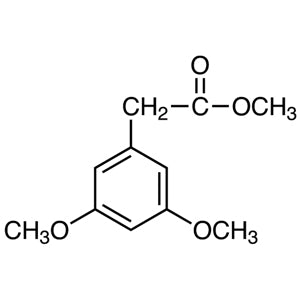
Methyl(3,5-Dimethoxyphenyl)acetate TCI M2933
Regular price From Rp 1.618.050,00Regular price -
(1E,4E)-1-(4-Hydroxy-3,5-dimethoxyphenyl)-5-(3,4,5-trimethoxyphenyl)-1,4-pentadiene-3-one TCI H1525
Regular price From Rp 2.650.200,00Regular price
![477789-30-3 trans-1,2-Bis[5-(trimethylstannyl)thiophen-2-yl]ethene - AMI Scientific](http://amiscientific.com/cdn/shop/files/TCI2510B5377.jpg?v=1769055911&width=533)