

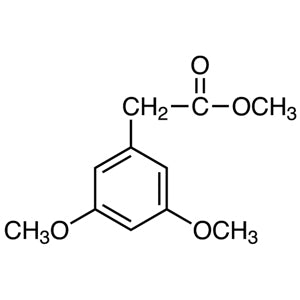
Methyl (3,5-Dimethoxyphenyl)acetate is a chemical compound widely used as a building block in the synthesis of complex organic molecules. It plays a crucial role in laboratory settings by enabling the formation of ester groups and facilitating the integration of aromatic structures with alkyl chains. This compound is essential for researchers aiming to create compounds with specific structural features, such as phenolic derivatives or bioactive molecules. Its versatility makes it a valuable resource in various chemical processes, particularly those involving esterification or hydrolysis reactions.
The compound’s chemical structure is stable yet reactive under specific conditions, allowing it to participate in a wide range of chemical transformations. Its ability to interact with different functional groups enhances its utility in synthetic pathways. The unique reactivity profile of Methyl (3,5-Dimethoxyphenyl)acetate makes it a preferred choice for scientists seeking reliable and adaptable starting materials. Its chemical stability ensures consistent performance, making it a trusted component in both academic and industrial research environments.
In Indonesian laboratories, Methyl (3,5-Dimethoxyphenyl)acetate is commonly used in scientific research across disciplines such as pharmacology, organic chemistry, and biochemistry. Its availability in the local market supports ongoing research efforts, enabling scientists to access high-quality building blocks for their experiments. The compound’s relevance in these fields underscores its importance as a fundamental reagent in chemical synthesis and structural modification.
Related TCI products
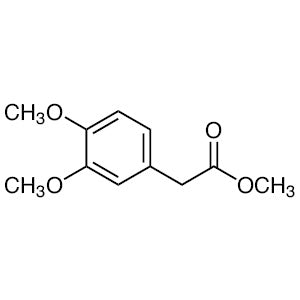
- TCI M3431 15964-79-1 Methyl 2-(3,4-Dimethoxyphenyl)acetate
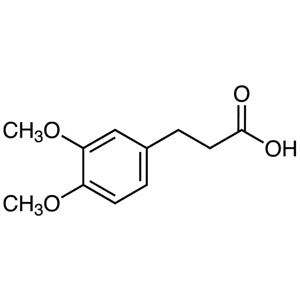
- TCI D1953 2107-70-2 3-(3,4-Dimethoxyphenyl)propionic Acid
- TCI C4117 1204-22-4 2-Chloro-1-(2,5-dimethoxyphenyl)ethan-1-one
- TCI A0228 123-86-4 Butyl Acetate [for Spectrophotometry]
- TCI A0045 108-05-4 Vinyl Acetate Monomer (stabilized with HQ)
- TCI A0044 109-60-4 Propyl Acetate
- Organic synthesis: This compound is ideal for creating complex organic molecules due to its reactivity and structural versatility.
- Esterification reactions: It serves as a key reagent in esterification processes, contributing to the formation of ester functional groups.
- Structural modification of aromatic compounds: Its ability to integrate aromatic rings with alkyl chains makes it useful in modifying molecular structures.
- Pharmacological research: It is widely used in drug development to synthesize bioactive compounds with potential therapeutic applications.
- Biochemical studies: It supports the synthesis of compounds used in biochemical assays and molecular interactions research.
| Brand | TCI |
|---|---|
| CAS number | 6512-32-9 |
| Molecular formula | — |
| Purity | — |
| Category | Chemistry > Building Blocks > Non-Heterocyclic Building Blocks |
| Pack sizes | Available in various quantities as per standard laboratory supply |
| Physical form | Liquid |
| Storage | Store in a cool, dry place away from direct sunlight |
Methyl (3,5-Dimethoxyphenyl)acetate should be stored in a cool, dry environment to maintain its chemical stability. It is recommended to keep the compound in a tightly sealed container to prevent exposure to moisture and air. Due to its reactive nature, it should be handled in a well-ventilated laboratory setting to minimize potential hazards. Suitable containers for storage include glass or high-density polyethylene vessels that are resistant to chemical degradation. General laboratory precautions include wearing appropriate personal protective equipment, such as gloves and goggles, when handling the compound. Proper labeling of storage containers is essential for safe and efficient laboratory management.
—
Produk Terkait
-
Methyl2-(3,4-Dimethoxyphenyl)acetate TCI M3431
Regular price From Rp 2.439.150,00Regular price -
3-(3,4-Dimethoxyphenyl)propionicAcid TCI D1953
Regular price From Rp 1.087.800,00Regular price -
2-Chloro-1-(2,5-dimethoxyphenyl)ethan-1-one TCI C4117
Regular price Rp 6.015.450,00Regular price -
ButylAcetate[forSpectrophotometry] TCI A0228
Regular price Rp 1.538.250,00Regular price -
VinylAcetateMonomer(stabilizedwithHQ) TCI A0045
Regular price Rp 477.750,00Regular price -
PropylAcetate TCI A0044
Regular price From Rp 477.750,00Regular price -
PhenylAcetate TCI A0043
Regular price Rp 452.550,00Regular price -
n-OctylAcetate TCI A0042
Regular price From Rp 505.050,00Regular price

![123-86-4 Butyl Acetate [for Spectrophotometry] - AMI Scientific](http://amiscientific.com/cdn/shop/files/TCI2510A0228.jpg?v=1767078302&width=533)


