

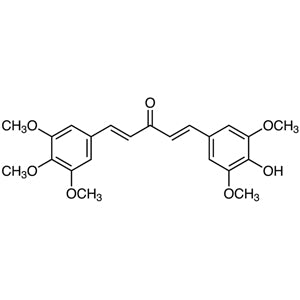
(1E,4E)-1-(4-Hydroxy-3,5-dimethoxyphenyl)-5-(3,4,5-trimethoxyphenyl)-1,4-pentadiene-3-one is a complex chemical compound widely used in pharmaceutical and biochemical research. This compound serves as a key reagent in experimental studies aimed at understanding the biological activity of various substances. Its structural complexity and functional groups make it a valuable tool for researchers seeking to explore molecular interactions and biological mechanisms. In laboratory settings, it is often employed to test the effects of compounds on cellular processes and to support the development of new therapeutic agents.
The compound’s molecular structure features multiple methoxy and hydroxy groups, which contribute to its reactivity and polarity. These properties enable it to interact effectively with biological targets such as proteins and enzymes, making it suitable for a wide range of experimental applications. Its chemical stability and solubility characteristics further enhance its utility in laboratory research. Researchers appreciate its versatility and the precision it offers in studying complex biochemical pathways and pharmacological responses.
In Indonesian laboratories, this compound is commonly used in pharmacology, biochemistry, and health sciences research. It plays a crucial role in studies related to anti-inflammatory, antitumor, and neuropharmacological effects. Its application in these fields highlights its importance as a research tool for advancing scientific understanding and innovation in drug development and biological research.
Advantages (TCI brochure)
- Enhanced Antitumor Activities
- Strong Multi-Target Inhibitory Activities
- Increased Bioavailability
- Improved Water Solubility
TCI brochures (PDF)
- Curcumin Analogue with Enhanced Antitumor Activities 2024-09-17 · p. 1
- Antimicrobials and Antitumor Agents for Research and Experimental Use 2025-04-24 · p. 18
- Pharmaceutical Ingredients for Research and Experimental Use 2026-03-09 · p. 19
Related TCI products
- TCI T4336 25173-72-2 3-(3,4,5-Trimethoxyphenyl)propanoic Acid
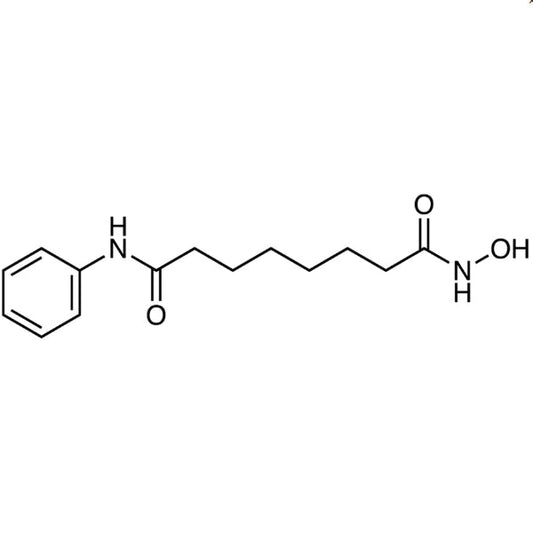
- TCI H1388 149647-78-9 N-Hydroxy-N'-phenyloctanediamide
- TCI H1340 1316652-41-1 N-Hydroxy-3-[1-(phenylthio)methyl-1H-1,2,3-triazol-4-yl]benzamide
- TCI P1841 504-60-9 1,3-Pentadiene (cis- and trans- mixture) (stabilized with TBC)
- TCI P0805 591-95-7 1,2-Pentadiene
- TCI P0650 1574-41-0 cis-1,3-Pentadiene (stabilized with TBC)
- Pharmaceutical research for the development of new therapeutic agents due to its potential biological activity and structural complexity.
- Biochemical studies to investigate molecular interactions with proteins and enzymes, supporting the understanding of biological mechanisms.
- Drug discovery initiatives aimed at identifying compounds with anti-inflammatory or antitumor properties through experimental testing.
- Neuropharmacological research to explore the effects of the compound on neurological processes and receptor interactions.
- Health sciences research focusing on the development of novel treatments for various diseases through experimental validation.
From the TCI brochure
- Antitumor research (myeloma cell growth)
- Tumor angiogenesis research (actin disorganization)
- Gastric cancer mouse model
| Brand | TCI |
|---|---|
| CAS number | 1217503-60-0 |
| Molecular formula | — |
| Purity | — |
| Category | Life Science > Biochemicals and Reagents > Pharmaceutical Research Reagents |
| Pack sizes | — |
| Physical form | — |
| Storage | Store in a cool, dry place away from light and moisture |
Data from the TCI brochure
| Water solubility | 1.07 mg/L |
|---|---|
| Water solubility (curcumin, pembanding) | 0.54 mg/L |
| Myeloma cell growth suppression vs curcumin | 7 to 12 times more effective |
| Multi-target inhibition (NF-κB, PI3K/AKT, JAK/STAT3, IRF4) vs curcumin | 6- to 15-fold stronger |
| IL-6 production inhibition vs curcumin | 14-fold more |
Source: TCI brochure PP007 (2024-09-17)
This compound should be stored in a cool, dry environment, away from direct light and moisture to maintain its chemical integrity. It is recommended to use airtight containers to prevent exposure to air and humidity, which could affect its stability. Laboratory personnel should handle the compound with care, using appropriate personal protective equipment such as gloves and safety goggles to minimize risk. Due to its complex structure and potential reactivity, it is important to follow standard laboratory safety protocols. Proper labeling and storage conditions are essential to ensure the compound remains suitable for experimental use. Regular monitoring of storage conditions is advised to maintain the quality and effectiveness of the reagent in research applications.
References cited in the TCI brochure
- Shunsuke Sugiyama. A Curcumin Analog, GO-Y078, Effectively Inhibits Angiogenesis through Actin Disorganization Anti-Cancer Agents in Medicinal Chemistry, 2016. doi:10.2174/1871520615666151013125559
- Chieko Kudo. Synthesis of 86 species of 1,5-diaryl-3-oxo-1,4-pentadienes analogs of curcumin can yield a good lead in vivo BMC Pharmacology, 2011. doi:10.1186/1471-2210-11-4
- Aki Kohyama. Structure-Activity Relationships of the Antitumor C5-Curcuminoid GO-Y030 Molecules, 2015. doi:10.3390/molecules200815374
Product Categories
Produk Terkait
-
3-(3,4,5-Trimethoxyphenyl)propanoicAcid TCI T4336
Regular price From Rp 1.776.600,00Regular price -
N-Hydroxy-N'-phenyloctanediamide TCI H1388
Regular price Rp 3.896.550,00Regular price -
N-Hydroxy-3-[1-(phenylthio)methyl-1H-1,2,3-triazol-4-yl]benzamide TCI H1340
Regular price Rp 6.148.800,00Regular price -
1,3-Pentadiene(cis-andtrans-mixture)(stabilizedwithTBC) TCI P1841
Regular price Rp 10.229.100,00Regular price -
1,2-Pentadiene TCI P0805
Regular price From Rp 8.453.550,00Regular price -
cis-1,3-Pentadiene(stabilizedwithTBC) TCI P0650
Regular price From Rp 5.962.950,00Regular price -
trans-1,3-Pentadiene(stabilizedwithTBC) TCI P0647
Regular price From Rp 1.829.100,00Regular price -
1,4-Pentadiene TCI P0038
Regular price From Rp 5.327.700,00Regular price


![1316652-41-1 N-Hydroxy-3-[1-(phenylthio)methyl-1H-1,2,3-triazol-4-yl]benzamide - AMI Scientific](http://amiscientific.com/cdn/shop/files/TCI2510H1340.jpg?v=1769142603&width=533)


