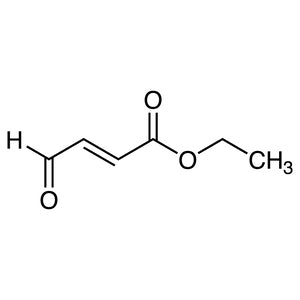
Ethyl But-3-enoate is a beta,gamma-unsaturated ester carrying a terminal double bond on a four-carbon chain, supplied by TCI in a form stabilized with MEHQ. The compound is a non-heterocyclic building block of considerable utility because it combines two complementary reactive elements within one small molecule: an ester group that is readily transformed into other functionalities, and a terminal alkene that is open to a wide range of addition and coupling reactions. In the laboratory, it is used to introduce a functionalized allyl fragment into target molecules, both in the synthesis of bioactive compounds and in the development of new reaction methodology.
The property that makes this compound a preferred choice is the placement of its double bond, which is not conjugated with the carbonyl. Because the alkene sits at the beta,gamma position, it retains electron-rich character and remains reactive toward olefin metathesis, hydroformylation, epoxidation, hydroboration, and Heck-type cross-coupling. At the same time, the alpha position adjacent to the carbonyl is weakly acidic and can be deprotonated to form a dienolate, opening a second and independent mode of bond construction. This system is also known to isomerize readily to the conjugated isomer under basic conditions, a behaviour that can be exploited deliberately or suppressed by careful choice of conditions. The presence of MEHQ as an inhibitor keeps the terminal olefin from polymerizing during storage and handling.
In Indonesian laboratories, this ester is typically found in university and institutional synthetic organic chemistry groups, in pharmaceutical and agrochemical research units, and in laboratories developing catalytic methodology. It is drawn on when a short, bifunctional allylic ester is needed as a starting point for chain elongation or ring formation, and it suits teaching and research settings where a single reagent must support several different transformations rather than one narrow application.
- Olefin metathesis substrate: the unhindered terminal alkene engages readily in cross and ring-closing metathesis, allowing the ester-bearing chain to be joined to another olefin partner cleanly.
- Heck-type cross-coupling: the electron-rich, non-conjugated double bond couples with aryl and vinyl halides, giving a direct route to arylated unsaturated esters for medicinal chemistry programmes.
- Hydroformylation and hydroboration studies: the terminal olefin offers a single, well-defined reaction site for adding a carbon or boron unit at the chain end under catalytic control.
- Dienolate chemistry: deprotonation at the weakly acidic alpha position generates a dienolate that can be alkylated or added to electrophiles, extending the carbon skeleton in a second direction.
- Epoxidation and downstream functionalization: oxidation of the terminal alkene produces an epoxide that can be opened by nucleophiles, converting the building block into more elaborate oxygenated fragments.
| Brand | TCI (Tokyo Chemical Industry) |
|---|---|
| CAS number | 1617-18-1 |
| Molecular formula | — |
| Purity | — |
| Category | Chemistry > Building Blocks > Non-Heterocyclic Building Blocks |
| Pack sizes | available in the standard research-scale catalogue packs offered by TCI; please confirm the required size when ordering |
| Physical form | — |
| Storage | keep in a cool, dark place in a tightly closed container, following the manufacturer's stated storage conditions on the label |
- Stabilizer: stabilized with MEHQ to inhibit polymerization of the terminal olefin
Store the container tightly closed in a cool, dark, well-ventilated place away from heat, ignition sources, and oxidizing agents, and keep it upright in its original manufacturer packaging or in a compatible amber glass bottle with a chemically resistant closure. Do not remove or dilute the MEHQ stabilizer unnecessarily, since the terminal olefin relies on it to resist polymerization during storage. Handle the material inside a fume hood while wearing safety glasses, nitrile gloves, and a laboratory coat, avoiding inhalation of vapour and contact with skin and eyes. Reseal promptly after dispensing to limit evaporation and air exposure, label any secondary containers clearly, and consult the manufacturer's safety data sheet before first use and for spill and disposal procedures.
—
Produk Terkait
-
MethylPent-4-enoate TCI M3829
Regular price From Rp 2.359.350,00Regular price -
MethylBut-3-enoate TCI M3405
Regular price From Rp 2.625.000,00Regular price -
Ethyl(E)-4-Oxobut-2-enoate TCI E1576
Regular price From Rp 980.700,00Regular price -
EthylHex-3-enoate TCI E0797
Regular price From Rp 2.068.500,00Regular price