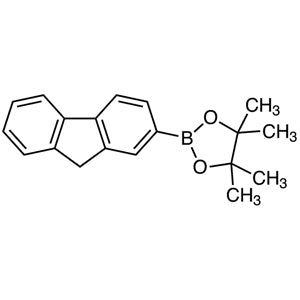
2-(9H-Fluoren-2-yl)-4,4,5,5-tetramethyl-1,3,2-dioxaborolane is an organoboron compound widely used in chemical laboratories for its versatile reactivity in organic synthesis. This compound plays a crucial role in facilitating carbon-carbon bond formation, particularly in coupling reactions such as the Suzuki-Miyaura reaction. Its unique molecular structure allows it to act as a key reagent in the development of complex organic molecules, making it indispensable in modern synthetic chemistry. Due to its stability and reactivity, it is frequently employed in research settings where precise chemical transformations are required.
The compound’s organoboron nature contributes to its effectiveness in various synthetic pathways. Its dioxaborolane framework provides both structural stability and reactivity, enabling it to participate in a range of organometallic reactions. The presence of the fluorene group enhances its compatibility with aromatic halides, making it a preferred choice for coupling reactions. Additionally, its non-toxic profile and ease of degradation under certain conditions make it a safe and reliable option for laboratory use. These properties collectively ensure its widespread application in both academic and industrial research environments.
In Indonesian laboratories, this compound is commonly used in organic chemistry research, particularly in universities and research institutions. Its role in synthetic processes has made it a standard reagent in the development of new chemical compounds. The compound’s reliability and effectiveness have led to its adoption in various experimental setups, supporting the advancement of chemical research in Indonesia. Its availability and performance make it a preferred choice for researchers working on complex molecular synthesis.
TCI brochures (PDF)
- Suzuki-Miyaura Cross Coupling Reaction 2025-12-01 · p. 19
- Boron Compounds 2025-10-07 · p. 17
- Building Blocks for Organic Semiconductor 2026-03-24 · p. 15
Related TCI products
- TCI S0994 1161009-89-7 2-(9,9'-Spirobi[fluoren]-4-yl)-4,4,5,5-tetramethyl-1,3,2-dioxaborolane
- TCI S0980 884336-44-1 2-(9,9'-Spirobi[fluoren]-7-yl)-4,4,5,5-tetramethyl-1,3,2-dioxaborolane
- TCI P2562 1346007-05-3 2-(9,9'-Spirobi[fluoren]-3-yl)-4,4,5,5-tetramethyl-1,3,2-dioxaborolane
- TCI D5800 1005771-03-8 2-[3-(9,9-Dimethyl-9H-fluoren-2-yl)phenyl]-4,4,5,5-tetramethyl-1,3,2-dioxaborolane
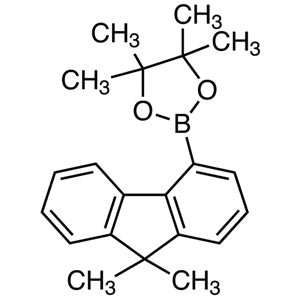
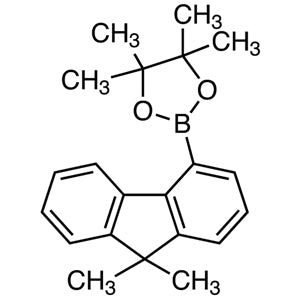
- TCI D5408 1365692-79-0 2-(9,9-Dimethyl-9H-fluoren-4-yl)-4,4,5,5-tetramethyl-1,3,2-dioxaborolane
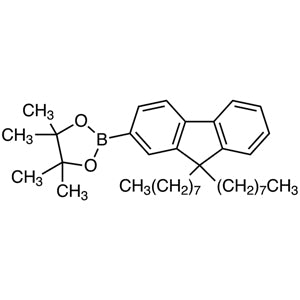
- TCI D5371 302554-81-0 2-(9,9-Di-n-octyl-9H-fluoren-2-yl)-4,4,5,5-tetramethyl-1,3,2-dioxaborolane
- Suzuki-Miyaura Coupling: This compound is ideal for coupling aromatic halides with boronic acids, enabling efficient carbon-carbon bond formation in organic synthesis.
- Organic Synthesis Reactions: Its reactivity and stability make it a valuable reagent in the synthesis of complex organic molecules, supporting a wide range of chemical transformations.
- Research and Development Projects: It is frequently used in R&D initiatives where precise and controlled chemical reactions are necessary for developing new compounds.
- Academic Teaching Laboratories: Its role in synthetic chemistry makes it a common reagent in educational settings for teaching advanced organic reaction mechanisms.
- Industrial Chemical Processes: Its reliability and performance in coupling reactions make it suitable for use in industrial applications requiring high chemical yield and efficiency.
| Brand | TCI |
|---|---|
| CAS number | 922706-40-9 |
| Molecular formula | — |
| Purity | — |
| Category | Chemistry > Organometallic Reagents > Organoboron [Organometallic Reagents] |
| Pack sizes | Available in various quantities as per supplier specifications |
| Physical form | Solid or liquid, depending on formulation |
| Storage | Store in a cool, dry place away from moisture and direct sunlight |
This compound should be stored in a cool, dry environment to maintain its stability and reactivity. It is recommended to use airtight containers to prevent exposure to moisture, which can affect its chemical integrity. Due to its organoboron nature, it should be handled with care to avoid any potential reactions with incompatible substances. In laboratory settings, it is advisable to store it in a well-ventilated area and ensure that it is kept away from heat sources. Proper labeling and storage practices are essential to ensure safe handling and prevent accidental contamination. Always follow standard laboratory safety protocols when working with this compound to ensure a safe and efficient research environment.
—
Produk Terkait
-
2-(9,9'-Spirobi[fluoren]-4-yl)-4,4,5,5-tetramethyl-1,3,2-dioxaborolane TCI S0994
Regular price From Rp 1.724.100,00Regular price -
2-(9,9'-Spirobi[fluoren]-7-yl)-4,4,5,5-tetramethyl-1,3,2-dioxaborolane TCI S0980
Regular price Rp 1.961.400,00Regular price -
2-(9,9'-Spirobi[fluoren]-3-yl)-4,4,5,5-tetramethyl-1,3,2-dioxaborolane TCI P2562
Regular price From Rp 1.988.700,00Regular price -
2-[3-(9,9-Dimethyl-9H-fluoren-2-yl)phenyl]-4,4,5,5-tetramethyl-1,3,2-dioxaborolane TCI D5800
Regular price From Rp 1.565.550,00Regular price -
2-(9,9-Dimethyl-9H-fluoren-4-yl)-4,4,5,5-tetramethyl-1,3,2-dioxaborolane TCI D5408
Regular price From Rp 2.386.650,00Regular price -
2-(9,9-Di-n-octyl-9H-fluoren-2-yl)-4,4,5,5-tetramethyl-1,3,2-dioxaborolane TCI D5371
Regular price Rp 3.525.900,00Regular price -
2-(9,9-Diphenyl-9H-fluoren-4-yl)-4,4,5,5-tetramethyl-1,3,2-dioxaborolane TCI D5033
Regular price From Rp 1.749.300,00Regular price -
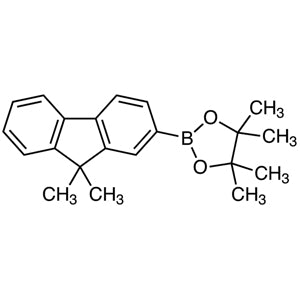
2-(9,9-Dimethyl-9H-fluoren-2-yl)-4,4,5,5-tetramethyl-1,3,2-dioxaborolane TCI D5018
Regular price From Rp 1.565.550,00Regular price
![1161009-89-7 2-(9,9'-Spirobi[fluoren]-4-yl)-4,4,5,5-tetramethyl-1,3,2-dioxaborolane - AMI Scientific](http://amiscientific.com/cdn/shop/files/TCI2510S0994.jpg?v=1769181254&width=533)
![884336-44-1 2-(9,9'-Spirobi[fluoren]-7-yl)-4,4,5,5-tetramethyl-1,3,2-dioxaborolane - AMI Scientific](http://amiscientific.com/cdn/shop/files/TCI2510S0980.jpg?v=1768206304&width=533)
![1346007-05-3 2-(9,9'-Spirobi[fluoren]-3-yl)-4,4,5,5-tetramethyl-1,3,2-dioxaborolane - AMI Scientific](http://amiscientific.com/cdn/shop/files/TCI2510P2562.jpg?v=1769143372&width=533)
![2-[3-(9,9-Dimethyl-9H-fluoren-2-yl)phenyl]-4,4,5,5-tetramethyl-1,3,2-dioxaborolane (CAS 1005771-03-8) - TCI D5800 - AMI Scientific](http://amiscientific.com/cdn/shop/files/TCI2510D5800.jpg?v=1769142139&width=533)