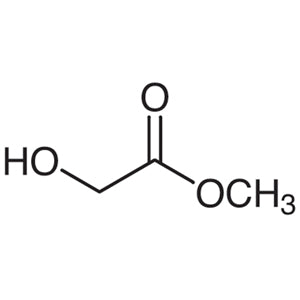
Methyl Glycolate is the methyl ester of glycolic acid, a compact molecule that carries both an ester group and a free hydroxyl group within a single small framework. In the laboratory it serves as a non-heterocyclic building block, allowing researchers to introduce a doubly functionalised two-carbon fragment into the skeleton of a target molecule. Because the carboxyl function is already present in esterified form, the compound offers more controlled reactivity than the free acid, while avoiding the acidity problems that frequently disturb base-sensitive reactions.
The properties that make it a widely chosen reagent begin with its liquid state at room temperature, which makes it easy to pipette and to measure volumetrically, together with its good solubility in polar organic solvents as well as in water. The ester group can be hydrolysed, transesterified, reduced to the corresponding alcohol, or converted into an amide through aminolysis, while the hydroxyl group is ready to be protected, oxidised, or used as a grafting point. These two reactivity pathways can be carried out sequentially, giving the synthetic chemist the freedom to design an efficient step order without requiring many additional protecting groups.
Indonesian laboratories draw on this compound in the same way as any versatile small building block: as a starting point for multi-step synthesis in university research groups, in chemistry and pharmacy teaching laboratories, and in industrial R&D units that prepare intermediates and reference materials. Its liquid form and predictable handling suit laboratories that work at bench scale, where accurate volumetric dispensing and straightforward solvent compatibility are more practical than handling a solid free acid.
- Multi-step organic synthesis — it contributes a two-carbon fragment that already carries two orthogonal handles, so the ester and hydroxyl groups can be elaborated in sequence within a planned route.
- Preparation of amide derivatives — aminolysis of the ester gives access to glycolamide-type structures without a separate activation step, which shortens routes that would otherwise start from the free acid.
- Protecting-group strategy development — the free hydroxyl can be selectively protected while the ester is left intact, making the molecule a convenient substrate for testing and comparing protection schemes.
- Reduction and functional group interconversion studies — the ester can be reduced to the corresponding alcohol or transesterified, so the compound serves as a compact model substrate for teaching and method work.
- Grafting and derivatisation chemistry — the hydroxyl group acts as an attachment point for linking the glycolate fragment onto larger scaffolds, supports, or molecules under development.
| Brand | TCI |
|---|---|
| CAS number | 96-35-5 |
| Molecular formula | — |
| Purity | — |
| Category | Chemistry > Building Blocks > Non-Heterocyclic Building Blocks |
| Pack sizes | available in standard TCI laboratory packaging; please confirm the pack size when ordering |
| Physical form | liquid at room temperature |
| Storage | keep in a tightly closed container in a cool, dry, well-ventilated place |
- Catalogue code: G0199
Store Methyl Glycolate in its original tightly closed container, in a cool, dry and well-ventilated area away from direct sunlight, heat sources and ignition sources. Because the material is a liquid, chemically resistant glass bottles with a well-sealing cap are the usual choice, and containers should be kept upright and clearly labelled. Keep the bottle closed when not in use to limit exposure to moisture and vapour loss. Handle in a fume hood, wear safety glasses, gloves and a laboratory coat, and avoid contact with skin and eyes as well as inhalation of vapour. Transfer and dispense volumetrically using clean, dry glassware, and separate the material from strong bases, strong acids and strong oxidising agents during storage. Always consult the manufacturer's safety data sheet before use and dispose of residues through the laboratory's chemical waste route.
—
Produk Terkait
-
tert-ButylGlycolate TCI B5353
Regular price Rp 1.724.100,00Regular price -
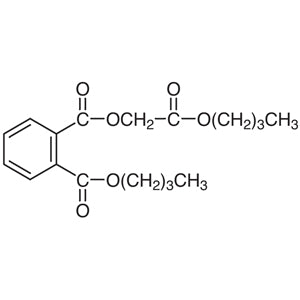
ButylPhthalylButylGlycolate TCI B0737
Regular price From Rp 769.650,00Regular price -
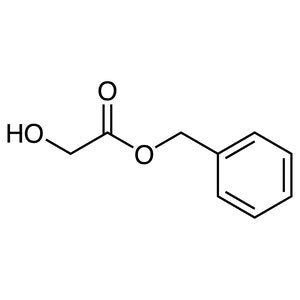
BenzylGlycolate TCI P2927
Regular price From Rp 2.016.000,00Regular price -
EthylGlycolate TCI G0242
Regular price From Rp 1.724.100,00Regular price -
CalciumGlycolate TCI G0200
Regular price Rp 2.094.750,00Regular price -
SodiumGlycolate TCI G0111
Regular price From Rp 903.000,00Regular price -
EthylPhthalylEthylGlycolate TCI E0164
Regular price From Rp 769.650,00Regular price