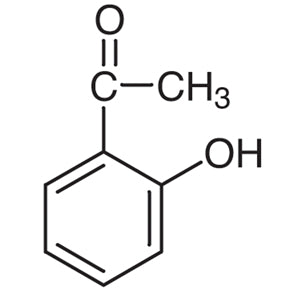
TCI H0192 2'-Hydroxyacetophenone is an aromatic ketone bearing a hydroxyl group in the ortho position relative to the acetyl group, an arrangement that makes it one of the most valuable building blocks in the synthesis of oxygen heterocyclic compounds. In the organic chemistry laboratory, this compound is a classic starting material for the preparation of chromones, flavones, and coumarins through routes such as the Baker–Venkataraman rearrangement and related condensation reactions. The combination of neighbouring phenolic and carbonyl groups also makes it an excellent precursor for Schiff base ligands widely used in coordination chemistry research and transition metal catalyst development.
The property that drives its selection is the strong intramolecular hydrogen bond formed between the hydroxyl group and the carbonyl group, which confers a characteristic stability while directing the reactivity of both functional groups in a controlled manner. The compound is generally a pale yellow liquid to solid at room temperature with a distinctive aromatic odour, dissolving readily in organic solvents such as ethanol, methanol, and dichloromethane, while showing limited solubility in water. The TCI grade delivers lot-to-lot consistency that matters greatly in multi-step synthesis, where variation in the starting material propagates through every subsequent stage of the route.
In Indonesian laboratories, this building block is typically found in university organic synthesis groups, natural product chemistry laboratories working on flavonoid and coumarin scaffolds, and coordination chemistry research groups preparing metal complexes. It also serves teaching laboratories that demonstrate classical named reactions and rearrangements to advanced undergraduate and postgraduate students, as well as research institutions developing new ligand systems where a reliable, well characterised ortho-hydroxy aryl ketone is required as the entry point to a synthetic sequence.
Related TCI products
- TCI A0104 121-71-1 3'-Hydroxyacetophenone
- TCI T1888 480-66-0 2',4',6'-Trihydroxyacetophenone Monohydrate
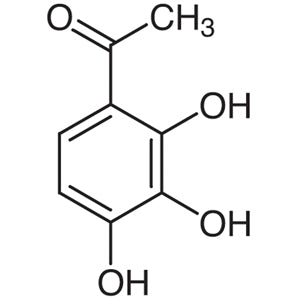
- TCI T1198 528-21-2 2',3',4'-Trihydroxyacetophenone
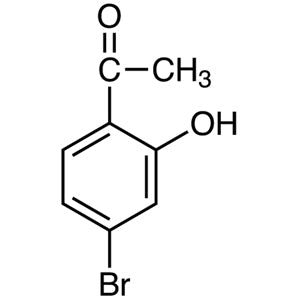
- TCI B5382 30186-18-6 4'-Bromo-2'-hydroxyacetophenone
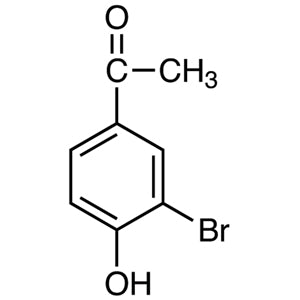
- TCI B5158 1836-06-2 3'-Bromo-4'-hydroxyacetophenone
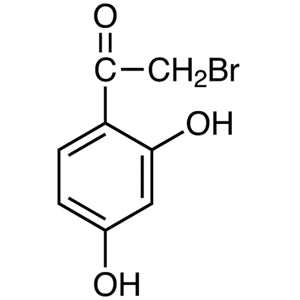
- TCI B4767 2491-39-6 2-Bromo-2',4'-dihydroxyacetophenone
- Chromone and flavone synthesis: the ortho-hydroxy acetophenone framework provides exactly the carbon skeleton and oxygen placement needed to close the benzopyranone ring system efficiently.
- Baker–Venkataraman rearrangement studies: the adjacent phenolic and acetyl groups undergo the ester-to-diketone migration that defines this classical route toward 1,3-diketone intermediates.
- Coumarin preparation: the compound serves as a well established starting material for condensation routes leading to coumarin scaffolds studied in natural product and fluorescent probe chemistry.
- Schiff base ligand synthesis: condensation of the carbonyl group with primary amines yields chelating ligands whose phenolic oxygen binds strongly to transition metal centres.
- Coordination chemistry and catalyst development: ligands derived from this precursor support metal complexes investigated as homogeneous catalysts and as models for structural and spectroscopic studies.
| Brand | TCI (Tokyo Chemical Industry) |
|---|---|
| CAS number | 118-93-4 |
| Molecular formula | — |
| Purity | — |
| Category | Chemistry > Building Blocks > Non-Heterocyclic Building Blocks |
| Pack sizes | available in standard TCI research and laboratory pack sizes; please confirm the size required when ordering |
| Physical form | pale yellow liquid to solid at room temperature with a characteristic aromatic odour |
| Storage | keep in a tightly closed container in a cool, dark, well ventilated place |
Store the container tightly closed in a cool, dark, and well ventilated area, away from heat sources, direct sunlight, and incompatible materials such as strong oxidising agents. Keep the material in its original supplier container or in a compatible amber glass bottle that limits light exposure and prevents moisture ingress. Handle inside a fume hood, since the compound carries a distinctive aromatic odour, and wear appropriate personal protective equipment including safety goggles, chemical resistant gloves, and a laboratory coat. Close the container immediately after weighing or transferring to preserve lot integrity and to avoid contamination, and always consult the manufacturer safety data sheet before first use.
—
Produk Terkait
-
3'-Hydroxyacetophenone TCI A0104
Regular price From Rp 1.060.500,00Regular price -
2',4',6'-TrihydroxyacetophenoneMonohydrate TCI T1888
Regular price From Rp 1.193.850,00Regular price -
2',3',4'-Trihydroxyacetophenone TCI T1198
Regular price From Rp 1.167.600,00Regular price -
4'-Bromo-2'-hydroxyacetophenone TCI B5382
Regular price From Rp 823.200,00Regular price -
3'-Bromo-4'-hydroxyacetophenone TCI B5158
Regular price Rp 2.862.300,00Regular price -
2-Bromo-2',4'-dihydroxyacetophenone TCI B4767
Regular price Rp 1.405.950,00Regular price -
2-Bromo-2'-hydroxyacetophenone TCI B4735
Regular price From Rp 1.565.550,00Regular price -
2-Bromo-4'-hydroxyacetophenone TCI B4115
Regular price From Rp 823.200,00Regular price