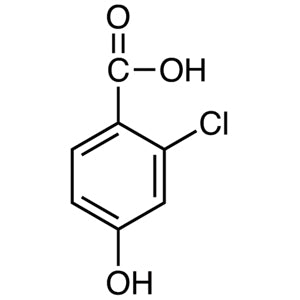
TCI H0207 4-Hydroxybenzoic Acid is the para isomer of hydroxybenzoic acid and ranks among the most widely recognised aromatic compounds in applied organic chemistry. Its molecule carries a carboxylic acid group and a phenolic hydroxyl group positioned directly opposite one another on the benzene ring, an arrangement that makes it the parent skeleton of the ester family known broadly as the parabens. In the laboratory, this compound serves as a primary building block for the synthesis of phenolic esters and equally as a comparison material in the analysis of its own derivatives.
The characteristics that account for its widespread use are its high stability, the availability of two functional groups whose reactivities can be clearly differentiated, and an esterification pattern that is already thoroughly established at the procedural level. The carboxylic acid group can be esterified with a range of alcohols to produce a homologous series of derivatives with differing chain lengths, while the para hydroxyl group remains available for further modification whenever a subsequent step requires it. This combination gives synthetic chemists a predictable and well-documented starting point.
The para symmetry of the molecule also renders its spectroscopic data simple and straightforward to interpret, which is why the compound appears so frequently as a teaching example in the interpretation of infrared and nuclear magnetic resonance spectra. Within Indonesian laboratories, this makes it a familiar item on both research and teaching benches, used in university organic chemistry courses, in preparative synthesis work, and as a reference material supporting the analysis of related phenolic compounds.
Related TCI products
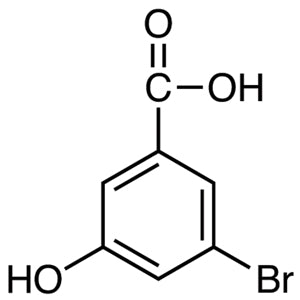
- TCI B4740 140472-69-1 3-Bromo-5-hydroxybenzoic Acid
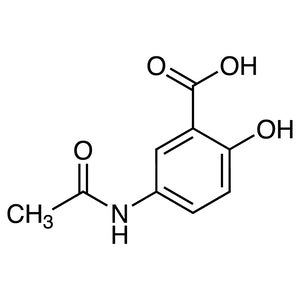
- TCI A3540 51-59-2 5-Acetamido-2-hydroxybenzoic Acid
- TCI H0205 99-06-9 3-Hydroxybenzoic Acid
- TCI D2381 1421-49-4 3,5-Di-tert-butyl-4-hydroxybenzoic Acid
- TCI D0373 3336-41-2 3,5-Dichloro-4-hydroxybenzoic Acid
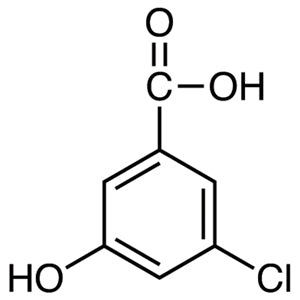
- TCI C3183 53984-36-4 3-Chloro-5-hydroxybenzoic Acid
- Synthesis of phenolic esters, where the carboxylic acid group reacts with a range of alcohols through esterification procedures that are already well established and reproducible.
- Preparation of paraben-type derivative series, since this compound forms the parent skeleton from which esters of differing alkyl chain lengths are systematically constructed.
- Reference material for the analysis of derivative compounds, providing a known comparison point when identifying or confirming products obtained from synthetic work.
- Teaching example in infrared and nuclear magnetic resonance spectrum interpretation, because the para substitution pattern produces simple, symmetrical spectral data that students can readily assign.
- Selective functional group chemistry exercises, where the differing reactivity of the carboxylic acid and the phenolic hydroxyl allows one site to be modified while the other is preserved.
| Brand | TCI |
|---|---|
| CAS number | 99-96-7 |
| Molecular formula | — |
| Purity | — |
| Category | Chemistry > Building Blocks > Non-Heterocyclic Building Blocks |
| Pack sizes | available in the standard catalogue pack sizes offered by TCI for this item; please confirm the size required when ordering. |
| Physical form | — |
| Storage | keep in a tightly closed container in a cool, dry place away from direct sunlight. |
- Product code: H0207
Store the container tightly closed in a cool, dry and well-ventilated area, protected from direct sunlight and from sources of heat or ignition. The original manufacturer's packaging is the most suitable container; where transfer is necessary, use clean, dry glass or chemically compatible bottles with secure closures and clear labelling that records the compound name, CAS number and date of opening. Handle the material in a fume hood or a well-ventilated work area, and wear standard laboratory personal protective equipment including safety goggles, gloves and a laboratory coat. Avoid generating and inhaling dust when weighing out the solid, keep the container closed when not in active use to limit moisture uptake, and clean up any spilled material promptly. Always consult the manufacturer's safety data sheet before first use.
—
Product Categories
Produk Terkait
-
3-Bromo-5-hydroxybenzoicAcid TCI B4740
Regular price From Rp 584.850,00Regular price -
5-Acetamido-2-hydroxybenzoicAcid TCI A3540
Regular price Rp 4.559.100,00Regular price -
3-HydroxybenzoicAcid TCI H0205
Regular price From Rp 955.500,00Regular price -
3,5-Di-tert-butyl-4-hydroxybenzoicAcid TCI D2381
Regular price From Rp 1.696.800,00Regular price -
3,5-Dichloro-4-hydroxybenzoicAcid TCI D0373
Regular price From Rp 848.400,00Regular price -
3-Chloro-5-hydroxybenzoicAcid TCI C3183
Regular price From Rp 2.757.300,00Regular price -
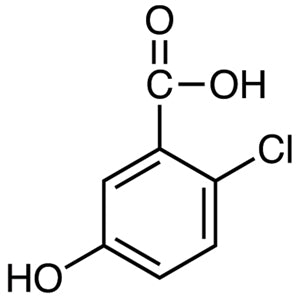
2-Chloro-5-hydroxybenzoicAcid TCI C2724
Regular price Rp 1.670.550,00Regular price -
2-Chloro-4-hydroxybenzoicAcid TCI C2349
Regular price From Rp 2.704.800,00Regular price