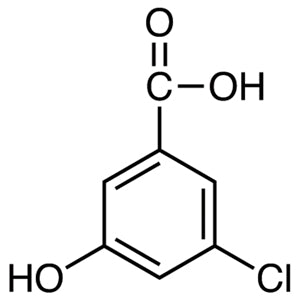
3-Chloro-5-hydroxybenzoic Acid is a versatile organic compound widely used in laboratory settings for synthetic reactions. It serves as a fundamental building block in the development of complex molecules, particularly those requiring aromatic structures with halogen and hydroxyl substituents. This compound is essential for researchers in various fields, including pharmaceuticals, materials science, and organic chemistry, due to its structural simplicity and reactivity. Its role as a starting material in the synthesis of more complex compounds makes it a valuable asset in modern chemical research.
The compound's stability and controlled reactivity make it a preferred choice for chemical synthesis. It readily reacts with a variety of reagents such as bases, acids, and organic solvents, enabling the formation of diverse derivatives. Its ability to participate in multiple reaction pathways, including esterification, amidation, and substitution, enhances its utility in laboratory applications. These chemical properties make it a reliable and adaptable reagent for both small-scale and intermediate-scale experiments.
In Indonesian laboratories, 3-Chloro-5-hydroxybenzoic Acid is commonly used in organic synthesis research, particularly in academic and research institutions. Its availability in various packaging sizes ensures convenience for both routine and specialized experiments. The compound's well-defined properties and consistent quality make it a trusted material for chemical studies and the development of new compounds.
Related TCI products
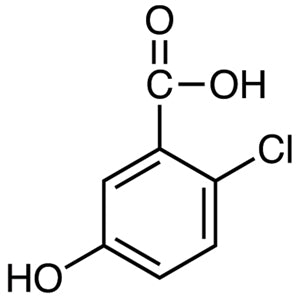
- TCI C2724 56961-30-9 2-Chloro-5-hydroxybenzoic Acid
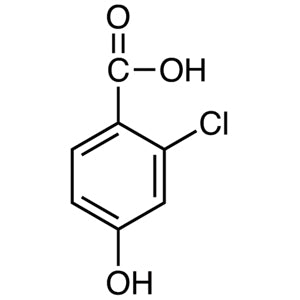
- TCI C2349 56363-84-9 2-Chloro-4-hydroxybenzoic Acid
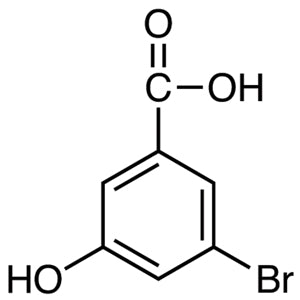
- TCI B4740 140472-69-1 3-Bromo-5-hydroxybenzoic Acid
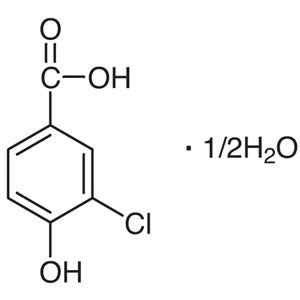
- TCI C1128 3964-58-7 3-Chloro-4-hydroxybenzoic Acid Hemihydrate
- TCI M3513 3964-57-6 Methyl 3-Chloro-4-hydroxybenzoate
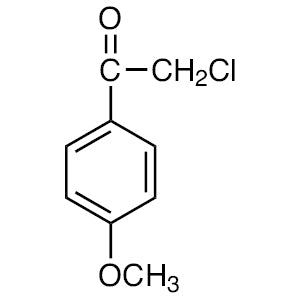
- TCI M3268 2196-99-8 2-Chloro-1-(4-methoxyphenyl)ethanone
- Organic synthesis of pharmaceutical compounds due to its aromatic structure and halogen substitution, allowing for the creation of complex drug molecules.
- Development of functional materials through chemical modifications that leverage its hydroxyl and chlorine groups for tailored properties.
- Research in medicinal chemistry where its reactivity supports the synthesis of bioactive compounds with therapeutic potential.
- Educational use in undergraduate and graduate chemistry courses to teach fundamental synthetic techniques and reaction mechanisms.
- Industrial-scale chemical processes requiring reliable and consistent building blocks for large-scale production of specialty chemicals.
| Brand | TCI |
|---|---|
| CAS number | 53984-36-4 |
| Molecular formula | — |
| Purity | — |
| Category | Chemistry > Building Blocks > Non-Heterocyclic Building Blocks |
| Pack sizes | Available in various sizes to suit different experimental needs |
| Physical form | Solid |
| Storage | Store in a cool, dry place away from moisture and direct sunlight |
This compound should be stored in a cool, dry environment to maintain its chemical stability. It is recommended to keep it in a sealed container to prevent exposure to moisture and air, which could affect its reactivity. Due to its potential reactivity with moisture, it is advisable to use appropriate safety measures when handling. Always ensure that the storage area is well-ventilated and free from incompatible substances. Proper labeling and storage conditions help maintain the integrity of the compound during experimentation and research.
—
Produk Terkait
-
2-Chloro-5-hydroxybenzoicAcid TCI C2724
Regular price Rp 1.670.550,00Regular price -
2-Chloro-4-hydroxybenzoicAcid TCI C2349
Regular price From Rp 2.704.800,00Regular price -
3-Bromo-5-hydroxybenzoicAcid TCI B4740
Regular price From Rp 584.850,00Regular price -
3-Chloro-4-hydroxybenzoicAcidHemihydrate TCI C1128
Regular price From Rp 2.332.050,00Regular price -
Methyl3-Chloro-4-hydroxybenzoate TCI M3513
Regular price From Rp 1.458.450,00Regular price -
2-Chloro-1-(4-methoxyphenyl)ethanone TCI M3268
Regular price From Rp 2.730.000,00Regular price -
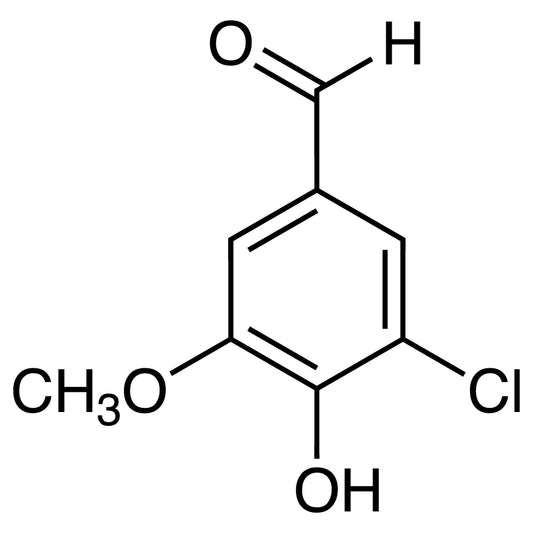
3-Chloro-4-hydroxy-5-methoxybenzaldehyde TCI C3987
Regular price From Rp 955.500,00Regular price -
2-Chloro-4-hydroxybenzaldehyde TCI C3873
Regular price From Rp 1.961.400,00Regular price