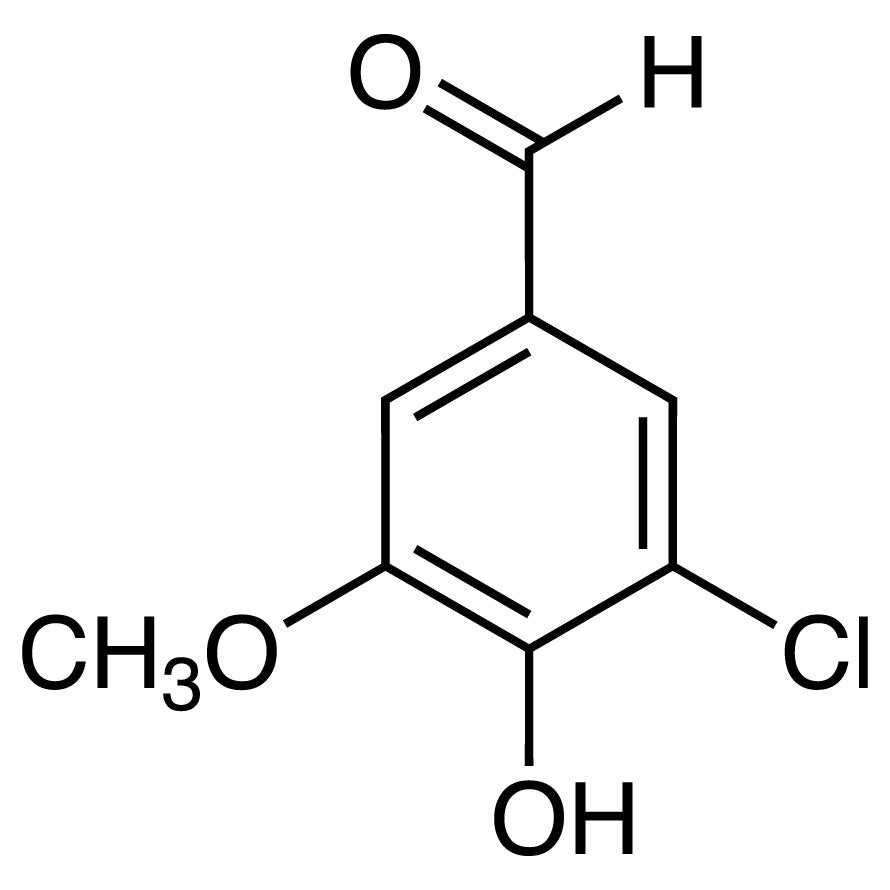
3-Chloro-4-hydroxy-5-methoxybenzaldehyde is a chemical compound widely used as a building block in the synthesis of complex molecules. This versatile reagent plays a crucial role in organic chemistry, particularly in the formation of aromatic and heterocyclic compounds. Its structural features make it an essential component in the development of pharmaceuticals and industrial chemicals. As a non-heterocyclic building block, it is frequently utilized in research settings to create more complex molecular structures.
The compound is known for its high reactivity, primarily due to the presence of an aldehyde group, hydroxyl group, and methoxy group. These functional groups enable it to participate in various chemical reactions such as substitution, reduction, and condensation. Its stability and reactivity make it a preferred choice for chemists working in both academic and industrial laboratories. The compound’s ability to undergo multiple reaction pathways enhances its utility in synthetic chemistry.
In Indonesian laboratories, 3-Chloro-4-hydroxy-5-methoxybenzaldehyde is commonly used for scientific research, pharmaceutical development, and chemical testing. It is a key reagent in the synthesis of aromatic compounds, supporting both educational and research activities. Many research institutions and universities in Indonesia rely on this compound for their chemical studies and experimental work. Its availability and reliability make it a valuable resource for laboratory operations.
Related TCI products
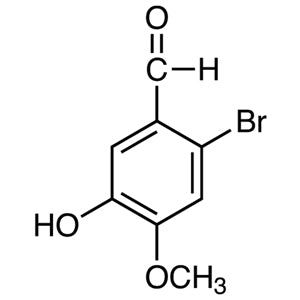
- TCI B4681 2973-59-3 2-Bromo-5-hydroxy-4-methoxybenzaldehyde
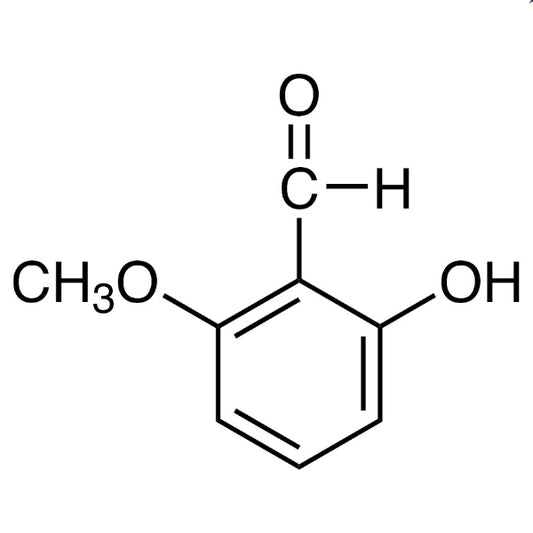
- TCI H1796 700-44-7 2-Hydroxy-6-methoxybenzaldehyde
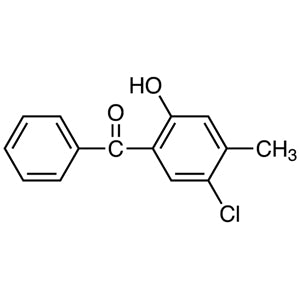
- TCI C3260 68751-90-6 5-Chloro-2-hydroxy-4-methylbenzophenone
- TCI C2103 92-78-4 4'-Chloro-3-hydroxy-2-naphthanilide
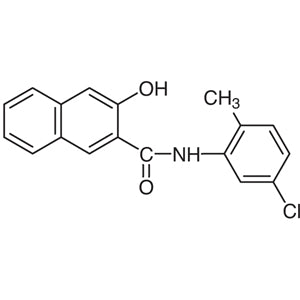
- TCI C2102 135-63-7 5'-Chloro-3-hydroxy-2'-methyl-2-naphthanilide
- TCI C2101 92-72-8 5'-Chloro-3-hydroxy-2',4'-dimethoxy-2-naphthanilide
- Synthesis of complex aromatic compounds for pharmaceutical development due to its reactive functional groups and structural versatility.
- Development of industrial chemicals through its participation in substitution and condensation reactions in organic synthesis.
- Educational use in chemistry courses to demonstrate the properties and reactivity of aromatic building blocks.
- Research applications in medicinal chemistry for the creation of novel drug molecules with specific functional groups.
- Testing of chemical reactivity in laboratory experiments to study reaction mechanisms and synthetic pathways.
| Brand | TCI |
|---|---|
| CAS number | 19463-48-0 |
| Molecular formula | — |
| Purity | — |
| Category | Chemistry > Building Blocks > Non-Heterocyclic Building Blocks |
| Pack sizes | Available in various quantities as per supplier specifications |
| Physical form | Solid or liquid depending on the specific product variant |
| Storage | Store in a cool, dry place away from light and incompatible substances |
This compound should be stored in a cool, dry environment, away from direct sunlight and sources of heat. It is recommended to keep it in a tightly sealed container to prevent moisture absorption and contamination. Due to its reactivity, it should be handled in a well-ventilated area, ideally with appropriate personal protective equipment. Avoid contact with incompatible materials such as strong oxidizers or acids. Regular monitoring of storage conditions is essential to maintain its chemical integrity and ensure safe handling in laboratory settings. Proper labeling and storage practices help minimize risks and support safe laboratory operations.
—
Produk Terkait
-
2-Bromo-5-hydroxy-4-methoxybenzaldehyde TCI B4681
Regular price Rp 4.293.450,00Regular price -
2-Hydroxy-6-methoxybenzaldehyde TCI H1796
Regular price From Rp 2.862.300,00Regular price -
5-Chloro-2-hydroxy-4-methylbenzophenone TCI C3260
Regular price From Rp 1.220.100,00Regular price -
4'-Chloro-3-hydroxy-2-naphthanilide TCI C2103
Regular price Rp 1.749.300,00Regular price -
5'-Chloro-3-hydroxy-2'-methyl-2-naphthanilide TCI C2102
Regular price Rp 1.618.050,00Regular price -
5'-Chloro-3-hydroxy-2',4'-dimethoxy-2-naphthanilide TCI C2101
Regular price Rp 928.200,00Regular price -
3,4-Dihydroxy-5-methoxybenzaldehyde TCI D4479
Regular price From Rp 3.021.900,00Regular price -
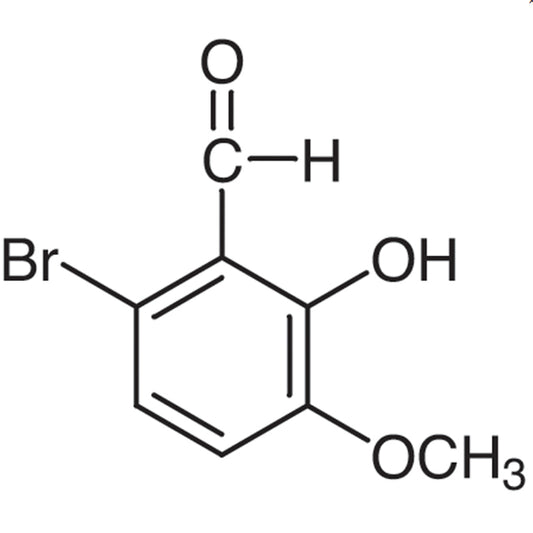
6-Bromo-2-hydroxy-3-methoxybenzaldehyde TCI B1487
Regular price From Rp 1.087.800,00Regular price