TCI C2103 4'-Chloro-3-hydroxy-2-naphthanilide is a simple naphthanilide compound built from a 3-hydroxy-2-naphthoic acid core joined to an aniline ring carrying a single chlorine atom at the para position. It is one of the classic coupling components in azo dye chemistry and, at the same time, a useful non-heterocyclic building block for organic synthesis. Having it on the shelf makes life easier for researchers who want to prepare azo pigments, because the reactive naphthol framework is already available and only needs to be paired with a diazo component chosen according to the target colour.
The strength of this material lies in a structure that is relatively compact yet still highly reactive. The phenolic hydroxyl group activates the naphthalene core so that coupling proceeds efficiently under mildly basic conditions, while the amide group forms hydrogen bonds that reinforce the crystal packing of the resulting pigment. The single chlorine substituent at the para position exerts an electronic influence that is easy to predict, which is why this compound is frequently used as a standard reference point when researchers study the effects of more complicated substituents.
Its solid form is a further practical advantage in day-to-day laboratory work, making weighing, storage, and purification by recrystallisation techniques straightforward. In Indonesian laboratories, this profile suits university organic chemistry groups, dye and pigment research units, and industrial R&D teams that need a dependable coupling component. Because it is supplied under the TCI brand within the Chemistry > Building Blocks > Non-Heterocyclic Building Blocks category, it fits naturally into synthesis programmes that require a consistent, well-characterised starting material.
Related TCI products
- TCI H0315 135-61-5 3-Hydroxy-2'-methyl-2-naphthanilide
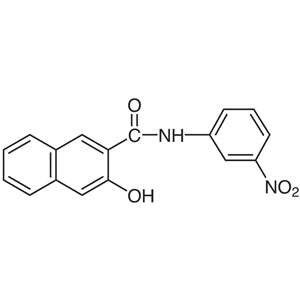
- TCI H0314 135-65-9 3-Hydroxy-3'-nitro-2-naphthanilide
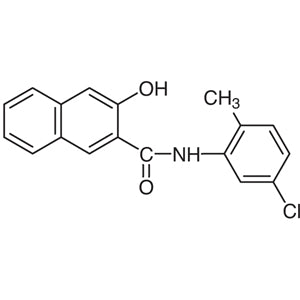
- TCI C2102 135-63-7 5'-Chloro-3-hydroxy-2'-methyl-2-naphthanilide
- TCI C2101 92-72-8 5'-Chloro-3-hydroxy-2',4'-dimethoxy-2-naphthanilide
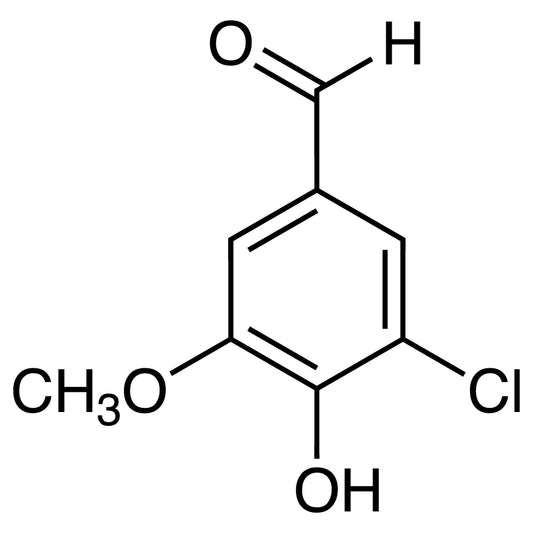
- TCI C3987 19463-48-0 3-Chloro-4-hydroxy-5-methoxybenzaldehyde
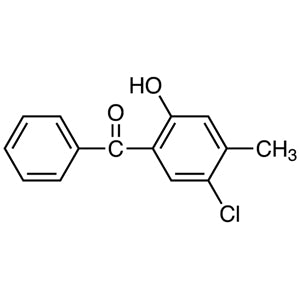
- TCI C3260 68751-90-6 5-Chloro-2-hydroxy-4-methylbenzophenone
- Azo pigment synthesis — the reactive naphthol framework couples directly with a chosen diazo component, letting researchers build a target colour without first constructing the coupling partner themselves.
- Azo dye chemistry teaching and demonstration — its classic role as a coupling component makes it a clear, reliable example for practical classes covering diazotisation and coupling reactions.
- Substituent effect studies — the single para chlorine gives predictable electronic behaviour, so the compound serves as a baseline against which more complex substituted analogues can be compared.
- Non-heterocyclic building block work — the 3-hydroxy-2-naphthoic core with an anilide linkage provides a compact scaffold that organic chemists can elaborate further in multi-step synthesis routes.
- Recrystallisation and purification practice — the solid physical form supports straightforward weighing, handling, and recrystallisation, making it convenient for method development and routine purity work.
| Brand | TCI |
|---|---|
| CAS number | 92-78-4 |
| Molecular formula | — |
| Purity | — |
| Category | Chemistry > Building Blocks > Non-Heterocyclic Building Blocks |
| Pack sizes | available in the standard TCI catalogue pack sizes for this item |
| Physical form | solid |
| Storage | keep in a tightly closed container in a cool, dry, well-ventilated place away from light |
Store the container tightly closed in a cool, dry, well-ventilated area, protected from direct sunlight and away from strong oxidising agents and sources of ignition. The original supplier container is suitable for long-term storage; if the material is transferred, use a clean, chemically compatible bottle with a secure closure and a clearly written label showing the product name and CAS number. Handle the solid in a fume hood or a well-ventilated workspace to limit dust generation, and wear a laboratory coat, chemical-resistant gloves, and safety glasses. Use clean, dry spatulas when weighing to avoid contaminating the bulk material, close the container immediately afterwards, and consult the manufacturer's safety data sheet before first use. Collect any spilled solid without raising dust and dispose of waste according to institutional chemical waste procedures.
—
Product Categories
- Building BlocksNon-Heterocyclic Building BlocksCarbonyl Compounds [Non-Heterocyclic Building Blocks]
- Building BlocksNon-Heterocyclic Building BlocksOxygen Compounds [Non-Heterocyclic Building Blocks]
- Stains and Dyes (for Research and Experimental Use)Dye Intermediates (for Research and Experimental Use)
Produk Terkait
-
3-Hydroxy-2'-methyl-2-naphthanilide TCI H0315
Regular price From Rp 1.087.800,00Regular price -
3-Hydroxy-3'-nitro-2-naphthanilide TCI H0314
Regular price Rp 477.750,00Regular price -
5'-Chloro-3-hydroxy-2'-methyl-2-naphthanilide TCI C2102
Regular price Rp 1.618.050,00Regular price -
5'-Chloro-3-hydroxy-2',4'-dimethoxy-2-naphthanilide TCI C2101
Regular price Rp 928.200,00Regular price -
3-Chloro-4-hydroxy-5-methoxybenzaldehyde TCI C3987
Regular price From Rp 955.500,00Regular price -
5-Chloro-2-hydroxy-4-methylbenzophenone TCI C3260
Regular price From Rp 1.220.100,00Regular price -
3-Hydroxy-N-(2-naphthyl)-2-naphthamide TCI H0319
Regular price Rp 2.094.750,00Regular price -
2-Hydroxy-1,4-naphthoquinone TCI H0285
Regular price From Rp 1.538.250,00Regular price