3-Hydroxy-3'-nitro-2-naphthanilide is a chemical compound widely used in organic reactions and the synthesis of complex molecules. As a building block, it plays a crucial role in the development of new compounds with specific properties. This compound is particularly valuable in organic chemistry research, especially in the formation of heterocyclic compounds and aromatic structures. Its versatility makes it a key component in various synthetic pathways, enabling researchers to explore new chemical transformations and molecular designs.
The compound’s aromatic structure provides stability, while its reactivity allows for substitution reactions and other chemical modifications under different conditions. These characteristics make it an ideal choice for researchers seeking a reactive yet stable starting material. Its ability to participate in a wide range of reactions enhances its utility in both academic and industrial settings, supporting the creation of novel compounds with tailored functionalities.
In Indonesian laboratories, 3-Hydroxy-3'-nitro-2-naphthanilide is commonly used in pure and applied chemistry research, particularly in pharmaceutical, material science, and environmental chemistry fields. Its availability supports experiments requiring specific structural and chemical properties, facilitating advancements in scientific discovery and innovation.
Related TCI products
- TCI H0315 135-61-5 3-Hydroxy-2'-methyl-2-naphthanilide
- TCI C2103 92-78-4 4'-Chloro-3-hydroxy-2-naphthanilide
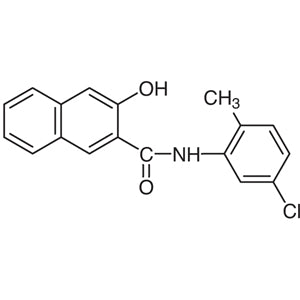
- TCI C2102 135-63-7 5'-Chloro-3-hydroxy-2'-methyl-2-naphthanilide
- TCI C2101 92-72-8 5'-Chloro-3-hydroxy-2',4'-dimethoxy-2-naphthanilide
- TCI H1962 2460-58-4 2-Hydroxy-4-nitrobenzaldehyde
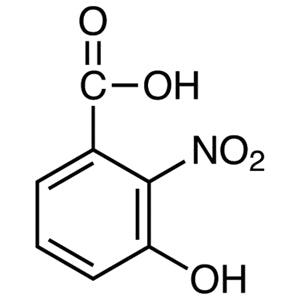
- TCI H1324 602-00-6 3-Hydroxy-2-nitrobenzoic Acid
- Synthesis of heterocyclic compounds for the development of new pharmaceuticals due to its reactivity and structural versatility.
- Aromatic substitution reactions in the creation of complex organic molecules, leveraging its stable aromatic framework.
- Research into molecular reactivity for understanding chemical behavior in various reaction conditions and environments.
- Development of advanced materials through controlled chemical modifications enabled by its functional groups.
- Environmental chemistry studies involving the analysis and transformation of organic pollutants in aqueous systems.
| Brand | TCI |
|---|---|
| CAS number | 135-65-9 |
| Molecular formula | — |
| Purity | — |
| Category | Chemistry > Building Blocks > Non-Heterocyclic Building Blocks |
| Pack sizes | Available in standard laboratory quantities as per supplier specifications |
| Physical form | Solid |
| Storage | Store in a cool, dry place away from direct sunlight and incompatible materials |
This compound should be stored in a cool, dry environment to maintain its chemical integrity and prevent degradation. It is recommended to use airtight containers to minimize exposure to moisture and air, which can affect its stability. Due to its reactivity, it should be handled with appropriate personal protective equipment, including gloves and safety goggles. Avoid contact with strong oxidizing agents or incompatible substances to ensure safe laboratory practices. Proper labeling and storage conditions are essential to maintain the compound’s effectiveness and safety in research applications.
—
Product Categories
- Building BlocksNon-Heterocyclic Building BlocksCarbonyl Compounds [Non-Heterocyclic Building Blocks]
- Building BlocksNon-Heterocyclic Building BlocksNitrogen Compounds [Non-Heterocyclic Building Blocks]
- Building BlocksNon-Heterocyclic Building BlocksOxygen Compounds [Non-Heterocyclic Building Blocks]
- Stains and Dyes (for Research and Experimental Use)Dye Intermediates (for Research and Experimental Use)
Produk Terkait
-
3-Hydroxy-2'-methyl-2-naphthanilide TCI H0315
Regular price From Rp 1.087.800,00Regular price -
4'-Chloro-3-hydroxy-2-naphthanilide TCI C2103
Regular price Rp 1.749.300,00Regular price -
5'-Chloro-3-hydroxy-2'-methyl-2-naphthanilide TCI C2102
Regular price Rp 1.618.050,00Regular price -
5'-Chloro-3-hydroxy-2',4'-dimethoxy-2-naphthanilide TCI C2101
Regular price Rp 928.200,00Regular price -
2-Hydroxy-4-nitrobenzaldehyde TCI H1962
Regular price From Rp 1.829.100,00Regular price -
3-Hydroxy-2-nitrobenzoicAcid TCI H1324
Regular price From Rp 1.378.650,00Regular price -
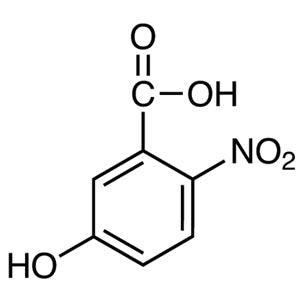
5-Hydroxy-2-nitrobenzoicAcid TCI H1321
Regular price From Rp 1.565.550,00Regular price -
2-Hydroxy-5-nitro-m-anisaldehyde TCI H0397
Regular price Rp 2.121.000,00Regular price