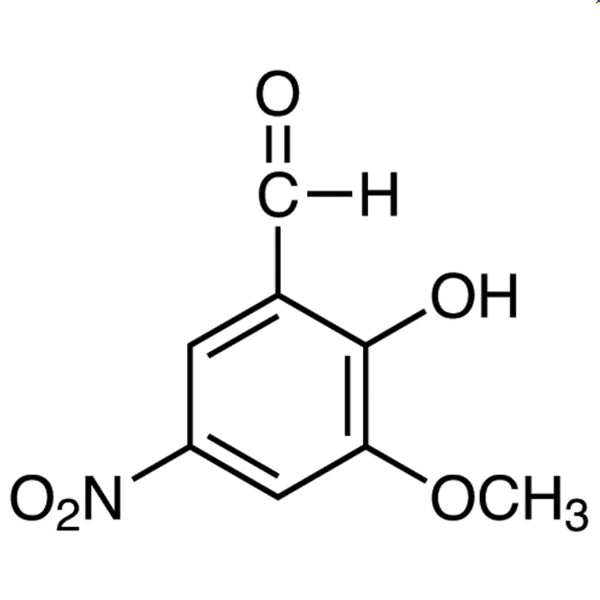
2-Hydroxy-5-nitro-m-anisaldehyde is a chemical compound widely used in laboratory settings for the synthesis of complex molecules. It serves as a key building block in organic chemistry, particularly in the development of aromatic and heterocyclic compounds. This compound is essential for various synthetic pathways, enabling the creation of intermediates that are crucial in pharmaceutical and industrial chemical applications. Its versatility makes it a valuable resource for researchers working on advanced chemical reactions and molecular design.
The compound’s molecular structure, featuring both hydroxyl and nitro groups, contributes to its high reactivity. These functional groups allow it to participate in a wide range of chemical reactions, including nitration, reduction, and substitution. This reactivity makes it an ideal choice for chemists seeking a compound that can be easily modified through various synthetic methods. Its ability to undergo multiple transformations enhances its utility in both academic and industrial research environments.
In Indonesian laboratories, 2-Hydroxy-5-nitro-m-anisaldehyde is commonly used in organic chemistry research, pharmaceutical development, and industrial chemical synthesis. It is particularly relevant for institutions engaged in drug discovery, material science, and chemical engineering. Its availability through AMI Scientific ensures that researchers have access to this essential compound for their experimental needs.
- Organic synthesis where reactive functional groups are required for intermediate formation
- Pharmaceutical research for the development of new drug compounds and therapeutic agents
- Industrial chemical production involving aromatic and heterocyclic compound synthesis
- Academic research in chemical reaction mechanisms and molecular transformation studies
- Analytical chemistry applications requiring reactive building blocks for compound modification
| Brand | TCI |
|---|---|
| CAS number | 17028-61-4 |
| Molecular formula | — |
| Purity | — |
| Category | Chemistry > Building Blocks > Non-Heterocyclic Building Blocks |
| Pack sizes | Available in standard laboratory quantities |
| Physical form | Solid or liquid, depending on supplier packaging |
| Storage | — |
This compound should be stored in a cool, dry, and well-ventilated area away from direct sunlight. It is recommended to use airtight containers made of glass or polyethylene to prevent contamination and degradation. Due to its reactive nature, it should be handled with appropriate personal protective equipment, including gloves and safety goggles. Avoid exposure to heat, moisture, and incompatible substances. Ensure proper labeling and storage in a designated chemical storage cabinet to maintain safety and compliance with laboratory protocols.
—
Produk Terkait
-
5-Nitro-o-anisaldehyde TCI N1034
Regular price From Rp 980.700,00Regular price -
3-Nitro-p-anisaldehyde TCI N0830
Regular price From Rp 1.724.100,00Regular price -
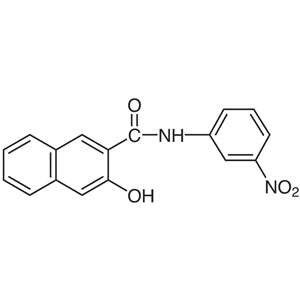
3-Hydroxy-3'-nitro-2-naphthanilide TCI H0314
Regular price Rp 477.750,00Regular price -
m-Anisaldehyde TCI A0478
Regular price From Rp 1.298.850,00Regular price -
o-Anisaldehyde TCI A0479
Regular price From Rp 769.650,00Regular price -
p-Anisaldehyde TCI A0480
Regular price From Rp 530.250,00Regular price -
5-Bromo-o-anisaldehyde TCI B1791
Regular price From Rp 1.776.600,00Regular price -
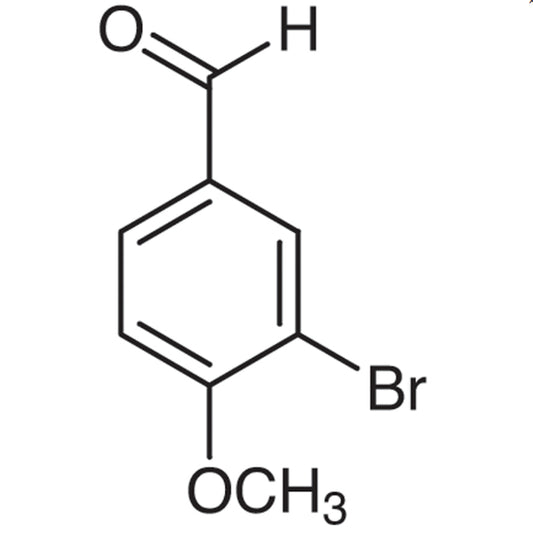
3-Bromo-p-anisaldehyde TCI B1790
Regular price From Rp 1.140.300,00Regular price