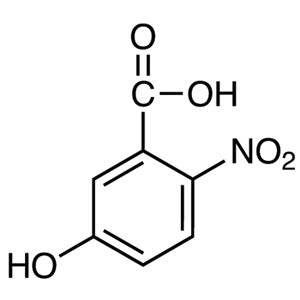
5-Hydroxy-2-nitrobenzoic Acid is an aromatic building block that carries three functional groups on a single benzene ring at once: a carboxylic acid group, a phenolic hydroxyl group, and a nitro group. This density of functionality is precisely what makes it a valuable intermediate in organic synthesis, because each group can be converted into a different function at a different stage of a reaction sequence. In the laboratory, substituted nitrobenzoic compounds of this kind frequently serve as entry points toward aminobenzoate derivatives, fused heterocyclic compounds, and dyes or molecular markers used for research purposes.
The property that makes this compound a deliberate choice is the strong electronic influence of the electron-withdrawing nitro group. Its presence increases the acidity of the neighbouring carboxyl and phenol groups while simultaneously activating the ring toward nucleophilic aromatic substitution, something that does not occur on an ordinary benzene ring. The nitro group can also be reduced to an amine, opening a route toward the formation of heterocyclic rings through cyclisation with the adjacent carboxyl group. This combination of directed reactivity and an easily handled solid form makes it a practical option in the design of multi-step syntheses.
In Indonesian laboratories, this building block is typically used in university research groups, synthetic chemistry laboratories, and industrial research and development units that prepare intermediate compounds on a small to moderate scale. It is generally handled as a starting material weighed out in gram quantities for exploratory reaction work, route development, and the preparation of derivatives, then stored back in its original container between experiments in a chemical store with controlled conditions.
Related TCI products
- Synthesis of aminobenzoate derivatives, where the nitro group is reduced to an amine to give an amino-substituted building block for subsequent coupling or condensation steps.
- Construction of fused heterocyclic compounds, in which the amine generated from nitro reduction cyclises with the neighbouring carboxyl group to close a new ring system.
- Nucleophilic aromatic substitution studies, since the electron-withdrawing nitro group activates the aromatic ring toward displacement chemistry that unsubstituted benzene rings will not undergo.
- Preparation of dyes and molecular markers for research use, taking advantage of the combined carboxyl, phenol, and nitro functionality present on one aromatic scaffold.
- Multi-step synthesis route development, where the three distinct functional groups allow chemists to address each position selectively at different stages of the sequence.
| Brand | TCI |
|---|---|
| CAS number | 610-37-7 |
| Molecular formula | — |
| Purity | — |
| Category | Chemistry > Building Blocks > Non-Heterocyclic Building Blocks |
| Pack sizes | available in the standard catalogue pack sizes offered for this item |
| Physical form | solid |
| Storage | keep in the tightly closed original container, protected from light and moisture |
- Product code: H1321
Store the material in its tightly closed original container in a cool, dry place away from direct sunlight and sources of heat or ignition, and keep it separated from strong bases, strong oxidising agents, and strong reducing agents. Amber glass or the manufacturer's supplied packaging is suitable for keeping the solid dry and protected from light. Handle and weigh the compound in a fume hood while wearing safety goggles, chemical-resistant gloves, and a laboratory coat, and avoid generating or inhaling dust. Wash hands thoroughly after handling, keep the container closed when not in use, and consult the manufacturer's safety data sheet before first use and before disposal of any residues or contaminated material.
—
Product Categories
Produk Terkait
-
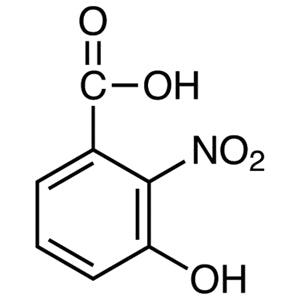
3-Hydroxy-2-nitrobenzoicAcid TCI H1324
Regular price From Rp 1.378.650,00Regular price -
2-Bromo-4-nitrobenzoicAcid TCI B3607
Regular price From Rp 903.000,00Regular price -
2-Hydroxy-4-nitrobenzaldehyde TCI H1962
Regular price From Rp 1.829.100,00Regular price -
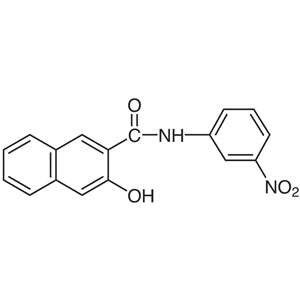
3-Hydroxy-3'-nitro-2-naphthanilide TCI H0314
Regular price Rp 477.750,00Regular price -
3-Bromo-4-nitrobenzoicAcid TCI B4786
Regular price From Rp 1.618.050,00Regular price -
3-Bromo-5-nitrobenzoicAcid TCI B3370
Regular price From Rp 955.500,00Regular price -
4-Methoxy-2-nitrobenzoicAcid TCI M2828
Regular price From Rp 928.200,00Regular price -
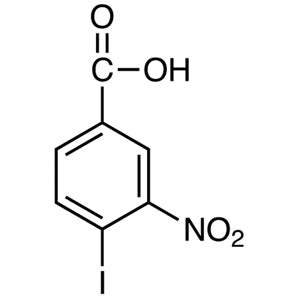
4-Iodo-3-nitrobenzoicAcid TCI I0980
Regular price From Rp 1.298.850,00Regular price