TCI C1128 3-Chloro-4-hydroxybenzoic Acid Hemihydrate is a benzoic acid derivative with three functional groups on a single aromatic ring: a carboxylic acid group, a phenolic hydroxyl group in the para position, and a chlorine atom in the meta position. In the laboratory it serves as a non-heterocyclic building block for assembling more complex molecules. Researchers in organic chemistry, medicinal chemistry, and materials science use it as a starting material for esters, amides, ethers, and other chlorinated aromatic derivatives.
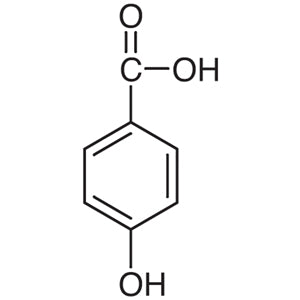
Chemists choose this compound because its three functional groups can be modified step by step and selectively. The carboxylic acid group can be esterified or converted into an amide, and the phenol group can be alkylated or acylated. The chlorine atom next to the phenol affects the acidity, polarity, and electron distribution of the ring, so its derivatives behave differently from those of plain 4-hydroxybenzoic acid. Because it is a hemihydrate, the crystals contain water of hydration. Researchers need to account for this water when they calculate stoichiometry and when they plan water-sensitive reactions.
In Indonesian laboratories, this material suits synthesis research groups at universities, research institutes, and industrial R&D units. Teams developing new organic compounds, screening analogues in medicinal chemistry projects, or preparing functional aromatic monomers for materials work can include it in their building block collections. Its well-defined substitution pattern also makes it useful in academic projects and thesis research, where students learn selective functional group transformations on a single aromatic scaffold.
Related TCI products
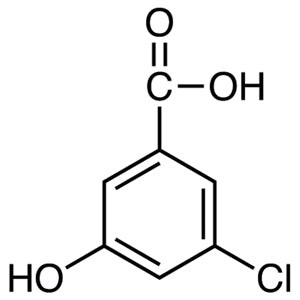
- TCI C3183 53984-36-4 3-Chloro-5-hydroxybenzoic Acid
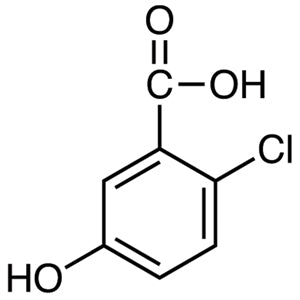
- TCI C2724 56961-30-9 2-Chloro-5-hydroxybenzoic Acid
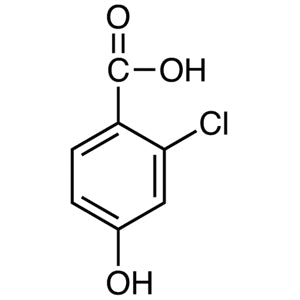
- TCI C2349 56363-84-9 2-Chloro-4-hydroxybenzoic Acid
- TCI T0070 632-58-6 Tetrachlorophthalic Acid Hemihydrate
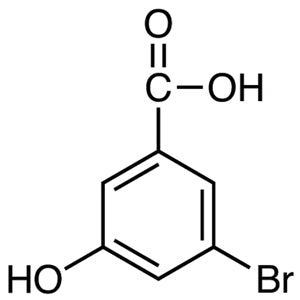
- TCI B4740 140472-69-1 3-Bromo-5-hydroxybenzoic Acid
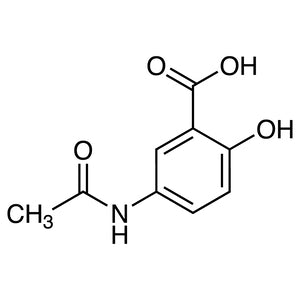
- TCI A3540 51-59-2 5-Acetamido-2-hydroxybenzoic Acid
- Ester synthesis: the carboxylic acid group can be esterified directly, giving chlorinated hydroxybenzoate esters for later reaction steps or for property comparison studies.
- Amide formation: converting the carboxylic acid into amides lets medicinal chemists attach amine fragments and build analogue series around a chlorinated phenolic core.
- Ether preparation: the phenolic hydroxyl group can be alkylated selectively, so researchers can introduce side chains while keeping the carboxylic acid available for later modification.
- Medicinal chemistry analogue studies: the chlorine substituent changes ring acidity, polarity, and electron distribution, which helps researchers study how substitution affects the behaviour of 4-hydroxybenzoic acid derivatives.
- Materials science precursors: its three distinct functional groups make it a flexible starting point for chlorinated aromatic derivatives that researchers evaluate as building units for functional materials.
| Brand | TCI (product code C1128) |
|---|---|
| CAS number | 3964-58-7 |
| Molecular formula | — |
| Purity | — |
| Category | Chemistry > Building Blocks > Non-Heterocyclic Building Blocks |
| Pack sizes | as offered by TCI for product C1128; please confirm with AMI Scientific when ordering |
| Physical form | crystalline hemihydrate (contains water of hydration) |
| Storage | keep tightly closed in a cool, dry place and follow the manufacturer's label and Safety Data Sheet |
Store this compound in its original tightly sealed container in a cool, dry, well-ventilated area, away from direct sunlight and incompatible materials such as strong oxidizing agents and strong bases. Because it is a hemihydrate, keep the container closed when not in use so the hydration state stays consistent and stoichiometric calculations remain reliable. Handle it in a fume hood or a well-ventilated area. Wear suitable gloves, safety glasses, and a lab coat, and avoid creating or breathing dust. Clean up spills promptly. Before use, read the TCI Safety Data Sheet and follow your institution's chemical hygiene and waste disposal procedures.
—
Produk Terkait
-
3-Chloro-5-hydroxybenzoicAcid TCI C3183
Regular price From Rp 2.809.800,00Regular priceRp 1.980.300,00Sale price From Rp 2.809.800,00 -
2-Chloro-5-hydroxybenzoicAcid TCI C2724
Regular price Rp 1.723.050,00Regular priceRp 1.220.100,00Sale price Rp 1.723.050,00 -
2-Chloro-4-hydroxybenzoicAcid TCI C2349
Regular price From Rp 2.757.300,00Regular priceRp 1.943.550,00Sale price From Rp 2.757.300,00 -
TetrachlorophthalicAcidHemihydrate TCI T0070
Regular price From Rp 1.431.150,00Regular priceRp 1.000.650,00Sale price From Rp 1.431.150,00 -
3-Bromo-5-hydroxybenzoicAcid TCI B4740
Regular price From Rp 637.350,00Regular priceRp 460.950,00Sale price From Rp 637.350,00 -
5-Acetamido-2-hydroxybenzoicAcid TCI A3540
Regular price Rp 4.611.600,00Regular priceRp 3.240.300,00Sale price Rp 4.611.600,00 -
4-HydroxybenzoicAcid TCI H0207
Regular price From Rp 557.550,00Regular priceRp 405.300,00Sale price From Rp 557.550,00 -
3-HydroxybenzoicAcid TCI H0205
Regular price From Rp 1.008.000,00Regular priceRp 720.300,00Sale price From Rp 1.008.000,00