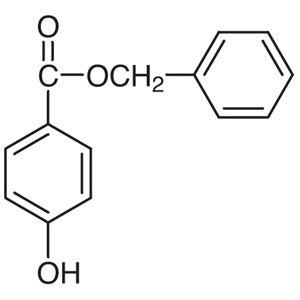
Benzyl 4-Hydroxybenzoate is the benzyl ester of 4-hydroxybenzoic acid, a member of the hydroxybenzoate ester family more commonly known as parabens. In the laboratory it serves a dual role: as a raw material for organic synthesis — a non-heterocyclic building block that supplies both a free phenolic group and an aromatic ester group within a single molecule — and as a reference compound in the analysis of preservatives in cosmetic, pharmaceutical, and food products. The presence of the benzyl ring places it within the paraben homologous series with a distinct character, which is why it is frequently used as a comparison point in structure–activity relationship studies.
The property that makes this compound a preferred choice is the combination of the polarity of its phenolic hydroxyl group with the lipophilic character of the benzyl ester moiety. The free phenol can be alkylated, acylated, or employed in etherification reactions, while the ester group can be hydrolysed or transesterified under controlled conditions. The two aromatic rings in the molecule give strong ultraviolet absorption, so the compound is readily detected by liquid chromatography with a UV detector and is well suited for use as a system suitability marker. Its solid form, stable at room temperature, makes handling and weighing straightforward.
In Indonesian laboratories this material is typically found in organic synthesis groups preparing substituted aromatic intermediates, and in quality control and analytical laboratories that verify preservative content in finished formulations. University research laboratories use it in comparative studies across the paraben series, while industrial testing laboratories rely on it as a chromatographic reference standard. Its solid, room-temperature-stable form suits routine storage conditions in laboratories that do not have extensive cold-chain facilities.
Related TCI products
- Organic synthesis building block: the free phenolic group and aromatic ester in one molecule allow selective, sequential functionalisation when constructing more complex substituted aromatic intermediates.
- Reference compound for preservative analysis: used as a comparison standard when determining paraben content in cosmetic, pharmaceutical, and food formulations by chromatographic methods.
- Structure–activity relationship studies: as a member of the paraben homologous series carrying a benzyl ring, it provides a distinct comparison point against shorter-chain esters.
- Liquid chromatography system suitability: its two aromatic rings give strong ultraviolet absorption, making it easy to detect with UV detectors and useful for verifying instrument response.
- Selective ester and phenol transformations: the ester can be hydrolysed or transesterified under controlled conditions while the phenol undergoes alkylation, acylation, or etherification reactions.
| Brand | TCI |
|---|---|
| CAS number | 94-18-8 |
| Molecular formula | — |
| Purity | — |
| Category | Chemistry > Building Blocks > Non-Heterocyclic Building Blocks |
| Pack sizes | available in standard TCI laboratory pack sizes — please confirm the currently available options when ordering |
| Physical form | solid, stable at room temperature |
| Storage | store in a closed container at room temperature, protected from light and moisture |
- Catalogue code: H0209
Store the material in its original tightly closed container, in a cool, dry, well-ventilated area away from direct sunlight and sources of heat or ignition. Amber glass or the manufacturer's original packaging is suitable, as the aromatic rings absorb ultraviolet light and prolonged light exposure is best avoided. Keep the container sealed when not in use to prevent moisture uptake, which can affect weighing accuracy for analytical work. Handle in a fume hood where dust may be generated, and wear a laboratory coat, safety glasses, and chemical-resistant gloves. Avoid inhalation of dust and contact with skin and eyes. Use clean, dry spatulas when dispensing to prevent cross-contamination of the stock, and always consult the manufacturer's safety data sheet before first use.
—
Produk Terkait
-
Methyl4-Amino-3-hydroxybenzoate TCI A3639
Regular price From Rp 2.041.200,00Regular price -
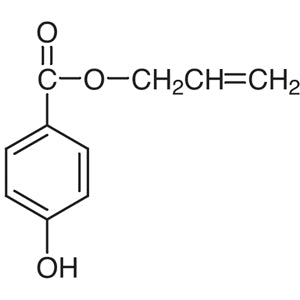
Allyl4-Hydroxybenzoate TCI A1846
Regular price Rp 3.843.000,00Regular price -
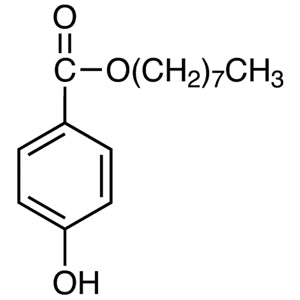
n-Octyl4-Hydroxybenzoate TCI O0443
Regular price Rp 1.724.100,00Regular price -
Methyl3-Chloro-4-hydroxybenzoate TCI M3513
Regular price From Rp 1.458.450,00Regular price -
Methyl3-Amino-4-hydroxybenzoate TCI M3498
Regular price From Rp 1.378.650,00Regular price -
Methyl2-Amino-5-hydroxybenzoate TCI M2796
Regular price From Rp 717.150,00Regular price -
Methyl4-Bromo-3-hydroxybenzoate TCI M2246
Regular price From Rp 1.670.550,00Regular price -
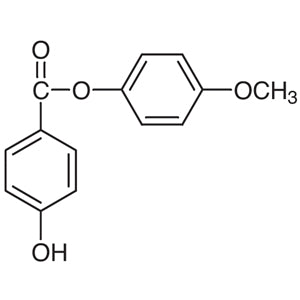
4-Methoxyphenyl4-Hydroxybenzoate TCI H0825
Regular price From Rp 4.531.800,00Regular price