1-Hydroxybenzotriazole Monohydrate is a chemical compound widely utilized in various chemical reactions and biosynthetic processes. It plays a crucial role in laboratory settings as a reagent for the formation of ester and amide bonds. This compound is particularly valued for its ability to activate carboxyl groups in organic compounds, thereby accelerating chemical reactions. Its unique molecular structure makes it an essential component in many synthetic pathways, especially in the field of glycoscience. Due to its stability and reactivity, it is frequently employed in biochemical and pharmacological research.
The compound's chemical stability under normal conditions, combined with its high reactivity in specific environments, makes it a preferred choice for researchers. The presence of a water molecule in its monohydrate form enhances its reactivity, allowing for more efficient reactions. This property is particularly beneficial in applications requiring precise functional group activation. Additionally, its solubility in organic solvents simplifies its use in a wide range of experimental procedures. These characteristics contribute to its popularity among scientists working in both academic and industrial research environments.
In Indonesian laboratories, 1-Hydroxybenzotriazole Monohydrate is commonly used in chemical and biological research. It is a key reagent in the synthesis of glycosides and other complex organic molecules. Many research institutions in Indonesia rely on this compound for its reliability and effectiveness in various experimental setups. Its consistent performance and availability make it a go-to material for researchers in the field of chemical biology.
Advantages (TCI brochure)
- One of the most used conditions for condensations
TCI brochures (PDF)
- Condensing Agents 2025-11-18 · p. 2
- Reagents for Glyco Chemistry & Biology 5th Edition · p. 141
- Amino Acids and Peptide Synthesis Reagents 2025-08-14 · p. 38
Related TCI products
- TCI H1454 26198-21-0 1-Hydroxy-6-(trifluoromethyl)benzotriazole
- TCI N0220 100-02-7 4-Nitrophenol
- TCI H0623 6066-82-6 N-Hydroxysuccinimide
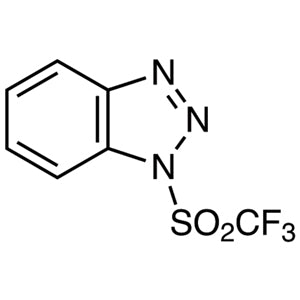
- TCI T3167 117632-84-5 1-(Trifluoromethanesulfonyl)-1H-benzotriazole
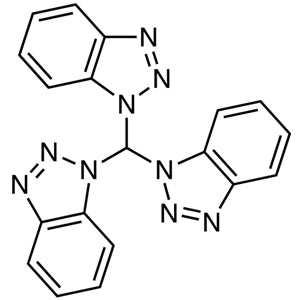
- TCI T3141 88088-95-3 Tris(1H-benzotriazol-1-yl)methane
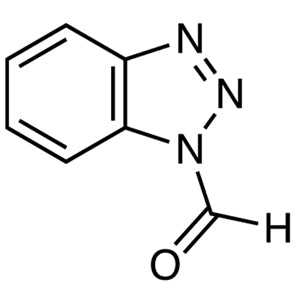
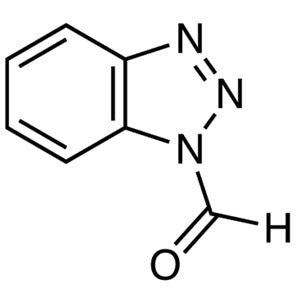
- TCI B3920 72773-04-7 1H-Benzotriazole-1-carboxaldehyde
- Glycoside Synthesis: This compound is ideal for activating carboxyl groups in sugar derivatives, enabling efficient glycosidic bond formation.
- Peptide Coupling Reactions: Its ability to activate carboxylic acid groups makes it suitable for peptide synthesis and modification processes.
- Bioconjugation Studies: The compound facilitates the coupling of biomolecules, making it useful in bioconjugation and molecular labeling techniques.
- Organic Synthesis: It is widely used in the preparation of esters and amides, supporting a variety of organic reaction mechanisms.
- Enzymatic Reaction Optimization: Its reactivity and stability help in studying enzyme mechanisms and substrate interactions in biochemical experiments.
From the TCI brochure
- Used together with EDC
| Brand | TCI |
|---|---|
| CAS number | 80029-43-2 |
| Molecular formula | — |
| Purity | — |
| Category | Chemistry > Chemical Biology > Glycoscience |
| Pack sizes | Available in various quantities, including 5g, 25g, and 100g |
| Physical form | White crystalline powder |
| Storage | — |
This compound should be stored in a cool, dry place away from direct sunlight and moisture. It is recommended to keep it in a sealed container to prevent exposure to air and humidity. Due to its reactivity, it should be handled with care, using appropriate personal protective equipment such as gloves and safety goggles. It is not flammable but may react with strong acids or bases. Proper ventilation is advised during handling to ensure a safe laboratory environment. Always follow standard chemical safety protocols to minimize any potential risks associated with its use.
—
Produk Terkait
-
1-Hydroxy-6-(trifluoromethyl)benzotriazole TCI H1454
Regular price Rp 1.192.800,00Regular priceRp 849.450,00Sale price Rp 1.192.800,00 -
4-Nitrophenol TCI N0220
Regular price Rp 505.050,00Regular priceRp 352.800,00Sale price Rp 505.050,00 -
N-Hydroxysuccinimide TCI H0623
Regular price Rp 1.220.100,00Regular priceRp 868.350,00Sale price Rp 1.220.100,00 -
1-(Trifluoromethanesulfonyl)-1H-benzotriazole TCI T3167
Regular price Rp 1.670.550,00Regular priceRp 1.183.350,00Sale price Rp 1.670.550,00 -
Tris(1H-benzotriazol-1-yl)methane TCI T3141
Regular price Rp 2.227.050,00Regular priceRp 1.572.900,00Sale price Rp 2.227.050,00 -
1H-Benzotriazole-1-carboxaldehyde TCI B3920
Regular price Rp 2.757.300,00Regular priceRp 1.943.550,00Sale price Rp 2.757.300,00 -
9-(1H-Benzotriazol-1-ylmethyl)-9H-carbazole TCI B1967
Regular price Rp 1.378.650,00Regular priceRp 979.650,00Sale price Rp 1.378.650,00 -
1H-Benzotriazole-1-methanol TCI B1903
Regular price Rp 1.749.300,00Regular priceRp 1.239.000,00Sale price Rp 1.749.300,00