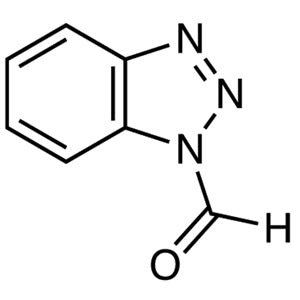
1H-Benzotriazole-1-carboxaldehyde is a synthetic reagent widely used in laboratory settings for its versatility in chemical reactions. This compound features a benzotriazole ring linked to a carbonyl group, making it a valuable intermediate in the synthesis of heterocyclic compounds and bioactive molecules. Its unique structure allows it to participate in various reaction mechanisms, including nucleophilic substitution and condensation reactions, which are essential for the development of pharmaceuticals and agrochemicals. In the laboratory, it serves as a key building block for creating complex organic structures with specific functional groups.
The chemical properties of 1H-Benzotriazole-1-carboxaldehyde make it a preferred choice for synthetic chemists. Its stable molecular framework ensures predictable reactivity under controlled conditions, while its neutral nature minimizes unwanted side reactions. The compound’s ability to maintain structural integrity during synthesis contributes to the efficiency and reliability of laboratory processes. These characteristics make it suitable for use in both academic and industrial research environments where precision and reproducibility are critical.
In Indonesian laboratories, 1H-Benzotriazole-1-carboxaldehyde is commonly utilized in organic chemistry and pharmaceutical research. It plays a crucial role in the development of new compounds with potential medical or agricultural applications. Researchers in universities and research institutions rely on this reagent for its consistent performance and compatibility with various synthetic methodologies. Its availability and reliability make it an essential component in the toolkit of chemical scientists in Indonesia.
TCI brochures (PDF)
- Powerful N-Formylating Reagent 2024-09-12 · p. 2
- Formylation Reagents 2024-07-08 · p. 2
Related TCI products
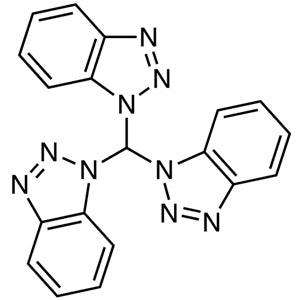
- TCI T3141 88088-95-3 Tris(1H-benzotriazol-1-yl)methane
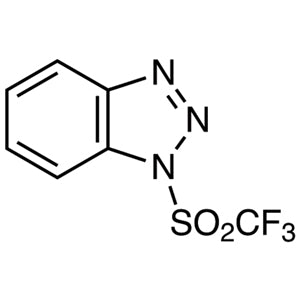
- TCI T3167 117632-84-5 1-(Trifluoromethanesulfonyl)-1H-benzotriazole
- TCI T2590 113306-55-1 1-[2-(Trimethylsilyl)ethoxycarbonyloxy]benzotriazole
- TCI T1752 43183-36-4 1-(Trimethylsilyl)-1H-benzotriazole
- TCI B3869 23814-12-2 5-Benzotriazolecarboxylic Acid
- TCI B1967 124337-34-4 9-(1H-Benzotriazol-1-ylmethyl)-9H-carbazole
- Organic synthesis of heterocyclic compounds due to its benzotriazole ring and aldehyde functionality
- Development of bioactive molecules for pharmaceutical applications as a versatile intermediate
- Preparation of agrochemicals through controlled condensation and substitution reactions
- Research in medicinal chemistry for the synthesis of drug-like molecules with specific functional groups
- Investigation of chemical reactivity in academic and industrial research settings
| Brand | TCI |
|---|---|
| CAS number | 72773-04-7 |
| Molecular formula | — |
| Purity | — |
| Category | Chemistry > Synthetic Reagents > C-X(Non-Halogen) Bond Formation [Synthetic Reagents] |
| Pack sizes | Available in various quantities as per standard laboratory supply |
| Physical form | Solid or liquid, depending on the specific product variant |
| Storage | — |
This compound should be stored in a cool, dry, and well-ventilated area away from direct sunlight and sources of heat. It is recommended to keep it in a sealed container to prevent moisture absorption and contamination. Due to its chemical stability, it does not require special refrigeration, but it should be protected from prolonged exposure to air. In laboratory settings, it is important to handle it with appropriate personal protective equipment, such as gloves and safety goggles, to ensure safe handling. Proper labeling and storage practices help maintain the integrity of the compound and ensure safe usage in chemical experiments.
—
Produk Terkait
-
Tris(1H-benzotriazol-1-yl)methane TCI T3141
Regular price From Rp 2.227.050,00Regular priceRp 1.572.900,00Sale price From Rp 2.227.050,00 -
1-(Trifluoromethanesulfonyl)-1H-benzotriazole TCI T3167
Regular price From Rp 1.670.550,00Regular priceRp 1.183.350,00Sale price From Rp 1.670.550,00 -
1-[2-(Trimethylsilyl)ethoxycarbonyloxy]benzotriazole TCI T2590
Regular price From Rp 2.782.500,00Regular priceRp 1.961.400,00Sale price From Rp 2.782.500,00 -
1-(Trimethylsilyl)-1H-benzotriazole TCI T1752
Regular price From Rp 1.167.600,00Regular priceRp 831.600,00Sale price From Rp 1.167.600,00 -
5-BenzotriazolecarboxylicAcid TCI B3869
Regular price From Rp 2.147.250,00Regular priceRp 1.517.250,00Sale price From Rp 2.147.250,00 -
9-(1H-Benzotriazol-1-ylmethyl)-9H-carbazole TCI B1967
Regular price From Rp 1.378.650,00Regular priceRp 979.650,00Sale price From Rp 1.378.650,00 -
1H-Benzotriazole-1-methanol TCI B1903
Regular price Rp 1.749.300,00Regular priceRp 1.239.000,00Sale price Rp 1.749.300,00 -
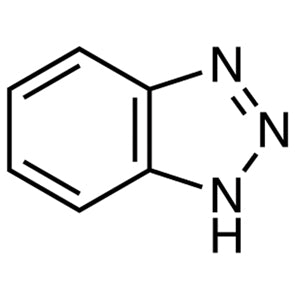
1,2,3-Benzotriazole TCI B0094
Regular price From Rp 557.550,00Regular priceRp 405.300,00Sale price From Rp 557.550,00