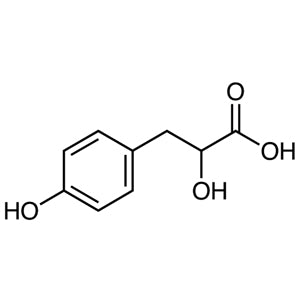
TCI H0542 DL-4-Hydroxyphenyllactic Acid is an aromatic hydroxy acid supplied as a racemic mixture. Structurally it is a tyrosine derivative in which the amino group has been replaced by a hydroxyl group, giving a compact molecule that carries a phenol ring, a secondary alcohol and a carboxylic acid on the same scaffold. The compound is recognised as a metabolite arising in the tyrosine catabolic pathway and as a product of microbial transformation in the gastrointestinal tract, which is why it appears frequently in metabolomics work and microbiome research. As a non-heterocyclic building block, it also serves as a practical starting material in organic synthesis.
The characteristics that lead researchers to select this material are rooted in its combination of three different functional groups on one small, easily handled framework. The phenol, secondary alcohol and carboxylic acid allow selective, stepwise reactions and give access to ester, ether and amide derivatives without the need for elaborate protecting-group strategies at the outset. The phenolic structure provides hydrogen-atom donating ability, which is the basis of the antioxidant activity widely studied in compounds of this class. The DL racemic form makes the material more economical and well suited to experiments that do not demand optical purity, such as calibration for total analysis or synthetic routes that finish with a chiral resolution.
In Indonesian laboratories the compound is typically used in university research groups, analytical service laboratories and institutional research centres working on metabolite profiling and natural-product chemistry. It fits routine work in metabolomics sample preparation, reference standard handling and small-scale synthetic exploration. Because the racemic form is sufficient for many of these purposes, it is a sensible choice for teaching laboratories and research programmes that need a reliable aromatic hydroxy acid for method development rather than stereochemically defined work.
- Metabolomics profiling studies — the compound is an established tyrosine catabolism metabolite, making it directly relevant as a reference material when identifying and confirming peaks in biological sample analyses.
- Gut microbiome research — because it is formed through microbial transformation in the digestive tract, it supports investigations into host-microbiota metabolic interactions and the characterisation of microbially derived aromatic metabolites.
- Organic synthesis as a building block — its three distinct functional groups on one compact scaffold allow stepwise selective reactions leading to ester, ether and amide derivatives in multi-step routes.
- Antioxidant activity screening — the phenolic structure donates hydrogen atoms, providing the mechanistic basis for evaluating radical-scavenging behaviour in comparative studies of phenolic acid compounds.
- Analytical method development and calibration — the racemic DL form is appropriate for total-analysis calibration work where optical purity is not required, keeping method validation practical and straightforward.
| Brand | TCI (Tokyo Chemical Industry) |
|---|---|
| CAS number | 306-23-0 |
| Molecular formula | — |
| Purity | — |
| Category | Chemistry > Building Blocks > Non-Heterocyclic Building Blocks |
| Pack sizes | available in standard laboratory research pack sizes; please confirm the currently listed options when ordering |
| Physical form | generally supplied as a crystalline powder |
| Storage | — |
- Product code: H0542
Store the material in a tightly closed original container in a cool, dry place away from direct sunlight, moisture and sources of heat or ignition, following the storage conditions stated on the manufacturer's label and safety data sheet. Amber glass or the supplied container is appropriate, since phenolic compounds can be sensitive to prolonged light exposure. Handle the powder in a well-ventilated area or fume hood to avoid dust generation and inhalation, and wear standard laboratory personal protective equipment including safety glasses, gloves and a laboratory coat. Keep the container closed when not in use to limit moisture uptake, avoid contact with skin and eyes, and wash hands thoroughly after handling. Consult the manufacturer's safety data sheet before use and dispose of residues in accordance with applicable laboratory waste procedures.
—
Produk Terkait
-
D-(+)-3-PhenyllacticAcid TCI P1981
Regular price From Rp 1.060.500,00Regular price -
L-(-)-3-PhenyllacticAcid TCI P1168
Regular price From Rp 980.700,00Regular price -
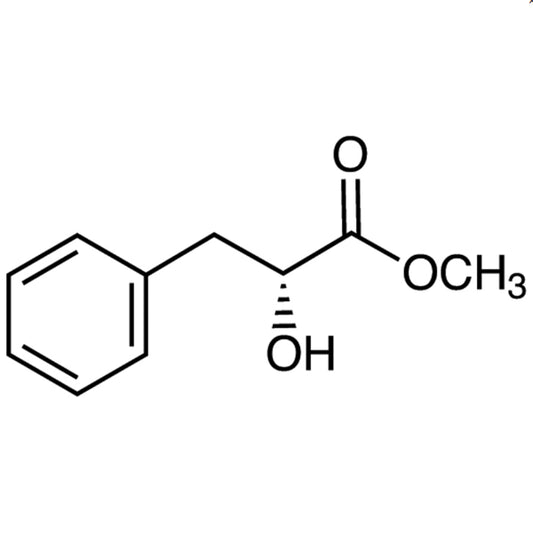
MethylD-3-Phenyllactate TCI M2350
Regular price From Rp 769.650,00Regular price