TCI H0620 4-Hydroxy-3-methoxybenzonitrile (CAS 4421-08-3) is a benzonitrile derivative carrying the guaiacol substitution pattern, meaning a phenolic hydroxyl group positioned adjacent to a methoxy group, the same arrangement found in vanillin. The combination of three functional groups on a single aromatic ring makes it a highly useful building block in organic synthesis and medicinal chemistry laboratories. The nitrile group serves as a masked functional group that can be converted into a carboxylic acid, amide, aldehyde, primary amine, or heterocyclic ring, while the hydroxy–methoxy pair modulates the electron density of the ring and simultaneously provides additional points for modification.
The property that leads researchers to select this compound is the exceptionally broad transformation flexibility of the nitrile group, combined with a substitution pattern that already resembles many phenylpropanoid-based natural product frameworks. The hydroxyl group can be protected or alkylated to direct subsequent reactions, while the methoxy group exerts an electron-donating effect that assists electrophilic substitution at particular ring positions. The scaffold also acts as a direct precursor to tetrazoles, amidoximes, and substituted benzylamines, structural motifs that appear frequently across synthetic and medicinal chemistry programmes.
In Indonesian laboratories this building block is typically handled in university organic synthesis groups, pharmaceutical research units, and natural product chemistry laboratories working on vanillin-related scaffolds. It is normally used on small to moderate scale within multi-step synthetic routes, where the nitrile is carried through several transformations before being unmasked at a late stage. Researchers generally weigh out the material on an analytical balance inside a fume hood and characterise intermediates by standard spectroscopic methods available in the institution.
Related TCI products
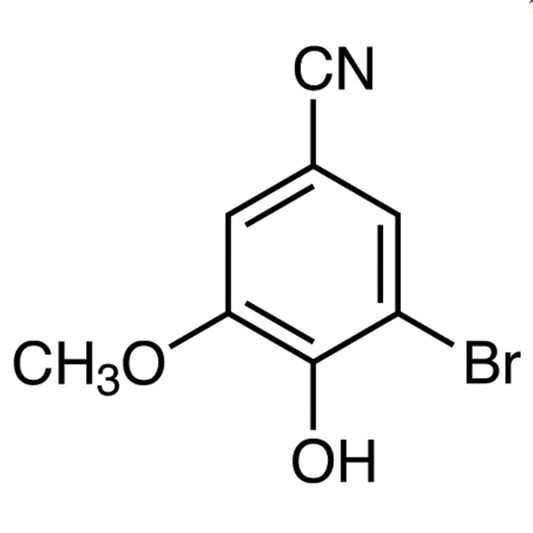
- TCI B4757 52805-45-5 3-Bromo-4-hydroxy-5-methoxybenzonitrile
- TCI T3285 43020-38-8 2,3,4-Trimethoxybenzonitrile
- TCI T3244 1885-35-4 3,4,5-Trimethoxybenzonitrile
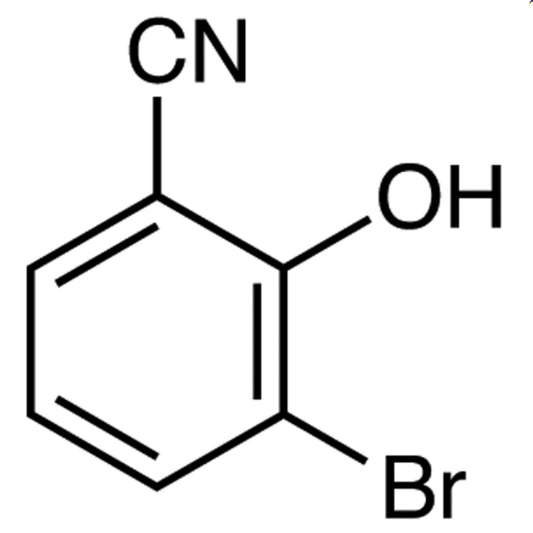
- TCI B5273 13073-28-4 3-Bromo-2-hydroxybenzonitrile
- TCI B3124 117572-79-9 3-Bromo-4-methoxybenzonitrile
- TCI B3123 144649-99-0 5-Bromo-2-methoxybenzonitrile
- Organic synthesis building block, since the three orthogonal functional groups on one aromatic ring allow chemists to construct complex targets through selective, stepwise transformations from a single starting material.
- Medicinal chemistry scaffold preparation, because the guaiacol substitution pattern closely mirrors motifs found in bioactive natural products and supports systematic analogue generation around a pharmacologically familiar core.
- Tetrazole and amidoxime synthesis, where the nitrile group reacts directly to form these bioisosteric heterocycles that are widely used to replace carboxylic acid functionality in drug candidates.
- Substituted benzylamine preparation, as reduction of the nitrile delivers a primary amine while the phenolic hydroxyl and methoxy substituents remain available for further derivatisation work.
- Natural product analogue studies, given that the hydroxy–methoxy aromatic arrangement corresponds to phenylpropanoid frameworks, allowing researchers to prepare and compare structurally related synthetic derivatives.
| Brand | TCI (Tokyo Chemical Industry) |
|---|---|
| CAS number | 4421-08-3 |
| Molecular formula | — |
| Purity | — |
| Category | Chemistry > Building Blocks > Non-Heterocyclic Building Blocks |
| Pack sizes | available in standard TCI research pack sizes; please confirm the currently offered size when ordering |
| Physical form | — |
| Storage | store in a tightly closed container in a cool, dry, well-ventilated area |
- Chemical Name: 4-Hydroxy-3-methoxybenzonitrile
- Product Code: H0620
Store the container tightly closed in a cool, dry, and well-ventilated place, away from direct sunlight, heat sources, and incompatible reagents such as strong oxidising agents. Keep the material in its original supplier container, or transfer it to a clean amber glass bottle with a chemically resistant cap if repackaging is required, and label it clearly. Phenolic compounds may darken on prolonged exposure to air and light, so minimise the time the container remains open. Handle the solid in a fume hood using safety glasses, gloves, and a laboratory coat, and avoid generating dust during weighing. Wash hands after handling and consult the manufacturer safety data sheet before first use.
—
Produk Terkait
-
3-Bromo-4-hydroxy-5-methoxybenzonitrile TCI B4757
Regular price From Rp 689.850,00Regular price -
2,3,4-Trimethoxybenzonitrile TCI T3285
Regular price From Rp 1.458.450,00Regular price -
3,4,5-Trimethoxybenzonitrile TCI T3244
Regular price From Rp 1.485.750,00Regular price -
3-Bromo-2-hydroxybenzonitrile TCI B5273
Regular price From Rp 1.220.100,00Regular price -
3-Bromo-4-methoxybenzonitrile TCI B3124
Regular price Rp 1.829.100,00Regular price -
5-Bromo-2-methoxybenzonitrile TCI B3123
Regular price From Rp 1.140.300,00Regular price -
4-Bromo-2-hydroxybenzonitrile TCI B3120
Regular price From Rp 1.246.350,00Regular price -
5-Bromo-2-hydroxybenzonitrile TCI B2214
Regular price From Rp 3.100.650,00Regular price