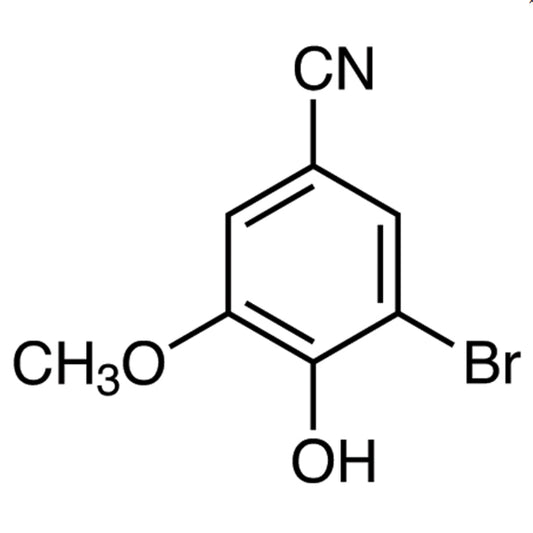
3-Bromo-2-hydroxybenzonitrile is a chemical compound widely used in laboratory settings for the synthesis of complex molecules. As a building block in organic chemistry, it serves as a versatile intermediate that enables the formation of compounds with specific structural features. Its presence in chemical reactions allows for the development of diverse products through various synthetic pathways. This compound is particularly valuable in research environments where precision and reproducibility are essential.
The compound’s molecular structure, featuring bromo, hydroxyl, and nitrile groups, contributes to its high reactivity. These functional groups make it suitable for a range of chemical transformations, including substitution reactions, electrophilic reactions, and bond-forming processes. Its reactivity and functional diversity make it a preferred choice for chemists aiming to create novel compounds with tailored properties.
In Indonesian laboratories, 3-Bromo-2-hydroxybenzonitrile is commonly used in organic chemistry research, especially in the development of pharmaceutical compounds and industrial chemicals. Its availability in solid form and ease of handling make it a practical choice for both academic and industrial applications. Its role in precise and consistent chemical reactions supports ongoing research and innovation in the field.
Related TCI products
- TCI B3120 288067-35-6 4-Bromo-2-hydroxybenzonitrile
- TCI B4757 52805-45-5 3-Bromo-4-hydroxy-5-methoxybenzonitrile
- TCI C3083 2315-81-3 3-Chloro-4-hydroxybenzonitrile
- TCI C2708 473923-97-6 3-Chloro-5-hydroxybenzonitrile
- TCI B2214 40530-18-5 5-Bromo-2-hydroxybenzonitrile
- TCI B2037 2315-86-8 3-Bromo-4-hydroxybenzonitrile
- Organic synthesis applications benefit from this compound’s reactivity and functional group versatility, enabling the creation of complex molecules with high specificity.
- Pharmaceutical research utilizes its structural features to develop new drug candidates with targeted biological activities and improved therapeutic properties.
- Industrial chemical production relies on its role as a building block for synthesizing compounds used in various commercial applications, including dyes and polymers.
- Analytical chemistry experiments use it as a standard reference material for testing reaction conditions and evaluating synthetic methodologies.
- Environmental studies incorporate it in the investigation of chemical degradation processes and the behavior of reactive intermediates in different environments.
| Brand | TCI |
|---|---|
| CAS number | 13073-28-4 |
| Molecular formula | — |
| Purity | — |
| Category | Chemistry > Building Blocks > Non-Heterocyclic Building Blocks |
| Pack sizes | Available in standard laboratory quantities |
| Physical form | Solid |
| Storage | Store in a cool, dry place away from light and incompatible materials |
This compound should be stored in a cool, dry environment, away from direct sunlight and sources of heat. It is recommended to keep it in a sealed container to prevent moisture absorption and maintain its chemical integrity. Due to its reactivity, it should be handled in a well-ventilated area, and appropriate personal protective equipment should be worn when working with it. Avoid contact with incompatible substances such as strong oxidizers or acids. Proper labeling and storage conditions ensure the safety of laboratory personnel and the stability of the compound over time.
—
Produk Terkait
-
4-Bromo-2-hydroxybenzonitrile TCI B3120
Regular price From Rp 1.298.850,00Regular priceRp 924.000,00Sale price From Rp 1.298.850,00 -
3-Bromo-4-hydroxy-5-methoxybenzonitrile TCI B4757
Regular price From Rp 742.350,00Regular priceRp 534.450,00Sale price From Rp 742.350,00 -
3-Chloro-4-hydroxybenzonitrile TCI C3083
Regular price From Rp 1.087.800,00Regular priceRp 775.950,00Sale price From Rp 1.087.800,00 -
3-Chloro-5-hydroxybenzonitrile TCI C2708
Regular price Rp 2.041.200,00Regular priceRp 1.442.700,00Sale price Rp 2.041.200,00 -
5-Bromo-2-hydroxybenzonitrile TCI B2214
Regular price From Rp 3.153.150,00Regular priceRp 2.220.750,00Sale price From Rp 3.153.150,00 -
3-Bromo-4-hydroxybenzonitrile TCI B2037
Regular price From Rp 2.252.250,00Regular priceRp 1.590.750,00Sale price From Rp 2.252.250,00 -
2,3,4-Trimethoxybenzonitrile TCI T3285
Regular price From Rp 1.510.950,00Regular priceRp 1.072.050,00Sale price From Rp 1.510.950,00 -
3,4,5-Trimethoxybenzonitrile TCI T3244
Regular price From Rp 1.538.250,00Regular priceRp 1.090.950,00Sale price From Rp 1.538.250,00