

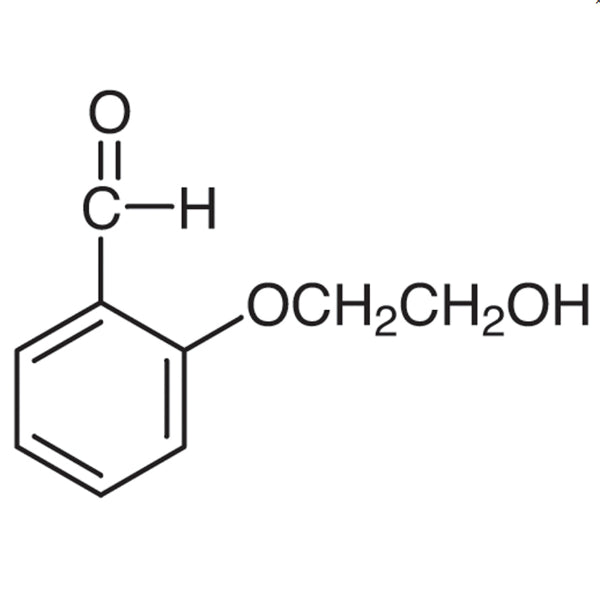
TCI H0857 2-(2-Hydroxyethoxy)benzaldehyde is a benzaldehyde derivative carrying a 2-hydroxyethoxy chain at the ortho position. The structure brings together three useful elements in a single molecule: a reactive aromatic aldehyde group, a flexible ether bridge, and a primary hydroxyl group at the end of the chain. As a non-heterocyclic building block, this compound is widely used by organic synthesis laboratories to construct molecules that require a flexible linker, for example in the preparation of macrocycles, ion-capturing ligands, and compounds bearing a terminal side chain that is ready for further modification.
The property that makes it a preferred choice is the ease of controlling reactions at two molecular termini of differing character. The aldehyde group is readily reacted through condensation with amines to form imines or Schiff bases, aldol condensation, the Wittig reaction, reduction to the benzylic alcohol, or oxidation to the carboxylic acid. The primary hydroxyl at the end of the ethylene glycol chain, on the other hand, can be tosylated, mesylated, alkylated, or esterified, allowing it to serve as the attachment point to the next molecular fragment. Positioning the substituent at the ortho position places the two functional groups in close spatial proximity, which favours ring-closing strategies.
In Indonesian laboratories, this building block is typically found in university and research-institute organic synthesis groups working on ligand design, macrocyclic chemistry, and medicinal chemistry intermediates. It is usually ordered in small research quantities for multi-step route development rather than bulk production, and is handled alongside other TCI fine chemicals on the synthesis bench. Analytical and postgraduate laboratories also use it when preparing Schiff base standards and reference materials for spectroscopic characterisation work.
Related TCI products
- TCI H0859 22042-73-5 4-(2-Hydroxyethoxy)benzaldehyde
- TCI H0858 60345-97-3 3-(2-Hydroxyethoxy)benzaldehyde
- TCI H0820 3204-73-7 Methyl 4-(2-Hydroxyethoxy)benzoate
- TCI H0730 163451-82-9 4-(2-Hydroxyethoxy)salicylic Acid
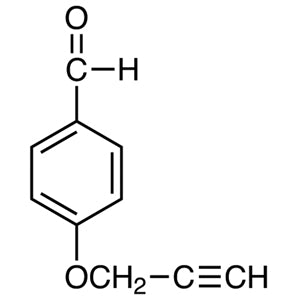
- TCI P2339 5651-86-5 4-(Propargyloxy)benzaldehyde
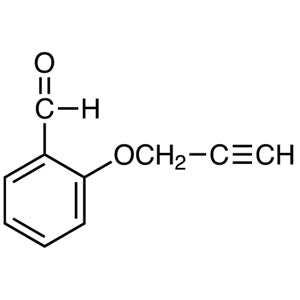
- TCI P2338 29978-83-4 2-(Propargyloxy)benzaldehyde
- Schiff base and imine synthesis — the aromatic aldehyde condenses cleanly with primary amines, while the pendant hydroxyethoxy chain remains available for later functionalisation of the resulting ligand.
- Macrocycle construction — the ortho placement of the flexible ether chain relative to the aldehyde brings both reactive ends into close spatial proximity, favouring intramolecular ring closure over polymerisation.
- Ion-capturing ligand preparation — the ether oxygen, the terminal hydroxyl, and the imine nitrogen formed from the aldehyde together provide multiple donor sites for coordinating metal centres.
- Linker and spacer chemistry — the ethylene glycol bridge introduces controlled flexibility between two molecular fragments, useful when rigid aromatic connectors give unsatisfactory conformational behaviour.
- Selective derivatisation studies — chemists exploit the differing reactivity of the aldehyde and the primary alcohol to modify one terminus while leaving the other intact for sequential synthetic steps.
| Brand | TCI (Tokyo Chemical Industry) |
|---|---|
| CAS number | 22042-72-4 |
| Molecular formula | — |
| Purity | — |
| Category | Chemistry > Building Blocks > Non-Heterocyclic Building Blocks |
| Pack sizes | available in standard TCI research-scale pack sizes; please confirm the currently listed options when ordering |
| Physical form | — |
| Storage | store in a cool, dry place in a tightly closed original container, away from light and oxidising agents |
- Catalogue Number: H0857
Keep the material in its original tightly closed container in a cool, dry, well-ventilated chemical store, protected from direct sunlight and away from oxidising agents and strong acids or bases. Aromatic aldehydes are prone to slow air oxidation, so minimise headspace and exposure to air by closing the container promptly after each use. Handle in a fume hood using nitrile gloves, safety goggles, and a laboratory coat, and avoid inhaling vapour or generating aerosols. Transfer with clean, dry glassware to prevent moisture ingress and cross-contamination. Consult the manufacturer's safety data sheet before first use, label all secondary containers clearly, and collect residues and contaminated consumables as chemical waste for disposal in line with your institution's procedures.
—
Produk Terkait
-
4-(2-Hydroxyethoxy)benzaldehyde TCI H0859
Regular price From Rp 1.060.500,00Regular price -
3-(2-Hydroxyethoxy)benzaldehyde TCI H0858
Regular price From Rp 1.298.850,00Regular price -
Methyl4-(2-Hydroxyethoxy)benzoate TCI H0820
Regular price From Rp 3.287.550,00Regular price -
4-(2-Hydroxyethoxy)salicylicAcid TCI H0730
Regular price Rp 6.253.800,00Regular price -
4-(Propargyloxy)benzaldehyde TCI P2339
Regular price From Rp 1.458.450,00Regular price -
2-(Propargyloxy)benzaldehyde TCI P2338
Regular price From Rp 717.150,00Regular price -
4-Methoxy-3-(methoxymethoxy)benzaldehyde TCI M3066
Regular price Rp 3.976.350,00Regular price -
4-[(2-Hydroxyethyl)(methyl)amino]benzaldehyde TCI H1844
Regular price From Rp 1.510.950,00Regular price



![1201-91-8 4-[(2-Hydroxyethyl)(methyl)amino]benzaldehyde - AMI Scientific](http://amiscientific.com/cdn/shop/files/TCI2510H1844.jpg?v=1767118605&width=533)