![1201-91-8 4-[(2-Hydroxyethyl)(methyl)amino]benzaldehyde - AMI Scientific](http://amiscientific.com/cdn/shop/files/TCI2510H1844.jpg?v=1767118605&width=1946)
![1201-91-8 4-[(2-Hydroxyethyl)(methyl)amino]benzaldehyde - AMI Scientific](http://amiscientific.com/cdn/shop/files/TCI2510H1844.jpg?v=1767118605&width=1445)
4-[(2-Hydroxyethyl)(methyl)amino]benzaldehyde is an aromatic compound that combines an aldehyde group, acting as an electron acceptor, with a substituted tertiary amine that serves as an electron donor, positioned para to one another on the benzene ring. This opposing donor–acceptor arrangement is a classic motif in dye chemistry and optical materials. In the laboratory, the compound functions as an important building block for preparing cyanine and merocyanine dyes, colorimetric indicators, and a wide range of fluorescent probes used in chemical analysis and biological imaging.
The characteristic that makes this material a preferred choice is the presence of three complementary reactive sites within a single molecule. The aldehyde group is readily available for Knoevenagel condensation and Schiff base formation, extending the conjugated system of the target structure. The hydroxyl group on the ethanol chain provides an anchoring point for esterification, etherification, or grafting onto polymers and solid surfaces. The tertiary amine acts as a strong electron donor that shifts the absorption of the final product toward longer wavelengths while increasing colour intensity. This combination gives molecular designers considerable flexibility.
In Indonesian laboratories, this building block is typically used in university and institutional research groups working on organic synthesis, materials chemistry, and analytical method development. It supports the preparation of laboratory-scale dye and probe libraries, exploratory work on optical sensing materials, and the synthesis of intermediates required for downstream coupling reactions. Research units that develop colorimetric or fluorescence-based detection methods generally keep such donor–acceptor aldehydes available as reference starting materials.
Related TCI products
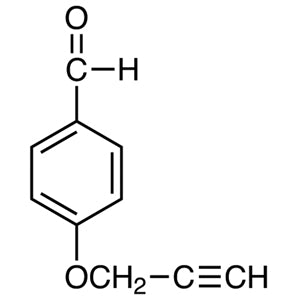
- TCI P2339 5651-86-5 4-(Propargyloxy)benzaldehyde
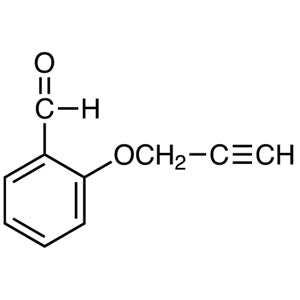
- TCI P2338 29978-83-4 2-(Propargyloxy)benzaldehyde
- TCI M3066 5779-98-6 4-Methoxy-3-(methoxymethoxy)benzaldehyde
- TCI H1216 124389-14-6 4-(11-Hydroxyundecyloxy)benzaldehyde
- TCI H0859 22042-73-5 4-(2-Hydroxyethoxy)benzaldehyde
- TCI H0858 60345-97-3 3-(2-Hydroxyethoxy)benzaldehyde
- Cyanine and merocyanine dye synthesis: the para donor–acceptor arrangement directly supports the extended conjugation these chromophore classes require for strong visible absorption.
- Fluorescent probe preparation: the strong electron-donating tertiary amine shifts emission toward longer wavelengths, which suits probes designed for chemical analysis and biological imaging work.
- Knoevenagel condensation studies: the readily available aldehyde group couples with active methylene partners to extend conjugation and build larger push–pull molecular frameworks.
- Schiff base formation: the aldehyde reacts with primary amines to give imine linkages, providing a straightforward route toward ligands and extended conjugated structures.
- Polymer and surface functionalisation: the hydroxyl group on the ethanol side chain allows esterification, etherification, or grafting of the chromophore onto polymers and solid supports.
| Brand | TCI |
|---|---|
| CAS number | 1201-91-8 |
| Molecular formula | — |
| Purity | — |
| Category | Chemistry > Building Blocks > Non-Heterocyclic Building Blocks |
| Pack sizes | available in standard TCI research-scale packaging; please refer to the current catalogue listing for available options |
| Physical form | — |
| Storage | store according to the conditions stated on the manufacturer label and accompanying safety data sheet |
- Catalogue code: H1844
Store the container tightly closed in a cool, dry, well-ventilated area, away from direct sunlight, heat sources, and incompatible materials, following the conditions stated on the manufacturer label and safety data sheet. Keep the material in its original supplier container or in a suitable tightly sealed amber glass container, since aldehydes and aromatic amines are generally sensitive to light, air, and moisture. Handle in a fume hood using safety glasses, chemical-resistant gloves, and a laboratory coat. Avoid inhalation of dust or vapour and avoid contact with skin and eyes. Close the container promptly after use, label all working solutions clearly, and dispose of residues and contaminated materials through the laboratory's designated chemical waste route in line with institutional procedures.
—
Produk Terkait
-
4-(Propargyloxy)benzaldehyde TCI P2339
Regular price From Rp 1.458.450,00Regular price -
2-(Propargyloxy)benzaldehyde TCI P2338
Regular price From Rp 717.150,00Regular price -
4-Methoxy-3-(methoxymethoxy)benzaldehyde TCI M3066
Regular price Rp 3.976.350,00Regular price -
4-(11-Hydroxyundecyloxy)benzaldehyde TCI H1216
Regular price From Rp 2.625.000,00Regular price -
4-(2-Hydroxyethoxy)benzaldehyde TCI H0859
Regular price From Rp 1.060.500,00Regular price -
3-(2-Hydroxyethoxy)benzaldehyde TCI H0858
Regular price From Rp 1.298.850,00Regular price -
2-(2-Hydroxyethoxy)benzaldehyde TCI H0857
Regular price From Rp 1.405.950,00Regular price -
2-HydroxyethylMethylTerephthalate TCI T1679
Regular price From Rp 1.803.900,00Regular price