


TCI H0858 3-(2-Hydroxyethoxy)benzaldehyde is the meta isomer of the hydroxyethoxybenzaldehyde family, with a 2-hydroxyethoxy chain attached at position three of the benzene ring and an aldehyde group at position one. This meta placement gives the molecule a geometry distinct from both the ortho and para isomers, making the compound a specialised choice when researchers require asymmetric angles and distances between functional groups. As a non-heterocyclic building block, it is widely used to design branched molecules, polymer linkers, and molecular frameworks with controlled directions of chain growth in synthetic laboratory work.
Its strengths rest on two functional groups that operate independently of one another. The aromatic aldehyde is ready to undergo condensation with amines, hydrazines, and active methylene compounds, or to be converted into alcohols, acids, or alkenes through reactions that are routine in the laboratory. The primary hydroxyl group at the end of the ether chain serves as a handle for esterification, etherification, tosylation, and attachment to resins and solid surfaces. The meta position distributes electronic effects across the ring differently from the other isomers, so the compound is frequently used to compare substituent influence across isomeric series.
In Indonesian laboratories, this building block is typically used in university and institutional research groups working on organic synthesis, polymer chemistry, and materials development, as well as in industrial R&D units preparing intermediates on a small scale. It commonly appears in graduate and postgraduate project work where a defined meta-substituted scaffold is needed, and in method development where a bifunctional aromatic starting material allows a synthetic route to be extended in two directions.
- Non-heterocyclic building block synthesis, where the meta-substituted aromatic core provides a rigid scaffold that researchers extend in two independent directions during multi-step organic preparations.
- Condensation chemistry with amines and hydrazines, since the aromatic aldehyde readily forms imines and hydrazones that serve as intermediates or characterisation derivatives in synthetic studies.
- Polymer linker preparation, because the terminal primary hydroxyl group allows esterification or etherification that connects the aromatic unit into a growing polymer chain under controlled conditions.
- Solid-phase and resin immobilisation work, as the free hydroxyl provides a reliable anchoring point for attaching the aldehyde-bearing fragment to resins and functionalised solid surfaces.
- Isomer comparison studies in physical organic chemistry, where the meta substitution pattern lets researchers evaluate how electronic and geometric effects differ from ortho and para analogues.
| Brand | TCI (Tokyo Chemical Industry) |
|---|---|
| CAS number | 60345-97-3 |
| Molecular formula | — |
| Purity | — |
| Category | Chemistry > Building Blocks > Non-Heterocyclic Building Blocks |
| Pack sizes | available in standard TCI research-scale packaging; please confirm the currently offered sizes when ordering |
| Physical form | — |
| Storage | keep in a closed original container under the conditions stated on the manufacturer's label and safety data sheet |
- Catalogue number: H0858
Store the material in its tightly closed original container in a cool, dry, and well-ventilated area, away from direct sunlight, heat sources, and incompatible chemicals such as strong oxidising agents. Aromatic aldehydes are generally sensitive to prolonged air exposure, so keep the container sealed between uses and avoid leaving it open on the bench. Handle the compound in a fume hood while wearing safety goggles, chemical-resistant gloves, and a laboratory coat. Use clean, dry glassware or compatible chemical-resistant containers for transfer and weighing. Always consult the manufacturer's safety data sheet before use, follow the storage conditions printed on the product label, and dispose of residues and contaminated materials through your institution's chemical waste procedures.
—
Produk Terkait
-
4-(2-Hydroxyethoxy)benzaldehyde TCI H0859
Regular price From Rp 1.060.500,00Regular price -
2-(2-Hydroxyethoxy)benzaldehyde TCI H0857
Regular price From Rp 1.405.950,00Regular price -
Methyl4-(2-Hydroxyethoxy)benzoate TCI H0820
Regular price From Rp 3.287.550,00Regular price -
4-(2-Hydroxyethoxy)salicylicAcid TCI H0730
Regular price Rp 6.253.800,00Regular price -
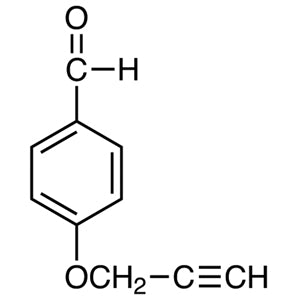
4-(Propargyloxy)benzaldehyde TCI P2339
Regular price From Rp 1.458.450,00Regular price -
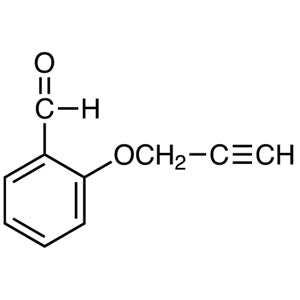
2-(Propargyloxy)benzaldehyde TCI P2338
Regular price From Rp 717.150,00Regular price -
4-Methoxy-3-(methoxymethoxy)benzaldehyde TCI M3066
Regular price Rp 3.976.350,00Regular price -
4-[(2-Hydroxyethyl)(methyl)amino]benzaldehyde TCI H1844
Regular price From Rp 1.510.950,00Regular price



![1201-91-8 4-[(2-Hydroxyethyl)(methyl)amino]benzaldehyde - AMI Scientific](http://amiscientific.com/cdn/shop/files/TCI2510H1844.jpg?v=1767118605&width=533)