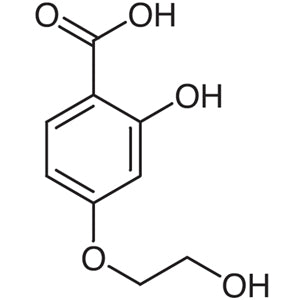
4-(2-Hydroxyethoxy)salicylic Acid is a chemical compound widely used in laboratory settings for various organic synthesis reactions. It serves as a fundamental building block in the development of compounds with specific functional properties, such as pharmaceuticals, industrial chemicals, and analytical reagents. This compound is particularly valuable in research where the presence of both hydroxyl and carboxylic acid groups is essential for the desired chemical transformations. Its versatility makes it a key component in the toolkit of chemists working on complex molecular structures.
The compound’s unique chemical properties make it a preferred choice in laboratory applications. It exhibits good solubility in organic solvents, which facilitates its use in a wide range of chemical processes. The presence of hydroxyl and carboxylic acid groups contributes to its reactivity, enabling it to participate in substitution, esterification, and other reaction mechanisms. These functional groups allow for the synthesis of more complex molecules with tailored properties, making it an essential reagent in both academic and industrial research environments.
In Indonesian laboratories, 4-(2-Hydroxyethoxy)salicylic Acid is commonly used in pure and applied chemical research. It plays a vital role in drug development, industrial chemical production, and analytical chemistry. Its availability and chemical versatility make it a standard material for researchers aiming to create new compounds with specific applications. This compound supports a wide range of experimental needs, from basic research to advanced synthesis projects.
- Organic synthesis is a primary application where this compound is used to create complex molecules with specific functional groups.
- Pharmaceutical research benefits from its ability to participate in reactions that form key intermediates in drug development.
- Industrial chemical production relies on its reactivity for the synthesis of various chemical compounds used in manufacturing.
- Analytical chemistry uses it as a reagent for the detection and quantification of specific compounds in samples.
- Material science applications take advantage of its functional groups to develop new materials with tailored properties.
| Brand | TCI |
|---|---|
| CAS number | 163451-82-9 |
| Molecular formula | — |
| Purity | — |
| Category | Chemistry > Building Blocks > Non-Heterocyclic Building Blocks |
| Pack sizes | Available in various quantities as per supplier specifications |
| Physical form | Solid, typically in crystalline or powder form |
| Storage | Store in a cool, dry place away from direct sunlight and moisture |
This compound should be stored in a cool, dry environment to maintain its chemical integrity. It is recommended to keep it in a sealed container to prevent exposure to moisture and air. Due to its reactivity, it should be handled with care in a well-ventilated area. Proper personal protective equipment, such as gloves and safety goggles, should be worn during handling. Avoid contact with skin and eyes, and ensure that it is stored separately from incompatible substances. Regular monitoring of storage conditions is advised to ensure optimal preservation of the material.
—
Produk Terkait
-
4-(2-Hydroxyethoxy)benzaldehyde TCI H0859
Regular price From Rp 1.060.500,00Regular price -
3-(2-Hydroxyethoxy)benzaldehyde TCI H0858
Regular price From Rp 1.298.850,00Regular price -
2-(2-Hydroxyethoxy)benzaldehyde TCI H0857
Regular price From Rp 1.405.950,00Regular price -
Methyl4-(2-Hydroxyethoxy)benzoate TCI H0820
Regular price From Rp 3.287.550,00Regular price -
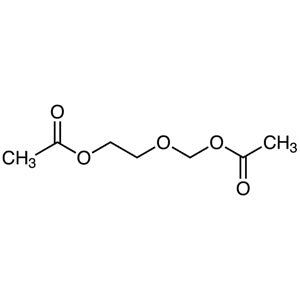
(2-Acetoxyethoxy)methylAcetate TCI A3163
Regular price From Rp 452.550,00Regular price -
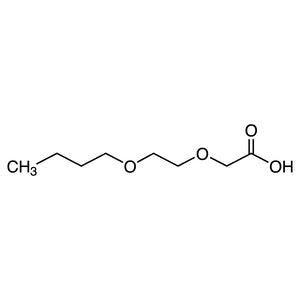
(2-Butoxyethoxy)aceticAcid TCI D2491
Regular price From Rp 3.551.100,00Regular price -
1,3-Bis(2-hydroxyethoxy)benzene TCI B1625
Regular price From Rp 1.326.150,00Regular price -
1,4-Bis(2-hydroxyethoxy)-2-butyne TCI B0979
Regular price Rp 2.121.000,00Regular price