


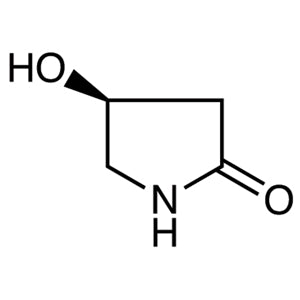
(S)-(-)-4-Hydroxy-2-pyrrolidone is a five-membered lactam bearing a hydroxyl group at the four position with a defined, pre-established stereochemical configuration. As a chiral building block, this compound occupies an important position in asymmetric synthesis laboratories because it supplies a stereogenic centre that is already formed from the outset. Researchers do not need to undertake racemic resolution steps or costly and time-consuming asymmetric catalysis; instead, they can build the target molecule directly onto a framework whose optical purity has been preserved from the moment the starting material arrives in the laboratory.
The property that makes this material especially valuable is the presence of two complementary reactive sites within a small molecule: a secondary hydroxyl group that can be esterified, oxidised, or converted into a leaving group, and a lactam nitrogen that can be alkylated or acylated. Its compact molecular size keeps the contribution to the mass of the target molecule efficient, while the pyrrolidinone framework is widely recognised as a core that appears frequently in bioactive molecules. The preserved enantiomeric purity makes it a dependable reference point when the final synthetic product must meet stereochemical requirements.
In Indonesian laboratories, this building block is typically used in university and institutional research groups working on asymmetric synthesis, medicinal chemistry, and the preparation of enantiomerically defined intermediates. It suits work where a reliable chiral starting material shortens a synthetic route and where the stereochemical integrity of the final product must be demonstrable. Supplied by AMI Scientific under the TCI brand, it serves both teaching-linked research activities and dedicated synthetic chemistry programmes.
TCI brochures (PDF)
- Chiral Building Blocks 2025-04-14 · p. 3
Related TCI products
- TCI H1573 25747-41-5 4-Hydroxy-2-pyrrolidone
- TCI B3662 61478-26-0 (2S,4R)-1-(tert-Butoxycarbonyl)-4-hydroxy-2-(hydroxymethyl)pyrrolidine
- TCI H1656 132127-34-5 (3R,4S)-3-Hydroxy-4-phenyl-2-azetidinone
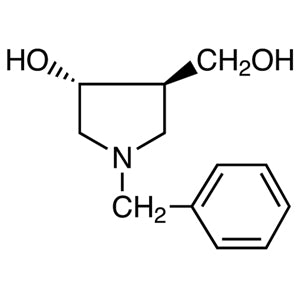
- TCI H1200 253129-03-2 (3R,4R)-1-Benzyl-4-hydroxy-3-pyrrolidinemethanol
- TCI H0933 48172-10-7 (S)-(+)-2-Hydroxy-4-phthalimidobutyric Acid
- TCI D3661 42399-49-5 (2S,3S)-(+)-2,3-Dihydro-3-hydroxy-2-(4-methoxyphenyl)-1,5-benzothiazepin-4(5H)-one
- Asymmetric synthesis route development: the pre-set stereogenic centre removes the need for racemic resolution or expensive asymmetric catalysis steps, shortening the overall route to the target molecule.
- Chiral intermediate preparation: the secondary hydroxyl group can be esterified, oxidised, or converted into a leaving group, giving chemists several complementary directions from a single starting material.
- Lactam nitrogen functionalisation studies: the nitrogen can be alkylated or acylated independently of the hydroxyl group, allowing selective derivatisation strategies to be explored on one compact framework.
- Bioactive scaffold construction: the pyrrolidinone core appears frequently in biologically active molecules, making this compound a practical entry point for building such frameworks with defined stereochemistry.
- Enantiomeric purity reference work: preserved optical purity makes the material a dependable point of comparison when the stereochemical requirements of a final synthetic product must be verified.
| Brand | TCI (Tokyo Chemical Industry) |
|---|---|
| CAS number | 68108-18-9 |
| Molecular formula | — |
| Purity | — |
| Category | Chemistry > Asymmetric Synthesis > Chiral Building Blocks |
| Pack sizes | available in the standard research-scale pack sizes listed by the manufacturer; please confirm the required size when ordering |
| Physical form | — |
| Storage | store according to the conditions stated on the manufacturer's label and safety data sheet |
- Catalogue number: H1368
Store the container tightly closed in a cool, dry place away from direct sunlight, moisture, and incompatible materials, following the storage conditions stated on the manufacturer's label and safety data sheet. Keep the material in its original supplied container, or transfer it only into clean, chemically compatible and clearly labelled containers. Handle in a well-ventilated area or fume hood, wearing a laboratory coat, safety glasses, and suitable gloves. Because the compound is hygroscopic-sensitive chemistry of this type depends on dry conditions, minimise the time the container stays open and close it promptly after weighing. Consult the safety data sheet before first use and dispose of residues through the laboratory's chemical waste procedure.
—
Produk Terkait
-
4-Hydroxy-2-pyrrolidone TCI H1573
Regular price Rp 1.115.100,00Regular price -
(2S,4R)-1-(tert-Butoxycarbonyl)-4-hydroxy-2-(hydroxymethyl)pyrrolidine TCI B3662
Regular price From Rp 1.273.650,00Regular price -
(3R,4S)-3-Hydroxy-4-phenyl-2-azetidinone TCI H1656
Regular price From Rp 980.700,00Regular price -
(3R,4R)-1-Benzyl-4-hydroxy-3-pyrrolidinemethanol TCI H1200
Regular price Rp 6.015.450,00Regular price -
(S)-(+)-2-Hydroxy-4-phthalimidobutyricAcid TCI H0933
Regular price Rp 2.279.550,00Regular price -
(2S,3S)-(+)-2,3-Dihydro-3-hydroxy-2-(4-methoxyphenyl)-1,5-benzothiazepin-4(5H)-one TCI D3661
Regular price From Rp 743.400,00Regular price -
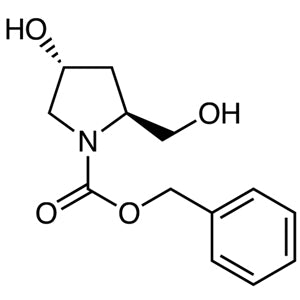
N-Carbobenzoxy-trans-4-hydroxy-L-prolinol TCI C3255
Regular price Rp 2.411.850,00Regular price -
(S)-6-Chloro-4-hydroxy-3,4-dihydro-2H-thieno[3,2-e][1,2]thiazine1,1-Dioxide TCI C2832
Regular price From Rp 1.140.300,00Regular price




![(S)-6-Chloro-4-hydroxy-3,4-dihydro-2H-thieno[3,2-e][1,2]thiazine 1,1-Dioxide (CAS 160982-16-1) - TCI C2832 - AMI Scientific](http://amiscientific.com/cdn/shop/files/TCI2510C2832.jpg?v=1767098859&width=533)