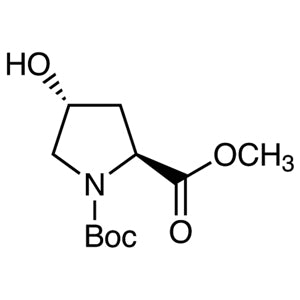
(2S,4R)-1-(tert-Butoxycarbonyl)-4-hydroxy-2-(hydroxymethyl)pyrrolidine is a complex chemical compound widely utilized in asymmetric synthesis. This chiral building block plays a crucial role in laboratories where the goal is to produce molecules with specific stereochemical configurations. Its unique structure allows for the creation of compounds with precise spatial arrangements, which are essential in the development of bioactive molecules. As a key component in organic synthesis, it supports researchers in achieving high enantiomeric purity, making it indispensable in advanced chemical processes.
The compound’s properties, including the presence of hydroxyl groups and a tert-butoxycarbonyl group, contribute to its reactivity and stability. These functional groups enable it to participate in various chemical reactions such as deprotonation and substitution, making it highly versatile in synthetic pathways. Its ability to undergo complex transformations under controlled conditions makes it a preferred choice for chemists working on intricate molecular designs. The compound’s structural characteristics also allow for selective modifications, enhancing its utility in targeted synthesis strategies.
In Indonesian laboratories, this compound is commonly used in organic chemistry research, particularly in pharmaceutical and biochemical studies. It is a valuable tool for developing new therapeutic agents, as its stereochemical properties are critical in the design of drugs with specific biological activities. Researchers in both academic and industrial settings rely on this compound to advance their work in asymmetric synthesis and drug discovery. Its application extends to the study of reaction mechanisms and the optimization of synthetic routes for complex molecules.
TCI brochures (PDF)
- Chiral Building Blocks 2025-04-14 · p. 3
Related TCI products
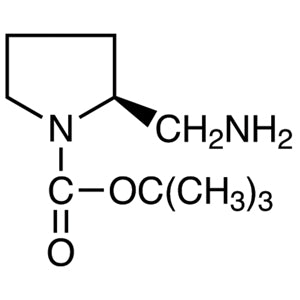
- TCI A2712 259537-92-3 (R)-2-(Aminomethyl)-1-(tert-butoxycarbonyl)pyrrolidine
- TCI A2473 119020-01-8 (S)-2-(Aminomethyl)-1-(tert-butoxycarbonyl)pyrrolidine
- TCI B4287 82689-19-8 Nalpha-(tert-Butoxycarbonyl)-L-tryptophanol
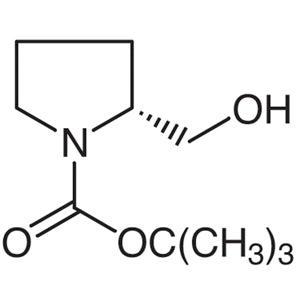
- TCI B3077 69610-40-8 N-(tert-Butoxycarbonyl)-L-prolinol
- TCI B3076 83435-58-9 N-(tert-Butoxycarbonyl)-D-prolinol
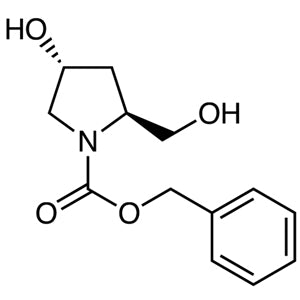
- TCI C3255 95687-41-5 N-Carbobenzoxy-trans-4-hydroxy-L-prolinol
- Asymmetric Synthesis Research – This compound is ideal for creating chiral molecules with precise stereochemistry, essential for pharmaceutical development.
- Organic Chemistry Studies – Its unique structure supports the synthesis of complex organic compounds, making it a key reagent in advanced chemical research.
- Drug Discovery Projects – The compound’s stereochemical properties are crucial in the development of bioactive molecules with therapeutic potential.
- Biochemical Investigations – It is used to study molecular interactions and reaction mechanisms in biological systems.
- Synthetic Route Optimization – Its reactivity and stability make it a valuable tool for refining and improving synthetic methodologies.
| Brand | TCI |
|---|---|
| CAS number | 61478-26-0 |
| Molecular formula | — |
| Purity | — |
| Category | Chemistry > Asymmetric Synthesis > Chiral Building Blocks |
| Pack sizes | Available in various quantities as per supplier specifications |
| Physical form | Solid or liquid, depending on the specific formulation |
| Storage | Store in a cool, dry place away from moisture and direct sunlight |
This compound should be stored in a cool, dry environment to maintain its chemical integrity. It is recommended to use airtight containers to prevent exposure to moisture and air, which can affect its stability. Proper labeling of storage containers is essential for safety and traceability. In laboratory settings, it should be handled with appropriate personal protective equipment, such as gloves and safety goggles, to minimize direct contact. Due to its chemical nature, it should be kept away from incompatible substances to prevent unwanted reactions. Regular monitoring of storage conditions ensures the compound remains in optimal condition for use in research applications.
—
Product Categories
- Asymmetric SynthesisChiral Building BlocksChiral Heterocyclic Building Blocks
- Building BlocksChiral Building BlocksChiral Heterocyclic Building Blocks
- Chemical BiologyPeptide ChemistryAmino Acid Derivatives [Peptide Chemistry]
- Pharmaceutical Development and Drug Discovery Research ReagentsPeptide ChemistryAmino Acid Derivatives [Peptide Chemistry]
Produk Terkait
-
(R)-2-(Aminomethyl)-1-(tert-butoxycarbonyl)pyrrolidine TCI A2712
Regular price Rp 5.352.900,00Regular priceRp 3.759.000,00Sale price Rp 5.352.900,00 -
(S)-2-(Aminomethyl)-1-(tert-butoxycarbonyl)pyrrolidine TCI A2473
Regular price Rp 2.252.250,00Regular priceRp 1.590.750,00Sale price Rp 2.252.250,00 -
Nalpha-(tert-Butoxycarbonyl)-L-tryptophanol TCI B4287
Regular price From Rp 1.008.000,00Regular priceRp 720.300,00Sale price From Rp 1.008.000,00 -
N-(tert-Butoxycarbonyl)-L-prolinol TCI B3077
Regular price From Rp 900.900,00Regular priceRp 645.750,00Sale price From Rp 900.900,00 -
N-(tert-Butoxycarbonyl)-D-prolinol TCI B3076
Regular price From Rp 610.050,00Regular priceRp 442.050,00Sale price From Rp 610.050,00 -
N-Carbobenzoxy-trans-4-hydroxy-L-prolinol TCI C3255
Regular price Rp 2.464.350,00Regular priceRp 1.738.800,00Sale price Rp 2.464.350,00 -
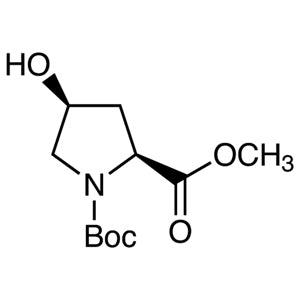
N-(tert-Butoxycarbonyl)-cis-4-hydroxy-L-prolineMethylEster TCI B3987
Regular price From Rp 742.350,00Regular priceRp 534.450,00Sale price From Rp 742.350,00 -
N-(tert-Butoxycarbonyl)-trans-4-hydroxy-L-prolineMethylEster TCI B3843
Regular price From Rp 822.150,00Regular priceRp 590.100,00Sale price From Rp 822.150,00