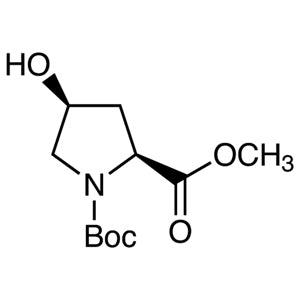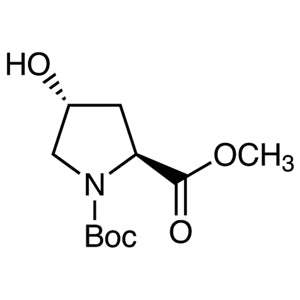
N-(tert-Butoxycarbonyl)-trans-4-hydroxy-L-proline Methyl Ester is a chemical compound widely used in organic and biochemical research, particularly in peptide synthesis. This compound plays a crucial role in laboratories where the development of complex molecules with specific biological activities is required. It is commonly employed in studies focused on protein structure and function due to its ability to participate in peptide bond formation. Its chemical stability and reactivity make it a valuable tool for chemists and biochemists working on advanced synthetic pathways.
The compound is preferred for its chemical reactivity and solubility in organic solvents, which facilitates its use in various synthetic reactions. Its ester functionality allows it to act as an intermediate in chemical processes, making it suitable for applications requiring controlled chemical transformations. Additionally, its compatibility with a wide range of reagents enhances its versatility in laboratory settings. These properties ensure that it remains a reliable and efficient component in the synthesis of bioactive compounds.
In Indonesian laboratories, this compound is frequently used in biochemical, pharmacological, and health science research. Researchers utilize it to develop new compounds with potential therapeutic applications. Its broad range of uses in drug discovery and molecular biology makes it an essential reagent for scientists working on innovative projects in the life sciences.
TCI brochures (PDF)
- Amino Acids and Peptide Synthesis Reagents 2025-08-14 · p. 14
Related TCI products
- TCI B3987 102195-79-9 N-(tert-Butoxycarbonyl)-cis-4-hydroxy-L-proline Methyl Ester
- TCI B4787 73323-65-6 N-(tert-Butoxycarbonyl)-D-proline Methyl Ester
- TCI B4141 84348-37-8 N-(tert-Butoxycarbonyl)-4-oxo-L-proline
- TCI B3414 102185-34-2 N-(tert-Butoxycarbonyl)-D-proline Succinimidyl Ester
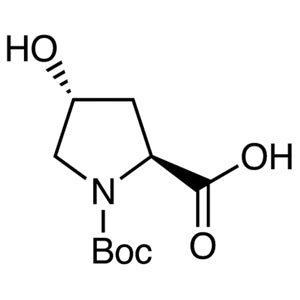
- TCI B1635 13726-69-7 trans-N-(tert-Butoxycarbonyl)-4-hydroxy-L-proline
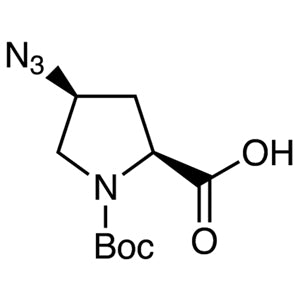
- TCI A3129 132622-65-2 cis-4-Azido-N-(tert-butoxycarbonyl)-L-proline
- Peptide Synthesis: This compound is ideal for constructing peptide sequences due to its reactivity and compatibility with standard peptide coupling protocols.
- Protein Structure Studies: It is used to investigate the structural properties of proteins by participating in synthetic reactions that mimic natural peptide bond formation.
- Drug Discovery Research: Its ability to form stable intermediates makes it useful in the development of bioactive molecules with pharmaceutical potential.
- Organic Chemistry Experiments: The compound's solubility in organic solvents and chemical stability make it a preferred choice for synthetic reactions requiring ester intermediates.
- Biochemical Analysis: It supports the preparation of complex molecules used in biochemical assays and functional studies of biological systems.
| Brand | TCI |
|---|---|
| CAS number | 74844-91-0 |
| Molecular formula | — |
| Purity | — |
| Category | Chemistry > Chemical Biology > Peptide Chemistry |
| Pack sizes | Available in various quantities as per supplier specifications |
| Physical form | Solid, crystalline powder |
| Storage | Store in a cool, dry place away from moisture and direct light |
This compound should be stored in a cool, dry environment to maintain its chemical stability and prevent degradation. It is recommended to keep it in a tightly sealed container to avoid exposure to moisture and air, which can affect its reactivity. Due to its chemical nature, it should be handled in a well-ventilated laboratory setting, ideally with appropriate personal protective equipment. Avoid direct contact with skin and eyes, and ensure proper disposal of any unused material according to local regulations. Regular monitoring of storage conditions ensures optimal performance and safety in laboratory applications.
—
Product Categories
- Chemical BiologyPeptide ChemistryAmino Acid Derivatives [Peptide Chemistry]
- Chemical BiologyPeptide ChemistryUnnatural Amino Acid Derivatives
- Pharmaceutical Development and Drug Discovery Research ReagentsPeptide ChemistryAmino Acid Derivatives [Peptide Chemistry]
- Pharmaceutical Development and Drug Discovery Research ReagentsPeptide ChemistryUnnatural Amino Acid Derivatives
- Biochemicals and ReagentsAmino AcidsC-ProtectedAmino Acids
- Biochemicals and ReagentsAmino AcidsN-Protected Amino Acids
- Pharmaceutical Development and Drug Discovery ResearchPeptide ChemistryAmino Acid Derivatives [Peptide Chemistry]
- Pharmaceutical Development and Drug Discovery ResearchPeptide ChemistryUnnatural Amino Acid Derivatives
Produk Terkait
-
N-(tert-Butoxycarbonyl)-cis-4-hydroxy-L-prolineMethylEster TCI B3987
Regular price From Rp 742.350,00Regular priceRp 534.450,00Sale price From Rp 742.350,00 -
N-(tert-Butoxycarbonyl)-D-prolineMethylEster TCI B4787
Regular price From Rp 822.150,00Regular priceRp 590.100,00Sale price From Rp 822.150,00 -
N-(tert-Butoxycarbonyl)-4-oxo-L-proline TCI B4141
Regular price From Rp 1.351.350,00Regular priceRp 960.750,00Sale price From Rp 1.351.350,00 -
N-(tert-Butoxycarbonyl)-D-prolineSuccinimidylEster TCI B3414
Regular price From Rp 795.900,00Regular priceRp 572.250,00Sale price From Rp 795.900,00 -
trans-N-(tert-Butoxycarbonyl)-4-hydroxy-L-proline TCI B1635
Regular price Rp 1.829.100,00Regular priceRp 1.294.650,00Sale price Rp 1.829.100,00 -
cis-4-Azido-N-(tert-butoxycarbonyl)-L-proline TCI A3129
Regular price From Rp 1.167.600,00Regular priceRp 831.600,00Sale price From Rp 1.167.600,00 -
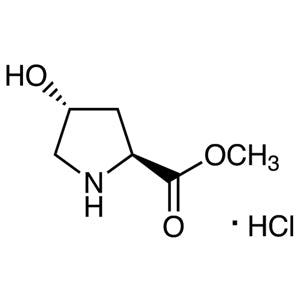
trans-4-Hydroxy-L-prolineMethylEsterHydrochloride TCI H1533
Regular price From Rp 1.060.500,00Regular priceRp 757.050,00Sale price From Rp 1.060.500,00 -
trans-N-Carbobenzoxy-4-hydroxy-L-proline TCI C2506
Regular price From Rp 822.150,00Regular priceRp 590.100,00Sale price From Rp 822.150,00