Trans-N-Carbobenzoxy-4-hydroxy-L-proline is a chemical compound widely used in biochemical and peptide chemistry research. It serves as a key reagent in the synthesis of peptides and molecular modifications, playing a crucial role in laboratory settings where precision and specificity are essential. This compound is particularly valuable in studies involving protein interactions and enzymatic activities, making it a fundamental tool for researchers in both academic and industrial environments. Its versatility allows it to be integrated into various experimental protocols, supporting the development of bioactive compounds and pharmaceutical research.
The compound's chemical stability and ability to interact with different reagents under controlled conditions make it a preferred choice for many applications. Its specific molecular structure enables high precision in peptide synthesis, ensuring reliable results in complex chemical processes. Additionally, its availability in solid form and compatibility with various reaction media enhance its utility in laboratory workflows. These properties make it an essential component in advanced chemical and biological research, particularly in the field of medicinal chemistry.
In Indonesian laboratories, trans-N-Carbobenzoxy-4-hydroxy-L-proline is commonly used in biomedical and pharmacological studies. It is a key ingredient in the development of new drugs and the investigation of molecular interactions. Researchers in educational and research institutions across Indonesia rely on this compound for its consistent performance and reliability in experimental settings. Its application supports both basic and applied research, contributing to the advancement of scientific knowledge in the region.
TCI brochures (PDF)
- Amino Acids and Peptide Synthesis Reagents 2025-08-14 · p. 18
Related TCI products
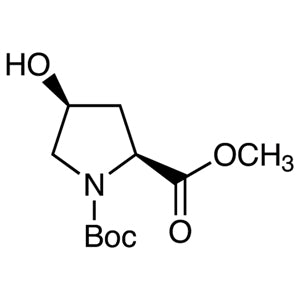
- TCI B3987 102195-79-9 N-(tert-Butoxycarbonyl)-cis-4-hydroxy-L-proline Methyl Ester
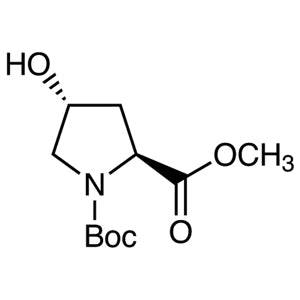
- TCI B3843 74844-91-0 N-(tert-Butoxycarbonyl)-trans-4-hydroxy-L-proline Methyl Ester
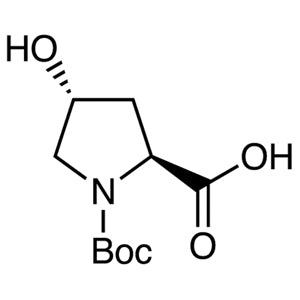
- TCI B1635 13726-69-7 trans-N-(tert-Butoxycarbonyl)-4-hydroxy-L-proline
- TCI B5887 87691-27-8 cis-N-(tert-Butoxycarbonyl)-4-hydroxy-L-proline
- TCI B5857 114676-69-6 N-(tert-Butoxycarbonyl)-cis-4-hydroxy-D-proline Methyl Ester
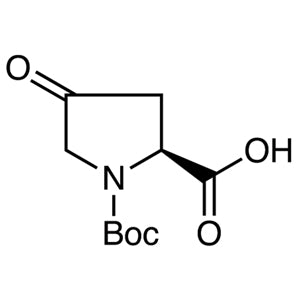
- TCI B4141 84348-37-8 N-(tert-Butoxycarbonyl)-4-oxo-L-proline
- Peptide Synthesis: This compound is ideal for peptide synthesis due to its specific functional groups and stability, enabling the creation of complex molecular structures with high accuracy.
- Enzymatic Activity Studies: It is used to investigate enzymatic reactions and substrate interactions, providing insights into biochemical mechanisms and catalytic processes.
- Protein Interaction Research: Its role in molecular interactions makes it suitable for studying protein binding and conformational changes in biological systems.
- Drug Development: It supports the development of bioactive compounds by serving as a building block in the synthesis of pharmaceutical agents.
- Molecular Modification Studies: Its chemical properties allow for the modification of molecules in controlled environments, aiding in the design of novel therapeutic agents.
| Brand | TCI |
|---|---|
| CAS number | 13504-85-3 |
| Molecular formula | — |
| Purity | — |
| Category | Chemistry > Chemical Biology > Peptide Chemistry |
| Pack sizes | Available in standard laboratory quantities |
| Physical form | Solid |
| Storage | Store in a cool, dry place away from direct light |
This compound should be stored in a cool, dry environment, away from direct sunlight and moisture. It is recommended to use airtight containers to prevent exposure to air and humidity, which could affect its stability. Proper labeling of storage containers is essential for safety and traceability. In laboratory settings, it should be handled with appropriate personal protective equipment to minimize exposure. Regular monitoring of storage conditions ensures the compound remains in optimal condition for use. Always follow standard laboratory safety protocols when handling and storing chemical reagents.
—
Product Categories
- Chemical BiologyPeptide ChemistryAmino Acid Derivatives [Peptide Chemistry]
- Chemical BiologyPeptide ChemistryUnnatural Amino Acid Derivatives
- Pharmaceutical Development and Drug Discovery Research ReagentsPeptide ChemistryAmino Acid Derivatives [Peptide Chemistry]
- Pharmaceutical Development and Drug Discovery Research ReagentsPeptide ChemistryUnnatural Amino Acid Derivatives
Produk Terkait
-
N-(tert-Butoxycarbonyl)-cis-4-hydroxy-L-prolineMethylEster TCI B3987
Regular price From Rp 689.850,00Regular price -
N-(tert-Butoxycarbonyl)-trans-4-hydroxy-L-prolineMethylEster TCI B3843
Regular price From Rp 769.650,00Regular price -
trans-N-(tert-Butoxycarbonyl)-4-hydroxy-L-proline TCI B1635
Regular price Rp 1.776.600,00Regular price -
cis-N-(tert-Butoxycarbonyl)-4-hydroxy-L-proline TCI B5887
Regular price From Rp 1.167.600,00Regular price -
N-(tert-Butoxycarbonyl)-cis-4-hydroxy-D-prolineMethylEster TCI B5857
Regular price From Rp 717.150,00Regular price -
N-(tert-Butoxycarbonyl)-4-oxo-L-proline TCI B4141
Regular price From Rp 1.298.850,00Regular price -
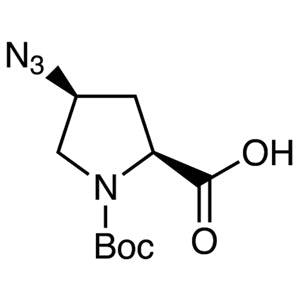
cis-4-Azido-N-(tert-butoxycarbonyl)-L-proline TCI A3129
Regular price From Rp 1.115.100,00Regular price -
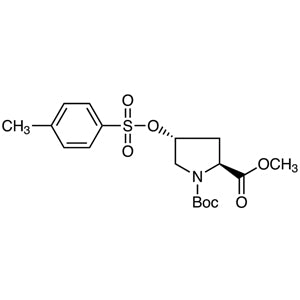
N-(tert-Butoxycarbonyl)-trans-4-(p-toluenesulfonyloxy)-L-prolineMethylEster TCI B5247
Regular price From Rp 557.550,00Regular price