TCI B5887 is cis-N-(tert-Butoxycarbonyl)-4-hydroxy-L-proline, a derivative of the amino acid proline in which the ring nitrogen has been protected with a tert-butoxycarbonyl (Boc) group and which carries a hydroxyl group at the 4-position in the cis orientation. The compound belongs to the family of peptide chemistry raw materials that are very frequently used as chiral building blocks in stepwise peptide synthesis, both on solid phase and in solution phase. The presence of two functional groups of differing reactivity, namely a free carboxylic acid and a secondary hydroxyl, makes this material a flexible starting point for chemists who wish to construct more elaborate molecular frameworks in a controlled and deliberate manner.
The characteristic that makes this material a preferred choice is its stereochemical purity. The compound is the cis isomer of 4-hydroxyproline, that is, the epimer of the naturally occurring trans-configured hydroxyproline, and it therefore gives researchers access to a different folding pattern of the pyrrolidine ring. That difference in hydroxyl orientation has been shown to influence the ring puckering preference and, ultimately, the conformation of the peptide chain built from it. The Boc protecting group adds a further practical advantage, since it masks the ring nitrogen during coupling steps and can be removed under acidic conditions without disturbing the stereocentres of the molecule, allowing the synthetic sequence to be planned with confidence.
In Indonesian laboratories, a building block of this type is typically found in university research groups, pharmaceutical development units, and contract research facilities that work on peptide synthesis and medicinal chemistry programmes. It is generally ordered in modest quantities for exploratory and method-development work rather than for bulk production, and is handled within a standard synthetic organic chemistry setup equipped with a fume hood, an analytical balance, and facilities for chromatographic purification and structural confirmation of the products obtained.
TCI brochures (PDF)
- Amino Acids and Peptide Synthesis Reagents 2025-08-14 · p. 15
Related TCI products
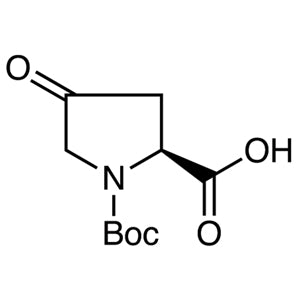
- TCI B4141 84348-37-8 N-(tert-Butoxycarbonyl)-4-oxo-L-proline
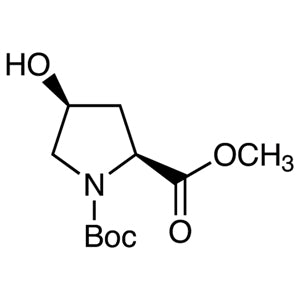
- TCI B3987 102195-79-9 N-(tert-Butoxycarbonyl)-cis-4-hydroxy-L-proline Methyl Ester
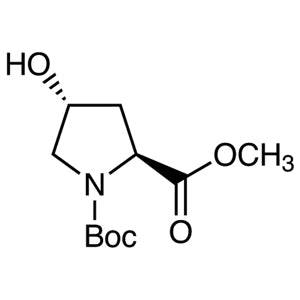
- TCI B3843 74844-91-0 N-(tert-Butoxycarbonyl)-trans-4-hydroxy-L-proline Methyl Ester
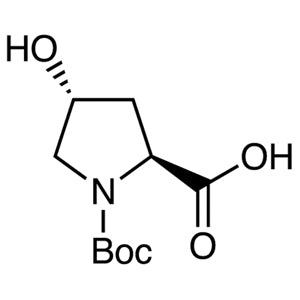
- TCI B1635 13726-69-7 trans-N-(tert-Butoxycarbonyl)-4-hydroxy-L-proline
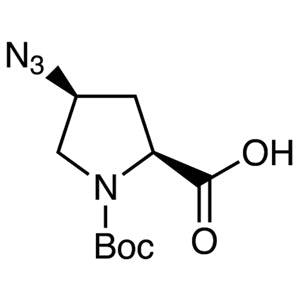
- TCI A3129 132622-65-2 cis-4-Azido-N-(tert-butoxycarbonyl)-L-proline
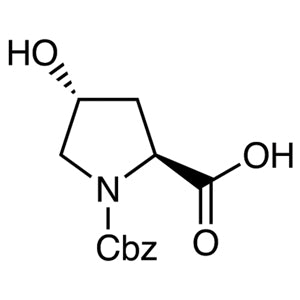
- TCI C2506 13504-85-3 trans-N-Carbobenzoxy-4-hydroxy-L-proline
- Stepwise solid-phase peptide synthesis, where the Boc-protected ring nitrogen allows the residue to be introduced into a growing chain without side reactions at the amine, while the free carboxylic acid serves as the coupling handle.
- Solution-phase peptide assembly, in which the compound acts as a defined chiral building block that can be coupled, deprotected, and extended through a planned sequence of transformations under conventional organic synthesis conditions.
- Conformational studies of peptide chains, because the cis orientation of the 4-hydroxyl group alters pyrrolidine ring puckering and therefore lets researchers probe how proline stereochemistry shapes the overall peptide fold.
- Medicinal chemistry scaffold construction, where the secondary hydroxyl offers a selective attachment point for further derivatisation while the carboxylic acid remains available for amide bond formation elsewhere in the molecule.
- Preparation of non-natural proline analogues and peptidomimetics, since this epimer of natural trans-hydroxyproline gives access to structural variants that cannot be obtained directly from the naturally occurring amino acid.
| Brand | TCI |
|---|---|
| CAS number | 87691-27-8 |
| Molecular formula | — |
| Purity | — |
| Category | Chemistry > Chemical Biology > Peptide Chemistry |
| Pack sizes | available in the catalogue pack sizes offered by the manufacturer for this item |
| Physical form | — |
| Storage | keep in the closed original container under the conditions stated on the manufacturer's label |
- Chemical name: cis-N-(tert-Butoxycarbonyl)-4-hydroxy-L-proline
Store the container tightly closed in a cool, dry, and well-ventilated place, away from heat sources, direct sunlight, and moisture, following the storage conditions indicated on the manufacturer's label. Keep the material in its original container or in a chemically compatible, clearly labelled vessel, and close it promptly after each use to limit exposure to atmospheric moisture. Handle the compound in a fume hood using standard laboratory personal protective equipment, including safety glasses, gloves, and a laboratory coat. Weigh and transfer the solid carefully to avoid generating dust, avoid contact with skin and eyes, and wash hands thoroughly after handling. Consult the manufacturer's safety data sheet before use, and dispose of residues and contaminated materials in accordance with applicable laboratory waste procedures.
—
Product Categories
- Chemical BiologyPeptide ChemistryAmino Acid Derivatives [Peptide Chemistry]
- Chemical BiologyPeptide ChemistryUnnatural Amino Acid Derivatives
- Pharmaceutical Development and Drug Discovery Research ReagentsPeptide ChemistryAmino Acid Derivatives [Peptide Chemistry]
- Pharmaceutical Development and Drug Discovery Research ReagentsPeptide ChemistryUnnatural Amino Acid Derivatives
Produk Terkait
-
N-(tert-Butoxycarbonyl)-4-oxo-L-proline TCI B4141
Regular price From Rp 1.298.850,00Regular price -
N-(tert-Butoxycarbonyl)-cis-4-hydroxy-L-prolineMethylEster TCI B3987
Regular price From Rp 689.850,00Regular price -
N-(tert-Butoxycarbonyl)-trans-4-hydroxy-L-prolineMethylEster TCI B3843
Regular price From Rp 769.650,00Regular price -
trans-N-(tert-Butoxycarbonyl)-4-hydroxy-L-proline TCI B1635
Regular price Rp 1.776.600,00Regular price -
cis-4-Azido-N-(tert-butoxycarbonyl)-L-proline TCI A3129
Regular price From Rp 1.115.100,00Regular price -
trans-N-Carbobenzoxy-4-hydroxy-L-proline TCI C2506
Regular price From Rp 769.650,00Regular price -
N-(tert-Butoxycarbonyl)-cis-4-hydroxy-D-prolineMethylEster TCI B5857
Regular price From Rp 717.150,00Regular price -
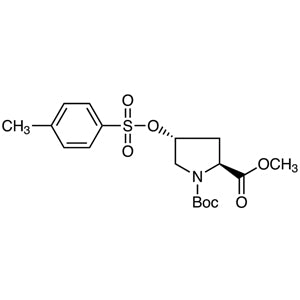
N-(tert-Butoxycarbonyl)-trans-4-(p-toluenesulfonyloxy)-L-prolineMethylEster TCI B5247
Regular price From Rp 557.550,00Regular price