(S)-2-(Aminomethyl)-1-(tert-butoxycarbonyl)pyrrolidine is a chiral building block widely used in asymmetric synthesis to construct molecules with optical activity. This compound plays a crucial role in chemical laboratories, particularly in research focused on bioactive compounds. Its chiral nature allows for the precise control of stereochemistry during synthesis, making it essential for the development of complex organic molecules. It is commonly utilized in both academic and industrial settings where the synthesis of optically active compounds is required.
The compound is valued for its structural complexity and the presence of the tert-butoxycarbonyl (Boc) group, which protects the amino group and enables controlled chemical reactions. This protective group ensures that the molecule remains stable during synthetic processes, allowing for selective modifications later on. Its high purity and well-defined stereochemistry make it a preferred choice for researchers aiming to achieve high yields and specificity in their synthetic pathways.
In Indonesian laboratories, this compound is frequently used in organic chemistry research, especially within higher education institutions and research organizations. It supports the development of new compounds with potential applications in medicine and industry. Its availability facilitates advanced chemical studies and contributes to the growth of scientific research in the region.
TCI brochures (PDF)
- Sulfonic Acid Catalyst Precursors for Asymmetric Synthesis 2026-02-13 · p. 2
- Chiral Building Blocks 2025-04-14 · p. 3
Related TCI products
- TCI B3662 61478-26-0 (2S,4R)-1-(tert-Butoxycarbonyl)-4-hydroxy-2-(hydroxymethyl)pyrrolidine
- TCI A2712 259537-92-3 (R)-2-(Aminomethyl)-1-(tert-butoxycarbonyl)pyrrolidine
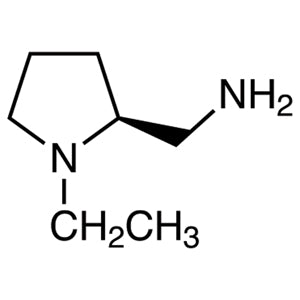
- TCI A1301 22795-99-9 (S)-(-)-2-Aminomethyl-1-ethylpyrrolidine
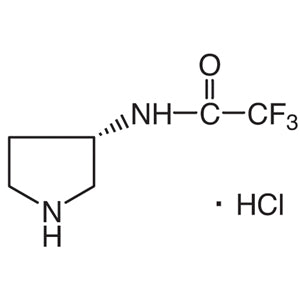
- TCI T1369 141043-16-5 (3R)-(+)-3-(Trifluoroacetamido)pyrrolidine Hydrochloride
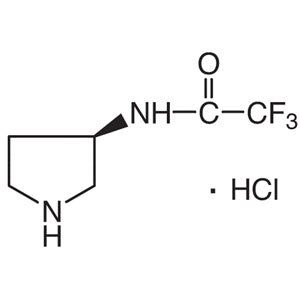
- TCI T1366 132883-43-3 (3S)-(-)-3-(Trifluoroacetamido)pyrrolidine Hydrochloride
- TCI B1932 131878-23-4 (3R)-(+)-1-Benzyl-3-(tert-butoxycarbonylamino)pyrrolidine
- Asymmetric synthesis is a key application where this compound is used to create optically active molecules with precise stereochemistry.
- Organic chemistry research benefits from its role as a chiral building block, enabling the synthesis of complex structures with controlled stereochemistry.
- Drug development projects often utilize this compound to design molecules with specific biological activity and target selectivity.
- Academic research in chemical synthesis relies on this compound for teaching and experimental purposes in university laboratories.
- Industrial chemical production may incorporate this compound in the development of specialized compounds with unique functional properties.
| Brand | TCI |
|---|---|
| CAS number | 119020-01-8 |
| Molecular formula | — |
| Purity | — |
| Category | Chemistry > Asymmetric Synthesis > Chiral Building Blocks |
| Pack sizes | Available in various quantities as per supplier specifications |
| Physical form | Solid or liquid, depending on the specific formulation |
| Storage | Store in a cool, dry place away from moisture and light |
This compound should be stored in a cool, dry environment, away from direct sunlight and sources of heat. It is recommended to keep it in a sealed container to prevent exposure to moisture, which could affect its stability. Due to its chiral nature, it is important to maintain strict handling protocols to avoid contamination or degradation. Laboratory personnel should wear appropriate personal protective equipment, such as gloves and safety goggles, when handling the compound. Proper ventilation is also advised to ensure safe working conditions. Storage should be in a designated chemical storage area to prevent accidental exposure or cross-contamination with other substances.
References cited in the TCI brochure
- Shurong Ban. Synthesis of Binaphthyl Sulfonimides and Their Application in the Enantioselective Michael Addition of Ketones to Nitroalkenes European Journal of Organic Chemistry, 2010. doi:10.1002/ejoc.201000818
Produk Terkait
-
(2S,4R)-1-(tert-Butoxycarbonyl)-4-hydroxy-2-(hydroxymethyl)pyrrolidine TCI B3662
Regular price From Rp 1.326.150,00Regular priceRp 942.900,00Sale price From Rp 1.326.150,00 -
(R)-2-(Aminomethyl)-1-(tert-butoxycarbonyl)pyrrolidine TCI A2712
Regular price Rp 5.352.900,00Regular priceRp 3.759.000,00Sale price Rp 5.352.900,00 -
(S)-(-)-2-Aminomethyl-1-ethylpyrrolidine TCI A1301
Regular price From Rp 689.850,00Regular priceRp 497.700,00Sale price From Rp 689.850,00 -
(3R)-(+)-3-(Trifluoroacetamido)pyrrolidineHydrochloride TCI T1369
Regular price From Rp 2.439.150,00Regular priceRp 1.720.950,00Sale price From Rp 2.439.150,00 -
(3S)-(-)-3-(Trifluoroacetamido)pyrrolidineHydrochloride TCI T1366
Regular price From Rp 1.351.350,00Regular priceRp 960.750,00Sale price From Rp 1.351.350,00 -
(3R)-(+)-1-Benzyl-3-(tert-butoxycarbonylamino)pyrrolidine TCI B1932
Regular price Rp 2.121.000,00Regular priceRp 1.498.350,00Sale price Rp 2.121.000,00 -
(3S)-(+)-1-Benzyl-3-(methylamino)pyrrolidine TCI B1583
Regular price From Rp 1.008.000,00Regular priceRp 720.300,00Sale price From Rp 1.008.000,00 -
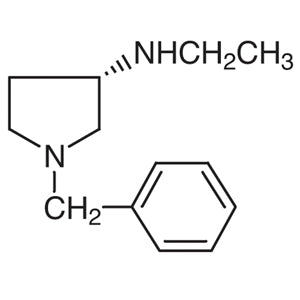
(3S)-(+)-1-Benzyl-3-(ethylamino)pyrrolidine TCI B1581
Regular price From Rp 2.252.250,00Regular priceRp 1.590.750,00Sale price From Rp 2.252.250,00