(3R)-(+)-1-Benzyl-3-(tert-butoxycarbonylamino)pyrrolidine is a chiral building block widely used in asymmetric synthesis to construct complex molecular structures. This compound plays a crucial role in organic chemistry laboratories, particularly in the development of chiral compounds with specific biological activities. Its unique stereochemistry makes it an essential tool for researchers aiming to produce enantiomerically pure substances. Due to its optical activity, it is especially valuable in pharmaceutical and biochemical research where precision is critical.
The compound's chiral nature and the presence of the tert-butoxycarbonyl (Boc) group make it a preferred choice for controlled deprotection reactions. This feature allows for multi-step synthesis strategies, enhancing the efficiency of complex molecule production. Its stability under standard laboratory conditions also contributes to its reliability in various synthetic processes. The combination of its structural specificity and functional versatility makes it a go-to reagent for advanced chemical applications.
In Indonesian laboratories, this compound is commonly used by chemists and pharmacologists in the development of new bioactive compounds. It is particularly relevant in research focused on drug discovery, active compound synthesis, and health product innovation. Its role in creating precise molecular structures supports the advancement of scientific studies in both academic and industrial settings.
TCI brochures (PDF)
- Chiral Building Blocks 2025-04-14 · p. 3
Related TCI products
- TCI B1583 169749-99-9 (3S)-(+)-1-Benzyl-3-(methylamino)pyrrolidine
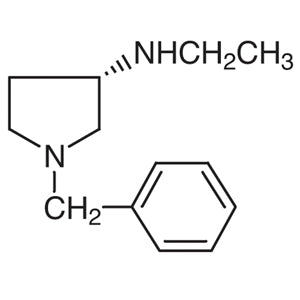
- TCI B1581 169750-99-6 (3S)-(+)-1-Benzyl-3-(ethylamino)pyrrolidine
- TCI B1580 376591-05-8 (3R)-(-)-1-Benzyl-3-(ethylamino)pyrrolidine
- TCI A1172 122536-76-9 (3S)-(-)-3-(tert-Butoxycarbonylamino)pyrrolidine
- TCI A1171 122536-77-0 (3R)-(+)-3-(tert-Butoxycarbonylamino)pyrrolidine
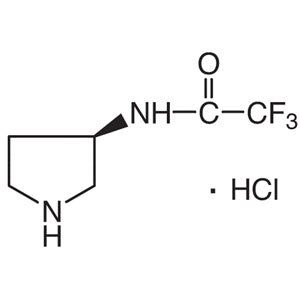
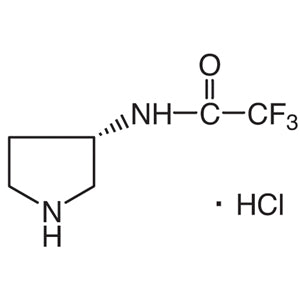
- TCI T1369 141043-16-5 (3R)-(+)-3-(Trifluoroacetamido)pyrrolidine Hydrochloride
- Asymmetric synthesis: This compound is ideal for creating enantiomerically pure compounds due to its chiral structure and optical activity.
- Chiral compound development: Its Boc group enables controlled deprotection, making it suitable for multi-step synthesis strategies.
- Pharmaceutical research: Used in the synthesis of bioactive molecules with specific therapeutic applications.
- Organic chemistry studies: Widely applied in research focused on molecular structure and functional group manipulation.
- Biochemical applications: Its stereochemical properties make it valuable in studies involving enzyme interactions and biological activity.
| Brand | TCI |
|---|---|
| CAS number | 131878-23-4 |
| Molecular formula | — |
| Purity | — |
| Category | Chemistry > Asymmetric Synthesis > Chiral Building Blocks |
| Pack sizes | Available in various quantities as per supplier specifications |
| Physical form | Solid or liquid, depending on supplier packaging |
| Storage | Store in a cool, dry place away from light and moisture |
This compound should be stored in a cool, dry environment, away from direct light and moisture to maintain its stability and effectiveness. It is recommended to use airtight containers to prevent exposure to air and humidity, which could affect its chemical integrity. In laboratory settings, proper ventilation should be ensured when handling the compound to minimize any potential inhalation risks. Always wear appropriate personal protective equipment, such as gloves and safety goggles, to ensure safe handling. The compound should be kept in a secure location, away from incompatible materials to prevent any chemical interactions. Regular monitoring of storage conditions is essential to maintain the quality and usability of the material.
—
Produk Terkait
-
(3S)-(+)-1-Benzyl-3-(methylamino)pyrrolidine TCI B1583
Regular price From Rp 1.008.000,00Regular priceRp 720.300,00Sale price From Rp 1.008.000,00 -
(3S)-(+)-1-Benzyl-3-(ethylamino)pyrrolidine TCI B1581
Regular price From Rp 2.252.250,00Regular priceRp 1.590.750,00Sale price From Rp 2.252.250,00 -
(3R)-(-)-1-Benzyl-3-(ethylamino)pyrrolidine TCI B1580
Regular price From Rp 1.881.600,00Regular priceRp 1.331.400,00Sale price From Rp 1.881.600,00 -
(3S)-(-)-3-(tert-Butoxycarbonylamino)pyrrolidine TCI A1172
Regular price From Rp 2.942.100,00Regular priceRp 2.072.700,00Sale price From Rp 2.942.100,00 -
(3R)-(+)-3-(tert-Butoxycarbonylamino)pyrrolidine TCI A1171
Regular price From Rp 2.757.300,00Regular priceRp 1.943.550,00Sale price From Rp 2.757.300,00 -
(3R)-(+)-3-(Trifluoroacetamido)pyrrolidineHydrochloride TCI T1369
Regular price From Rp 2.439.150,00Regular priceRp 1.720.950,00Sale price From Rp 2.439.150,00 -
(3S)-(-)-3-(Trifluoroacetamido)pyrrolidineHydrochloride TCI T1366
Regular price From Rp 1.351.350,00Regular priceRp 960.750,00Sale price From Rp 1.351.350,00 -
(2S,4R)-1-(tert-Butoxycarbonyl)-4-hydroxy-2-(hydroxymethyl)pyrrolidine TCI B3662
Regular price From Rp 1.326.150,00Regular priceRp 942.900,00Sale price From Rp 1.326.150,00