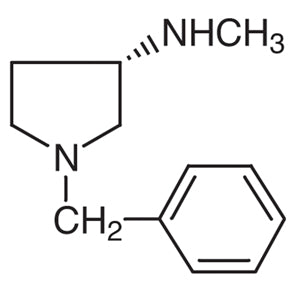
(3S)-(+)-1-Benzyl-3-(methylamino)pyrrolidine is a chiral building block widely used in asymmetric synthesis to construct complex molecular structures. This compound plays a crucial role in chemical laboratories where precise control over stereochemistry is essential. It is particularly valuable in the development of pharmaceuticals and organic compounds that require specific stereochemical configurations. Its chiral nature allows for the selective synthesis of enantiomers, which is vital in drug development and other advanced chemical applications.
This compound is preferred due to its stability and reactivity, making it suitable for a variety of chemical reactions. Its ability to undergo substitution and addition reactions enhances its versatility in synthetic pathways. The compound’s chiral characteristics enable the separation of optical isomers, which is essential for producing biologically active molecules with high specificity. Its molecular structure also supports a wide range of chemical transformations, making it a reliable choice for researchers working in asymmetric synthesis.
In Indonesian laboratories, (3S)-(+)-1-Benzyl-3-(methylamino)pyrrolidine is commonly used in chemical research, especially in the field of asymmetric synthesis and the development of bioactive compounds. It is a key component in studies aimed at creating new pharmaceuticals and organic materials. Its application is widespread across research institutions and universities, contributing to advancements in both academic and industrial chemical research.
TCI brochures (PDF)
- Chiral Building Blocks 2025-04-14 · p. 3
Related TCI products
- TCI B1932 131878-23-4 (3R)-(+)-1-Benzyl-3-(tert-butoxycarbonylamino)pyrrolidine
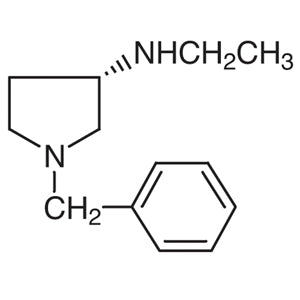
- TCI B1581 169750-99-6 (3S)-(+)-1-Benzyl-3-(ethylamino)pyrrolidine
- TCI B1580 376591-05-8 (3R)-(-)-1-Benzyl-3-(ethylamino)pyrrolidine
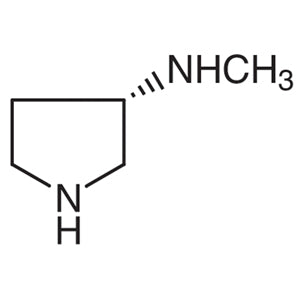
- TCI M1108 139015-32-0 (3S)-(-)-3-(Methylamino)pyrrolidine
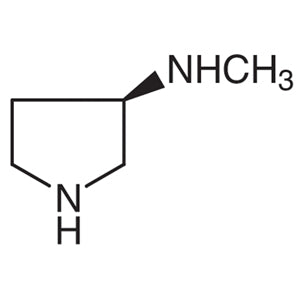
- TCI M1107 139015-33-1 (3R)-(+)-3-(Methylamino)pyrrolidine
- TCI M2157 116539-55-0 (S)-3-(Methylamino)-1-(2-thienyl)-1-propanol
- Asymmetric synthesis applications benefit from this compound's chiral structure, enabling precise control over stereochemistry in complex molecule creation.
- Pharmaceutical research utilizes it for the development of enantiomerically pure compounds, which are critical for drug efficacy and safety.
- Organic chemistry experiments rely on its reactivity and stability for a variety of substitution and addition reactions in synthetic pathways.
- Bioactive compound development leverages its chiral properties to produce molecules with specific biological activities and selectivity.
- Academic research in chemical synthesis uses it as a fundamental building block for exploring new synthetic strategies and molecular transformations.
| Brand | TCI |
|---|---|
| CAS number | 169749-99-9 |
| Molecular formula | — |
| Purity | — |
| Category | Chemistry > Asymmetric Synthesis > Chiral Building Blocks |
| Pack sizes | Available in various quantities as per standard laboratory supply |
| Physical form | Solid or liquid, depending on the specific product variant |
| Storage | Store in a cool, dry place away from light and moisture |
This compound should be stored in a cool, dry environment, away from direct light and moisture to maintain its stability and purity. It is recommended to use airtight containers to prevent exposure to air and humidity. Proper labeling of storage containers is essential to ensure safe handling and prevent cross-contamination. In laboratory settings, it is important to follow standard safety protocols, including the use of personal protective equipment when handling. The compound should be kept in a secure location that is inaccessible to unauthorized personnel. Regular monitoring of storage conditions ensures the compound remains suitable for use in chemical and pharmaceutical research.
—
Produk Terkait
-
(3R)-(+)-1-Benzyl-3-(tert-butoxycarbonylamino)pyrrolidine TCI B1932
Regular price Rp 2.121.000,00Regular priceRp 1.498.350,00Sale price Rp 2.121.000,00 -
(3S)-(+)-1-Benzyl-3-(ethylamino)pyrrolidine TCI B1581
Regular price From Rp 2.252.250,00Regular priceRp 1.590.750,00Sale price From Rp 2.252.250,00 -
(3R)-(-)-1-Benzyl-3-(ethylamino)pyrrolidine TCI B1580
Regular price From Rp 1.881.600,00Regular priceRp 1.331.400,00Sale price From Rp 1.881.600,00 -
(3S)-(-)-3-(Methylamino)pyrrolidine TCI M1108
Regular price From Rp 4.611.600,00Regular priceRp 3.240.300,00Sale price From Rp 4.611.600,00 -
(3R)-(+)-3-(Methylamino)pyrrolidine TCI M1107
Regular price From Rp 3.975.300,00Regular priceRp 2.795.100,00Sale price From Rp 3.975.300,00 -
(S)-3-(Methylamino)-1-(2-thienyl)-1-propanol TCI M2157
Regular price From Rp 1.749.300,00Regular priceRp 1.239.000,00Sale price From Rp 1.749.300,00 -
(3R)-(+)-3-(Trifluoroacetamido)pyrrolidineHydrochloride TCI T1369
Regular price From Rp 2.439.150,00Regular priceRp 1.720.950,00Sale price From Rp 2.439.150,00 -
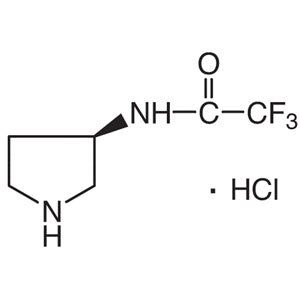
(3S)-(-)-3-(Trifluoroacetamido)pyrrolidineHydrochloride TCI T1366
Regular price From Rp 1.351.350,00Regular priceRp 960.750,00Sale price From Rp 1.351.350,00