

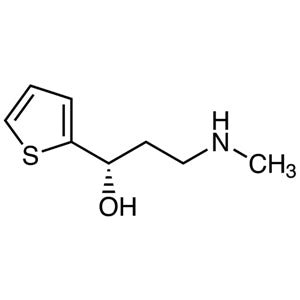
The TCI M2157 116539-55-0 (S)-3-(Methylamino)-1-(2-thienyl)-1-propanol is a chiral building block used in asymmetric synthesis to produce compounds with defined stereochemistry. This compound plays a crucial role in organic chemistry laboratories, particularly in the development of bioactive molecules. Its chiral structure allows for the creation of enantiomerically pure compounds, which are essential in pharmaceutical and medicinal research. Due to its unique molecular framework, it is a valuable tool for chemists aiming to control the stereochemical outcome of complex reactions.
This compound is preferred for its stability and compatibility with a wide range of reagents. Its ability to participate in various chemical reactions without undergoing unwanted side reactions makes it a reliable choice for synthetic chemists. Additionally, its solubility in organic solvents simplifies its use in laboratory settings, enabling efficient handling and reaction conditions. These properties make it a versatile and effective component in the synthesis of optically active compounds.
In Indonesian laboratories, this compound is commonly used in organic chemistry research, especially in the study of bioactive compound synthesis. It is widely utilized by research institutions and universities to develop new drugs or compounds with specific biological activities. Its role in creating chiral molecules is fundamental to advancing pharmaceutical and biochemical research in the region.
TCI brochures (PDF)
- Thiophenes 2026-06-29 · p. 8
- Chiral Building Blocks 2025-04-14 · p. 2
Related TCI products
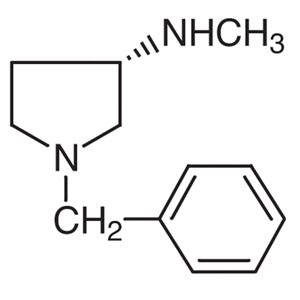
- TCI B1583 169749-99-9 (3S)-(+)-1-Benzyl-3-(methylamino)pyrrolidine
- TCI M1108 139015-32-0 (3S)-(-)-3-(Methylamino)pyrrolidine
- TCI M1107 139015-33-1 (3R)-(+)-3-(Methylamino)pyrrolidine
- TCI D4009 13636-02-7 3-(Dimethylamino)-1-(2-thienyl)-1-propanol
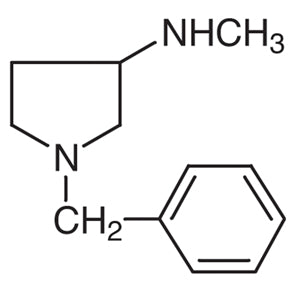
- TCI B1558 96568-35-3 1-Benzyl-3-(methylamino)pyrrolidine
- TCI B1433 3708-39-2 4,4'-Bis(methylamino)benzophenone
- Asymmetric Synthesis: This compound is ideal for creating enantiomerically pure compounds, which are essential in drug development and pharmaceutical research.
- Organic Chemistry Research: Its chiral structure makes it a key reagent for studying molecular stereochemistry and reaction mechanisms in organic synthesis.
- Bioactive Compound Development: It is frequently used in the synthesis of compounds with specific biological activities, supporting research into new therapeutic agents.
- Chiral Catalyst Studies: Its inherent chirality allows it to be used as a chiral auxiliary in catalytic reactions, enhancing the selectivity of complex transformations.
- Structural Elucidation: It is used in NMR and other analytical techniques to study the stereochemistry of complex molecules in synthetic pathways.
| Brand | TCI |
|---|---|
| CAS number | 116539-55-0 |
| Molecular formula | — |
| Purity | — |
| Category | Chemistry > Asymmetric Synthesis > Chiral Building Blocks |
| Pack sizes | Available in various quantities as per supplier specifications |
| Physical form | Solid or liquid, depending on the specific product variant |
| Storage | Store in a cool, dry place away from light and moisture |
This compound should be stored in a cool, dry environment, away from direct sunlight and sources of heat. It is recommended to keep it in a sealed container to prevent exposure to moisture and air. For optimal stability, it should be stored in a controlled temperature environment, ideally between 15°C and 25°C. When handling, it is important to use appropriate personal protective equipment, such as gloves and safety goggles, to avoid skin contact or inhalation. Due to its chemical nature, it should be handled in a well-ventilated area or fume hood to ensure laboratory safety. Always follow standard chemical safety protocols when working with this compound.
—
Produk Terkait
-
(3S)-(+)-1-Benzyl-3-(methylamino)pyrrolidine TCI B1583
Regular price From Rp 955.500,00Regular price -
(3S)-(-)-3-(Methylamino)pyrrolidine TCI M1108
Regular price From Rp 4.559.100,00Regular price -
(3R)-(+)-3-(Methylamino)pyrrolidine TCI M1107
Regular price From Rp 3.922.800,00Regular price -
3-(Dimethylamino)-1-(2-thienyl)-1-propanol TCI D4009
Regular price From Rp 928.200,00Regular price -
1-Benzyl-3-(methylamino)pyrrolidine TCI B1558
Regular price From Rp 1.590.750,00Regular price -
4,4'-Bis(methylamino)benzophenone TCI B1433
Regular price Rp 3.922.800,00Regular price -
NBD-CO-Hz[=4-(N-Hydrazinocarbonylmethyl-N-methylamino)-7-nitro-2,1,3-benzoxadiazole][forHPLCLabeling] TCI A5573
Regular price Rp 6.625.500,00Regular price -
NBD-COCl[=4-(N-Chloroformylmethyl-N-methylamino)-7-nitro-2,1,3-benzoxadiazole][forHPLCLabeling] TCI A5572
Regular price Rp 5.141.850,00Regular price




![221263-97-4 NBD-CO-Hz [=4-(N-Hydrazinocarbonylmethyl-N-methylamino)-7-nitro-2,1,3-benzoxadiazole] [for HPLC Labeling] - AMI Scientific](http://amiscientific.com/cdn/shop/files/TCI2510A5573.jpg?v=1767084917&width=533)
![140164-85-8 NBD-COCl [=4-(N-Chloroformylmethyl-N-methylamino)-7-nitro-2,1,3-benzoxadiazole] [for HPLC Labeling] - AMI Scientific](http://amiscientific.com/cdn/shop/files/TCI2510A5572.jpg?v=1768815070&width=533)
![140164-85-8 NBD-COCl [=4-(N-Chloroformylmethyl-N-methylamino)-7-nitro-2,1,3-benzoxadiazole] [for HPLC Labeling] - AMI Scientific](http://amiscientific.com/cdn/shop/files/TCI2510A5572_4e6b0877-c6ed-4765-9177-8755ec2501c8.jpg?v=1772176826&width=533)