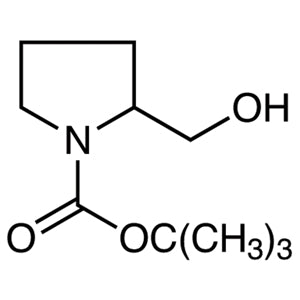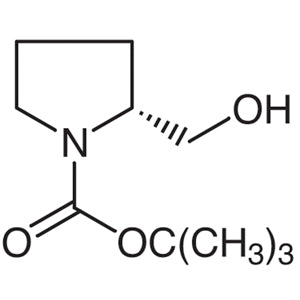
N-(tert-Butoxycarbonyl)-D-prolinol is a chiral building block widely used in asymmetric synthesis to construct molecules with optical activity. This compound plays a crucial role in laboratory settings where precise control over molecular structure and optical properties is essential. It is commonly employed in the development of pharmaceuticals, organic chemicals, and bioactive compounds. Its ability to participate in chiral-controlled reactions makes it an indispensable tool for chemists working on complex molecular architectures.
The compound’s chiral nature and stability under specific reaction conditions make it a preferred choice for synthetic chemists. Its ability to maintain stereochemical integrity during reactions ensures reliable outcomes in asymmetric synthesis. This characteristic is especially valuable in the production of enantiomerically pure compounds, which are critical in pharmaceutical applications. The compound’s chemical stability further enhances its utility, allowing for consistent performance across various experimental protocols.
In Indonesian laboratories, N-(tert-Butoxycarbonyl)-D-prolinol is frequently used in organic chemistry research, particularly in pharmaceutical and bioactive compound synthesis. Local researchers rely on this compound for developing new products that require precise molecular control. Its role in creating optically active molecules is vital for advancing drug discovery and chemical innovation in the region.
TCI brochures (PDF)
- Chiral Building Blocks 2025-04-14 · p. 3
Related TCI products
- Asymmetric synthesis of optically active pharmaceutical compounds due to its chiral structure and controlled reactivity.
- Development of bioactive molecules requiring precise stereochemical control for enhanced biological activity.
- Organic chemistry research focused on chiral building blocks for complex molecule construction.
- Pharmaceutical compound synthesis where enantiomeric purity is essential for drug efficacy and safety.
- Advanced chemical synthesis projects involving chiral intermediates for industrial and academic applications.
| Brand | TCI |
|---|---|
| CAS number | 83435-58-9 |
| Molecular formula | — |
| Purity | — |
| Category | Chemistry > Asymmetric Synthesis > Chiral Building Blocks |
| Pack sizes | Available in various quantities as per standard laboratory supply |
| Physical form | Solid (exact form may vary based on supplier packaging) |
| Storage | Store in a cool, dry place away from moisture and direct sunlight |
This compound should be stored in a cool, dry environment to maintain its chemical stability. It is recommended to keep it in a sealed container to prevent moisture absorption, which could compromise its integrity. For optimal preservation, it should be stored away from direct sunlight and sources of heat. Laboratory personnel should handle the compound with care, using appropriate personal protective equipment when necessary. Proper labeling of storage containers is essential for safe handling and to prevent accidental exposure. Regular monitoring of storage conditions ensures the compound remains suitable for use in chemical synthesis processes.
—
Product Categories
- Asymmetric SynthesisChiral Building BlocksChiral Heterocyclic Building Blocks
- Building BlocksChiral Building BlocksChiral Heterocyclic Building Blocks
- Chemical BiologyPeptide ChemistryAmino Acid Derivatives [Peptide Chemistry]
- Pharmaceutical Development and Drug Discovery Research ReagentsPeptide ChemistryAmino Acid Derivatives [Peptide Chemistry]
Produk Terkait
-
N-(tert-Butoxycarbonyl)-L-prolinol TCI B3077
Regular price From Rp 900.900,00Regular priceRp 645.750,00Sale price From Rp 900.900,00 -
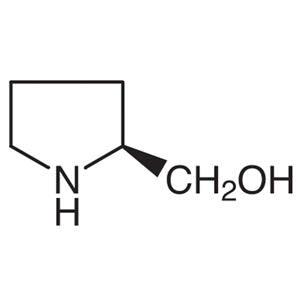
D-Prolinol TCI P1274
Regular price From Rp 848.400,00Regular priceRp 609.000,00Sale price From Rp 848.400,00 -
L-Prolinol TCI P1087
Regular price From Rp 1.458.450,00Regular priceRp 1.035.300,00Sale price From Rp 1.458.450,00 -
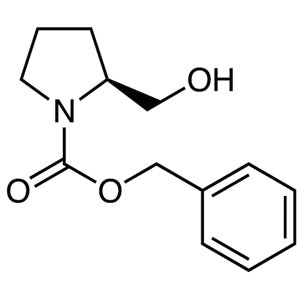
N-Carbobenzoxy-L-prolinol TCI C3332
Regular price Rp 1.458.450,00Regular priceRp 1.035.300,00Sale price Rp 1.458.450,00 -
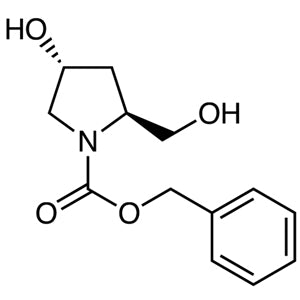
N-Carbobenzoxy-trans-4-hydroxy-L-prolinol TCI C3255
Regular price Rp 2.464.350,00Regular priceRp 1.738.800,00Sale price Rp 2.464.350,00 -
N-(tert-Butoxycarbonyl)-DL-prolinol TCI B3273
Regular price From Rp 2.279.550,00Regular priceRp 1.609.650,00Sale price From Rp 2.279.550,00 -
Nalpha-(tert-Butoxycarbonyl)-L-tryptophanol TCI B4287
Regular price From Rp 1.008.000,00Regular priceRp 720.300,00Sale price From Rp 1.008.000,00 -
(2S,4R)-1-(tert-Butoxycarbonyl)-4-hydroxy-2-(hydroxymethyl)pyrrolidine TCI B3662
Regular price From Rp 1.326.150,00Regular priceRp 942.900,00Sale price From Rp 1.326.150,00