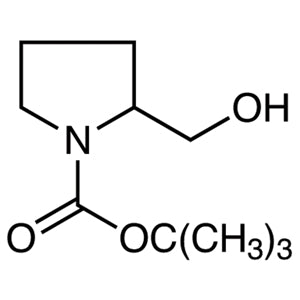
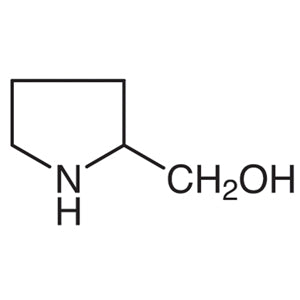
D-Prolinol is a chiral compound widely used in asymmetric synthesis, particularly in the creation of chiral structures. It serves as a key building block in chemical reactions where precise control over molecular structure is essential. In laboratory settings, D-Prolinol plays a critical role in the development of compounds with specific biological activities, such as pharmaceuticals and organic chemicals. Its chemical stability and reactivity make it a reliable choice for researchers aiming to achieve high yields and selectivity in their experiments.
The chiral molecular structure of D-Prolinol allows for the formation of products with specific configurations, which is vital in asymmetric synthesis. This property makes it a preferred choice for scientists working on complex chemical transformations. Its compatibility with various reaction conditions and its ability to participate in multiple synthetic pathways further enhance its utility. The compound’s predictable behavior under controlled laboratory conditions ensures consistent results, making it a valuable tool in both academic and industrial research.
In Indonesian laboratories, D-Prolinol is commonly used in chemical research, especially in the fields of asymmetric synthesis and the development of new compounds. It is particularly relevant for institutions focused on organic chemistry and pharmaceutical sciences. Researchers in Indonesia rely on D-Prolinol for its reliability and effectiveness in creating chiral molecules with specific functional properties. Its application is widespread in both academic and applied research settings, supporting advancements in chemical synthesis and drug discovery.
TCI brochures (PDF)
- Chiral Building Blocks 2025-04-14 · p. 2
Related TCI products
- TCI B3077 69610-40-8 N-(tert-Butoxycarbonyl)-L-prolinol
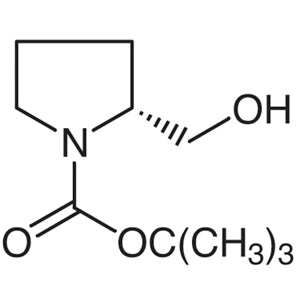
- TCI B3076 83435-58-9 N-(tert-Butoxycarbonyl)-D-prolinol
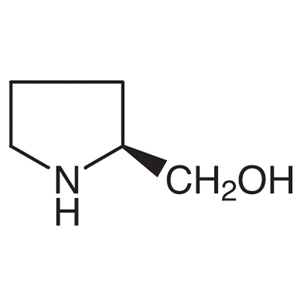
- TCI P1087 23356-96-9 L-Prolinol
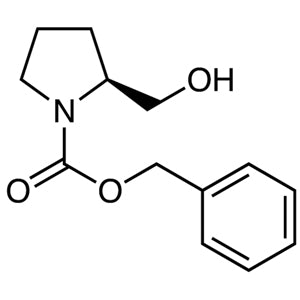
- TCI C3332 6216-63-3 N-Carbobenzoxy-L-prolinol
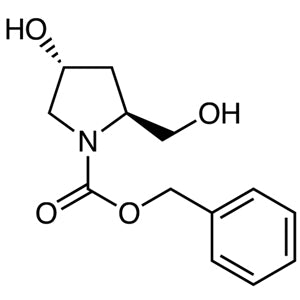
- TCI C3255 95687-41-5 N-Carbobenzoxy-trans-4-hydroxy-L-prolinol
- TCI B3273 170491-63-1 N-(tert-Butoxycarbonyl)-DL-prolinol
- Asymmetric synthesis for producing chiral compounds with specific stereochemistry due to its chiral structure and reactivity.
- Organic chemistry research to develop new molecules with precise molecular configurations and functional groups.
- Pharmaceutical development for creating bioactive compounds that require controlled stereochemistry for efficacy.
- Chiral building blocks in catalytic reactions to enhance reaction selectivity and yield in complex synthetic pathways.
- Academic and industrial research in Indonesia for advancing chemical synthesis techniques and drug discovery processes.
| Brand | TCI |
|---|---|
| CAS number | 68832-13-3 |
| Molecular formula | — |
| Purity | — |
| Category | Chemistry > Asymmetric Synthesis > Chiral Building Blocks |
| Pack sizes | Available in various quantities as per supplier specifications |
| Physical form | Solid (as per standard product description) |
| Storage | Store in a cool, dry place away from light and moisture |
D-Prolinol should be stored in a cool, dry environment to maintain its chemical stability and prevent degradation. It is recommended to keep it in a sealed container to minimize exposure to moisture and air. Suitable containers include glass or high-density polyethylene vessels that are resistant to chemical reactions. Laboratory personnel should handle the compound with care, using appropriate personal protective equipment such as gloves and safety goggles. It is important to ensure that the storage area is well-ventilated to avoid the accumulation of any potentially harmful vapors. Proper labeling of storage containers is essential for safety and easy identification. Regular monitoring of storage conditions helps maintain the integrity of the compound for optimal performance in chemical reactions.
—
Product Categories
- Asymmetric SynthesisChiral Building BlocksChiral Heterocyclic Building Blocks
- Building BlocksChiral Building BlocksChiral Heterocyclic Building Blocks
- Chemical BiologyPeptide ChemistryAmino Acid Derivatives [Peptide Chemistry]
- Pharmaceutical Development and Drug Discovery Research ReagentsPeptide ChemistryAmino Acid Derivatives [Peptide Chemistry]
Produk Terkait
-
N-(tert-Butoxycarbonyl)-L-prolinol TCI B3077
Regular price From Rp 848.400,00Regular price -
N-(tert-Butoxycarbonyl)-D-prolinol TCI B3076
Regular price From Rp 557.550,00Regular price -
L-Prolinol TCI P1087
Regular price From Rp 1.405.950,00Regular price -
N-Carbobenzoxy-L-prolinol TCI C3332
Regular price Rp 1.405.950,00Regular price -
N-Carbobenzoxy-trans-4-hydroxy-L-prolinol TCI C3255
Regular price Rp 2.411.850,00Regular price -
N-(tert-Butoxycarbonyl)-DL-prolinol TCI B3273
Regular price From Rp 2.227.050,00Regular price -
DL-Prolinol TCI P1793
Regular price From Rp 2.491.650,00Regular price -
L-TryptophanamideHydrochloride TCI T2312
Regular price From Rp 2.016.000,00Regular price