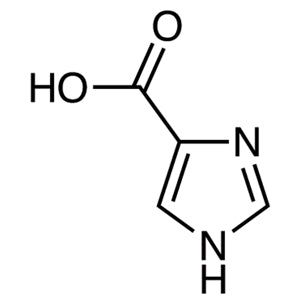
4-Imidazolecarboxylic Acid is a heterocyclic compound built around a five-membered imidazole ring containing two nitrogen atoms, with a carboxylic acid group attached at the four position. The combination of the imidazole ring and the acid function makes it a heterocyclic building block that appears frequently in the synthesis of bioactive compounds, because the imidazole skeleton is a motif commonly found in natural molecules such as histidine as well as in many active pharmaceutical ingredients. In the laboratory, this compound is generally used as a starting material or an intermediate for constructing more elaborate structures step by step.
This compound is chosen because it supplies two distinct kinds of reactivity at once within a single small molecule. Its carboxylic acid group is ready to be converted into esters, amides, or acid chlorides, so it can be joined easily to other molecular fragments through well-established coupling reactions. Meanwhile, the nitrogen atoms of the imidazole ring are weakly basic and able to act as electron-pair donors, a property that is exploited in coordination chemistry as well as in ligand design. Its compact molecular size is also advantageous from the standpoint of atom efficiency when building compound libraries.
In Indonesian laboratories, this material is typically handled as a bench-scale synthetic input in university research groups, pharmaceutical development units, and contract synthesis work. It is normally used in stepwise preparations where an imidazole fragment must be carried forward into a larger target molecule, and it is stored alongside other heterocyclic building blocks so that small quantities can be weighed out as individual reaction steps require them, rather than consumed in bulk.
Related TCI products
- TCI M2272 41716-18-1 1-Methyl-4-imidazolecarboxylic Acid
- TCI I1008 16042-25-4 2-Imidazolecarboxylic Acid
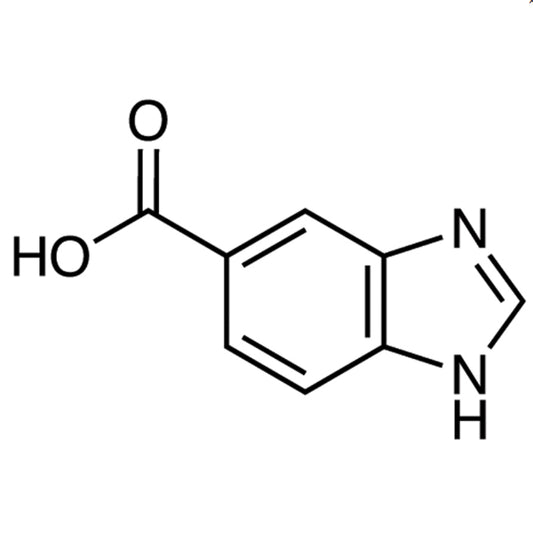
- TCI B1763 15788-16-6 5-Benzimidazolecarboxylic Acid
- TCI M2000 152628-03-0 4-Methyl-2-propyl-6-benzimidazolecarboxylic Acid
- TCI E1042 23785-21-9 Ethyl 4-Imidazolecarboxylate
- TCI E0952 33543-78-1 Ethyl 2-Imidazolecarboxylate
- Heterocyclic scaffold construction — the imidazole ring is carried intact into larger targets, giving chemists a reliable core without building the ring from scratch each time.
- Amide coupling chemistry — the carboxylic acid group is readily activated and joined to amine fragments through established coupling reactions, making it a convenient connection point in multi-step routes.
- Ester and acid chloride preparation — conversion of the acid function into esters or acid chlorides provides derivatives that extend the compound toward a wide range of downstream structures.
- Ligand design and coordination chemistry — the weakly basic ring nitrogen atoms act as electron-pair donors, which is the property exploited when designing ligands for metal centres.
- Bioactive compound synthesis — because the imidazole motif occurs in histidine and in many active pharmaceutical ingredients, this building block supports the preparation of biologically relevant molecules.
| Brand | TCI |
|---|---|
| CAS number | 1072-84-0 |
| Molecular formula | — |
| Purity | — |
| Category | Chemistry > Building Blocks > Heterocyclic Building Blocks |
| Pack sizes | available in standard TCI research-scale packaging; please confirm the current pack options when ordering. |
| Physical form | — |
| Storage | keep in the tightly closed original container as indicated on the manufacturer's label. |
- Catalogue number: I0607
Store the material in its original tightly closed container in a cool, dry, and well-ventilated area, away from moisture and from incompatible substances, and follow the storage conditions stated on the manufacturer's label and safety data sheet. Use clean, dry glass or chemically compatible containers when transferring portions, and reseal promptly to limit moisture uptake. Handle the solid in a fume hood or a well-ventilated workspace, wear a laboratory coat, safety glasses, and suitable gloves, and avoid generating dust during weighing. Wash hands after handling and dispose of residues according to institutional chemical waste procedures.
—
Produk Terkait
-
1-Methyl-4-imidazolecarboxylicAcid TCI M2272
Regular price From Rp 2.254.350,00Regular price -
2-ImidazolecarboxylicAcid TCI I1008
Regular price From Rp 1.696.800,00Regular price -
5-BenzimidazolecarboxylicAcid TCI B1763
Regular price From Rp 1.829.100,00Regular price -
4-Methyl-2-propyl-6-benzimidazolecarboxylicAcid TCI M2000
Regular price Rp 1.538.250,00Regular price -
Ethyl4-Imidazolecarboxylate TCI E1042
Regular price From Rp 848.400,00Regular price -
Ethyl2-Imidazolecarboxylate TCI E0952
Regular price From Rp 1.115.100,00Regular price -
5-BenzotriazolecarboxylicAcid TCI B3869
Regular price From Rp 2.094.750,00Regular price -
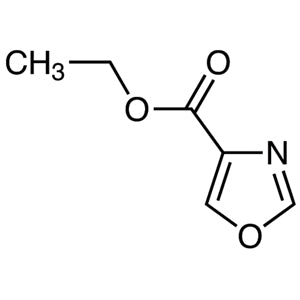
Ethyl4-Oxazolecarboxylate TCI O0289
Regular price From Rp 1.060.500,00Regular price