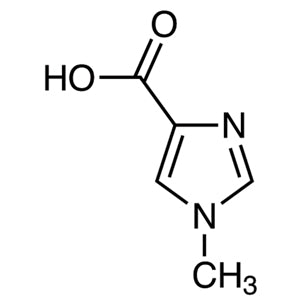
1-Methyl-4-imidazolecarboxylic acid is a versatile organic compound widely used in laboratory settings for its unique chemical structure and reactivity. This compound is a key building block in the synthesis of heterocyclic compounds, playing a crucial role in the development of pharmaceuticals and advanced chemical materials. Its molecular framework allows for various chemical modifications, making it an essential reagent in synthetic chemistry. In research environments, it is frequently employed to construct complex molecular architectures through substitution reactions and other synthetic pathways.
The compound's chemical properties make it a preferred choice for applications requiring high reactivity and specificity. It exhibits stability under controlled conditions but is sensitive to moisture and air exposure, which necessitates careful handling. Its ability to act as an electron donor or reactive intermediate enables it to participate in a range of chemical transformations. These characteristics make it particularly valuable in experiments where precise control over reaction conditions is essential.
In Indonesian laboratories, 1-Methyl-4-imidazolecarboxylic acid is commonly used in chemical research, especially in the synthesis of heterocyclic compounds and drug development. It is a fundamental reagent in academic and industrial research, supporting studies that require both reactivity and chemical stability. Its role in advancing scientific discovery is significant, particularly in the fields of medicinal chemistry and organic synthesis.
Related TCI products
- TCI I1008 16042-25-4 2-Imidazolecarboxylic Acid
- TCI I0607 1072-84-0 4-Imidazolecarboxylic Acid
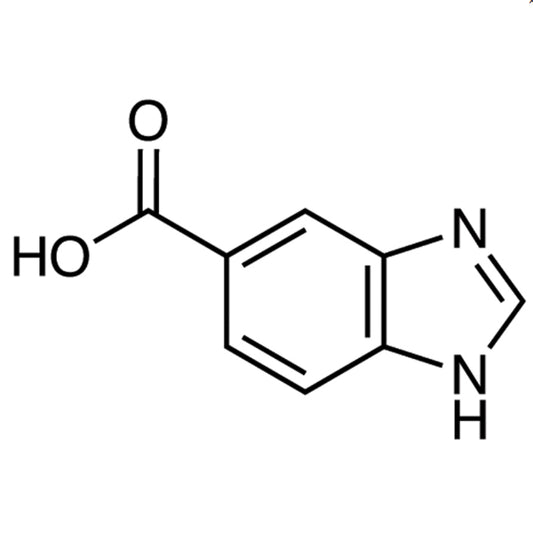
- TCI B1763 15788-16-6 5-Benzimidazolecarboxylic Acid
- TCI M2000 152628-03-0 4-Methyl-2-propyl-6-benzimidazolecarboxylic Acid
- TCI E1042 23785-21-9 Ethyl 4-Imidazolecarboxylate
- TCI E0952 33543-78-1 Ethyl 2-Imidazolecarboxylate
- Heterocyclic Compound Synthesis: This compound is ideal for creating complex ring structures due to its reactive imidazole core, supporting the development of pharmaceuticals and advanced materials.
- Pharmaceutical Research: Its ability to participate in substitution reactions makes it suitable for drug synthesis, where precise molecular modifications are required.
- Organic Chemistry Experiments: The compound’s unique structure enables it to act as a versatile building block in various synthetic pathways, enhancing the scope of experimental research.
- Drug Development: Its reactivity and stability under controlled conditions make it a key reagent in the synthesis of bioactive molecules and therapeutic agents.
- Academic Research: Widely used in Indonesian universities and research institutions for teaching and experimental studies in chemical synthesis and molecular design.
| Brand | TCI |
|---|---|
| CAS number | 41716-18-1 |
| Molecular formula | — |
| Purity | — |
| Category | Chemistry > Building Blocks > Heterocyclic Building Blocks |
| Pack sizes | Available in various quantities as per standard laboratory supply |
| Physical form | Solid powder |
| Storage | Store in a cool, dry place away from moisture and air exposure |
This compound should be stored in a cool, dry environment to prevent degradation due to moisture and air exposure. It is recommended to use airtight containers to maintain its chemical integrity. Due to its sensitivity, it should be handled with care, using appropriate personal protective equipment such as gloves and safety goggles. Storage should be in a well-ventilated area to minimize any potential risks. The compound should not be exposed to direct sunlight or high humidity conditions. Regular monitoring of storage conditions is advised to ensure optimal performance in laboratory applications.
—
Produk Terkait
-
2-ImidazolecarboxylicAcid TCI I1008
Regular price From Rp 1.696.800,00Regular price -
4-ImidazolecarboxylicAcid TCI I0607
Regular price From Rp 1.193.850,00Regular price -
5-BenzimidazolecarboxylicAcid TCI B1763
Regular price From Rp 1.829.100,00Regular price -
4-Methyl-2-propyl-6-benzimidazolecarboxylicAcid TCI M2000
Regular price Rp 1.538.250,00Regular price -
Ethyl4-Imidazolecarboxylate TCI E1042
Regular price From Rp 848.400,00Regular price -
Ethyl2-Imidazolecarboxylate TCI E0952
Regular price From Rp 1.115.100,00Regular price -
5-BenzotriazolecarboxylicAcid TCI B3869
Regular price From Rp 2.094.750,00Regular price -
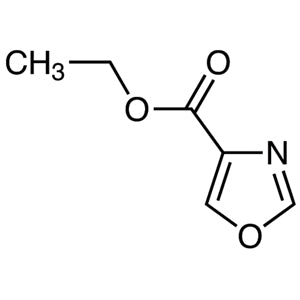
Ethyl4-Oxazolecarboxylate TCI O0289
Regular price From Rp 1.060.500,00Regular price