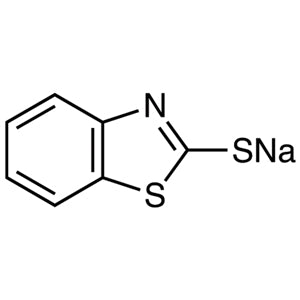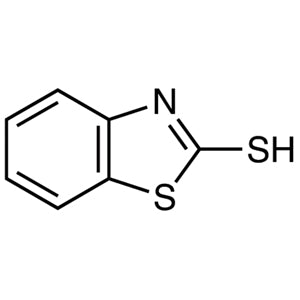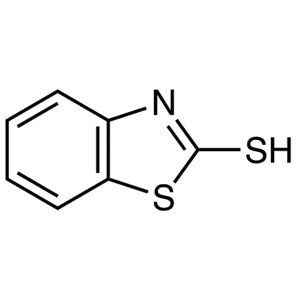
TCI M0247 2-Mercaptobenzothiazole, commonly abbreviated MBT among practitioners, is a heterocyclic compound that combines a benzene ring and a thiazole ring bearing a thiol group at the second position. It presents as a pale yellow to yellow solid with the characteristic odour of sulfur. The compound is one of the best-known materials in rubber chemistry because of its role as a vulcanisation accelerator, but in the laboratory setting its scope is considerably broader: it serves as a heterocyclic building block, a metal-binding ligand, a corrosion inhibitor, and a reagent for a range of surface and electrochemical studies.
The property that makes this compound so useful is the ability of the thiol group and the nitrogen atom of the thiazole ring to work together as metal-binding sites. The combination of sulfur and nitrogen produces strong binding toward transition metals, particularly copper and silver, which explains its effectiveness as a corrosion inhibitor and as a former of protective layers on metal surfaces. The thiol group can also be deprotonated to the nucleophilic thiolate, opening pathways for alkylation, acylation, and disulfide formation. The compound additionally displays an interesting thiol–thione tautomerism.
In Indonesian laboratories, 2-mercaptobenzothiazole is encountered across several working contexts. Synthetic chemistry groups use it as a starting heterocycle when benzothiazole scaffolds are required, while coordination chemistry and materials groups draw on its metal-binding behaviour. Corrosion and electrochemistry laboratories apply it in inhibitor and surface studies, and rubber-related work continues to reference it as a classical accelerator. Its recognisability makes it a practical reference material for teaching and method development alike.
Related TCI products
- Heterocyclic synthesis: the benzothiazole core with a reactive thiol handle at the second position allows chemists to build larger structures through alkylation, acylation, and disulfide-forming routes.
- Metal-binding ligand work: the adjacent sulfur and thiazole nitrogen act together as donor sites, giving strong coordination to transition metals and making it useful in complexation studies.
- Corrosion inhibition studies: its particularly strong affinity for copper and silver lets researchers investigate protective film formation and inhibitor performance on those metal surfaces directly.
- Surface and electrochemical research: the compound forms protective layers on metal substrates, so it is widely used as a reagent in surface characterisation and electrochemical measurement work.
- Rubber chemistry reference: as one of the best-known vulcanisation accelerators, it serves laboratories that need a well-documented accelerator for formulation development and comparative testing.
| Brand | TCI |
|---|---|
| CAS number | 149-30-4 |
| Molecular formula | — |
| Purity | — |
| Category | Chemistry > Building Blocks > Heterocyclic Building Blocks |
| Pack sizes | available in the standard TCI catalogue pack sizes; please refer to the packaging options listed for this item |
| Physical form | pale yellow to yellow solid with a characteristic sulfur odour |
| Storage | keep in a closed container under the storage conditions indicated on the manufacturer's label |
Store 2-mercaptobenzothiazole in a tightly closed container in a cool, dry, and well-ventilated area, away from moisture and incompatible materials. Amber glass or the original manufacturer packaging is suitable, since keeping the container sealed also limits the spread of the compound's characteristic sulfur odour. Weigh and transfer the solid inside a fume hood or a well-ventilated workspace, and wear standard personal protective equipment including gloves, safety glasses, and a laboratory coat. Avoid generating dust, close the container immediately after use, and clean any spilled material promptly. Consult the manufacturer's safety data sheet before handling and follow local laboratory waste procedures for disposal.
—
Produk Terkait
-
5-Chloro-2-mercaptobenzothiazole TCI C1297
Regular price Rp 4.611.600,00Regular price -
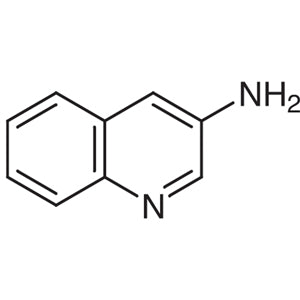
3-Aminoquinoline TCI A0418
Regular price From Rp 1.273.650,00Regular price -
2-Amino-5-mercapto-1,3,4-thiadiazole TCI A0425
Regular price From Rp 769.650,00Regular price -
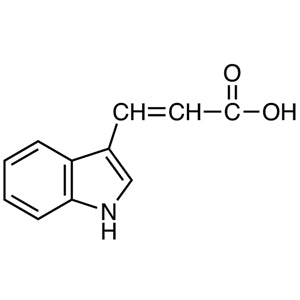
3-IndoleacrylicAcid TCI I0025
Regular price From Rp 1.378.650,00Regular price -
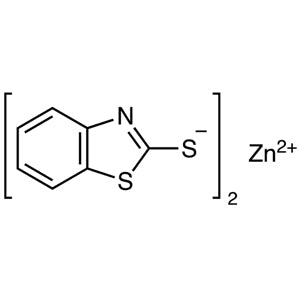
Zinc2-Mercaptobenzothiazole TCI Z0033
Regular price Rp 530.250,00Regular price -
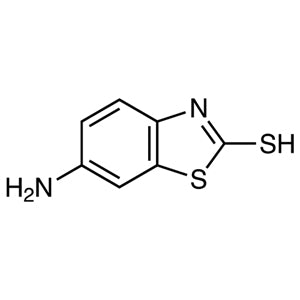
6-Amino-2-mercaptobenzothiazole TCI A0682
Regular price Rp 2.969.400,00Regular price -
Sodium2-Mercaptobenzothiazole TCI M0057
Regular price From Rp 477.750,00Regular price -
2-Mercaptobenzothiazole TCI M0055
Regular price From Rp 477.750,00Regular price