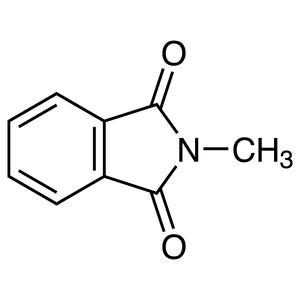
TCI M0299 N-Methylphthalimide (CAS 550-44-7) is a cyclic imide compound built on the phthalimide framework, with a methyl group bonded directly to the nitrogen atom. Within the catalogue classification it belongs to the non-heterocyclic building blocks group, and it serves both as a starting material and as a model compound in organic synthesis. The imide group, flanked by two carbonyl functions on an aromatic ring, gives the molecule strongly electron-withdrawing character, which is why the compound appears frequently in studies of reduction reactions, photochemistry, and carbonyl group transformations, as well as acting as an intermediate on the route to amine derivatives and other nitrogen-containing compounds.
The most notable characteristic of this material is the stability of the imide framework combined with carbonyl groups whose reactivity remains controlled and predictable. Because the nitrogen atom is already methyl-substituted, it no longer carries an acidic imide hydrogen; this simplifies the interpretation of reaction outcomes and makes the compound a clean model for studying the behaviour of imide carbonyl groups. Its strongly electron-withdrawing nature allows it to function as an electron acceptor in photochemical and photoredox investigations, including work on light-induced electron transfer, while the planar aromatic framework supports consistent, reproducible behaviour across repeated experiments.
In Indonesian laboratories this compound is typically used in university and institutional organic synthesis work, where it supports method development, reaction mechanism teaching, and preparative routes toward nitrogen-containing derivatives. Research groups working on photochemistry and reduction chemistry rely on it as a reference substrate whose response is well understood, making it useful for calibrating new procedures. Its role as a catalogue building block also makes it a practical stock item for laboratories that regularly assemble more complex target molecules from simple, dependable starting materials.
- Organic synthesis starting material: the imide framework provides a defined, stable point of entry for building more elaborate molecular structures in preparative laboratory work.
- Route to amine derivatives and nitrogen compounds: the compound acts as an intermediate whose imide functionality can be carried forward toward nitrogen-containing target derivatives.
- Reduction reaction studies: the two carbonyl groups on the imide ring offer a controlled, well-defined substrate for examining reduction behaviour and selectivity in research settings.
- Photochemistry and photoredox research: its strongly electron-withdrawing character lets it serve as an electron acceptor in light-induced electron transfer investigations across varied experimental conditions.
- Model compound for carbonyl group transformations: the absence of an acidic imide hydrogen simplifies interpretation of results, making it a clean reference substrate for mechanistic study.
| Brand | TCI (Tokyo Chemical Industry) |
|---|---|
| CAS number | 550-44-7 |
| Molecular formula | — |
| Purity | — |
| Category | Chemistry > Building Blocks > Non-Heterocyclic Building Blocks |
| Pack sizes | available in standard TCI catalogue research pack sizes; please confirm the current packaging option when ordering |
| Physical form | — |
| Storage | store according to the conditions stated on the manufacturer label and the accompanying safety data sheet |
- Product code: M0299
Store the container tightly closed in a cool, dry, well-ventilated area, away from direct sunlight, moisture, and sources of ignition, and follow the specific storage conditions printed on the manufacturer label. Keep the material in its original supplier container or in a chemically compatible, clearly labelled alternative, and reseal it promptly after each use to limit moisture uptake and contamination. Handle the compound in a fume hood using appropriate personal protective equipment, including safety glasses, gloves, and a laboratory coat. Avoid generating dust, avoid contact with skin and eyes, and keep the material separated from strong oxidising agents and strong bases. Always consult the manufacturer safety data sheet before handling, weighing, or disposing of the material, and follow local laboratory waste procedures.
—
Produk Terkait
-
4-Bromo-N-methylphthalimide TCI B3443
Regular price From Rp 2.147.250,00Regular price -
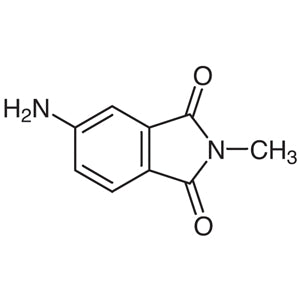
4-Amino-N-methylphthalimide TCI A1561
Regular price From Rp 955.500,00Regular price -
N-(4-Bromophenyl)phthalimide TCI B2707
Regular price From Rp 2.730.000,00Regular price -
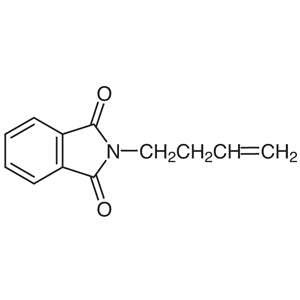
N-(3-Buten-1-yl)phthalimide TCI B1881
Regular price Rp 7.897.050,00Regular price -
PhthalimidePotassiumSalt TCI P0403
Regular price From Rp 557.550,00Regular price -
Phthalimide TCI P0402
Regular price From Rp 530.250,00Regular price -
3-MethylphthalicAnhydride TCI M1464
Regular price From Rp 1.087.800,00Regular price -
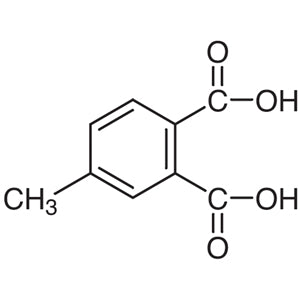
4-MethylphthalicAcid TCI M0560
Regular price From Rp 2.041.200,00Regular price