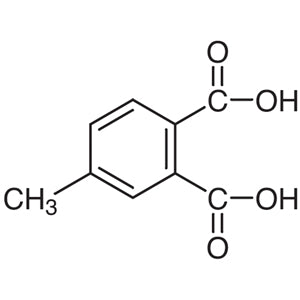
4-Methylphthalic Acid is a chemical compound widely used in various laboratory reactions due to its versatile reactivity and compatibility with multiple functional groups. It serves as a fundamental building block in organic chemistry, enabling the synthesis of complex molecules through esterification, condensation, and other reaction pathways. Its molecular structure provides a stable foundation for further chemical modifications, making it a valuable resource in both academic and industrial research settings.
This compound is favored for its high purity, predictable chemical behavior, and consistent quality, which are essential for reliable experimental outcomes. Its stability under normal laboratory conditions ensures that it remains effective throughout the duration of experiments. Additionally, its non-toxic nature in standard conditions makes it a safer option for use in controlled environments, reducing potential risks associated with handling hazardous materials.
In Indonesian laboratories, 4-Methylphthalic Acid is commonly utilized in educational institutions and research facilities focused on organic chemistry and material science. It plays a crucial role in teaching and experimental work, supporting the development of new compounds and advanced chemical processes. Its availability and reliability make it a preferred choice for both students and professionals engaged in chemical research.
TCI brochures (PDF)
- Organic Linker Molecules for Metal Organic Frameworks (MOFs) 2026-05-11 · p. 3
- Organic Synthesis: 4-Methylphthalic Acid is ideal for organic synthesis due to its reactivity and compatibility with various functional groups, enabling the creation of complex molecular structures.
- Esterification Reactions: Its carboxylic acid group makes it suitable for esterification, a common reaction in the production of esters used in pharmaceuticals and polymers.
- Material Science Research: It is frequently used in the development of new materials, particularly in polymer synthesis and coating applications.
- Teaching and Education: In academic settings, it serves as a key reagent for demonstrating chemical reactions and teaching fundamental concepts in organic chemistry.
- Analytical Chemistry: It is used as a standard in analytical procedures to calibrate instruments and ensure accurate measurements in chemical analysis.
| Brand | TCI |
|---|---|
| CAS number | 4316-23-8 |
| Molecular formula | — |
| Purity | — |
| Category | Chemistry > Building Blocks > Non-Heterocyclic Building Blocks |
| Pack sizes | Available in various quantities as per standard laboratory supply |
| Physical form | Solid powder |
| Storage | Store in a cool, dry place away from direct sunlight and moisture |
4-Methylphthalic Acid should be stored in a cool, dry place, away from direct sunlight and moisture to maintain its stability and purity. It is recommended to use airtight containers to prevent exposure to humidity and contaminants. While it is considered non-toxic under normal conditions, standard laboratory safety protocols should still be followed when handling it. Avoid inhalation of dust particles and ensure proper ventilation in the workspace. The compound is stable under normal storage conditions and does not require refrigeration unless specified by the supplier. Always use appropriate personal protective equipment, such as gloves and safety goggles, to ensure safe handling.
—
Product Categories
- Organic-Inorganic Hybrid MaterialsMetal Organic Frameworks (MOF) and Their Raw MaterialsOrganic Linker Molecules [Metal Organic Frameworks (MOFs) Precursors]
- Polymer/Macromolecule ReagentsMetal Organic Frameworks (MOF) and Their Raw MaterialsOrganic Linker Molecules [Metal Organic Frameworks (MOFs) Precursors]
Produk Terkait
-
3-MethylphthalicAnhydride TCI M1464
Regular price From Rp 1.087.800,00Regular priceRp 760.200,00Sale price From Rp 1.087.800,00 -
4-MethylphthalicAnhydride TCI M0559
Regular price From Rp 1.193.850,00Regular priceRp 834.750,00Sale price From Rp 1.193.850,00 -
4-Bromo-N-methylphthalimide TCI B3443
Regular price From Rp 2.199.750,00Regular priceRp 1.554.000,00Sale price From Rp 2.199.750,00 -
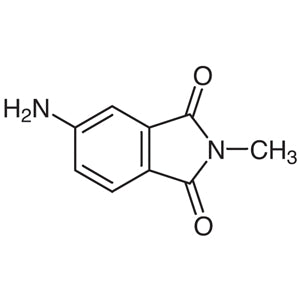
4-Amino-N-methylphthalimide TCI A1561
Regular price From Rp 1.008.000,00Regular priceRp 720.300,00Sale price From Rp 1.008.000,00 -
N-Methylphthalimide TCI M0299
Regular price Rp 1.856.400,00Regular priceRp 1.313.550,00Sale price Rp 1.856.400,00 -
N-Hydroxymethylphthalimide TCI H0648
Regular price From Rp 1.113.000,00Regular priceRp 793.800,00Sale price From Rp 1.113.000,00 -
AcetylenedicarboxylicAcid TCI A0088
Regular price From Rp 1.220.100,00Regular priceRp 868.350,00Sale price From Rp 1.220.100,00 -
Tetrakis(4-carboxyphenyl)methane TCI T3896
Regular price Rp 6.863.850,00Regular priceRp 4.799.550,00Sale price Rp 6.863.850,00